From Click to Action The Journey You Never See
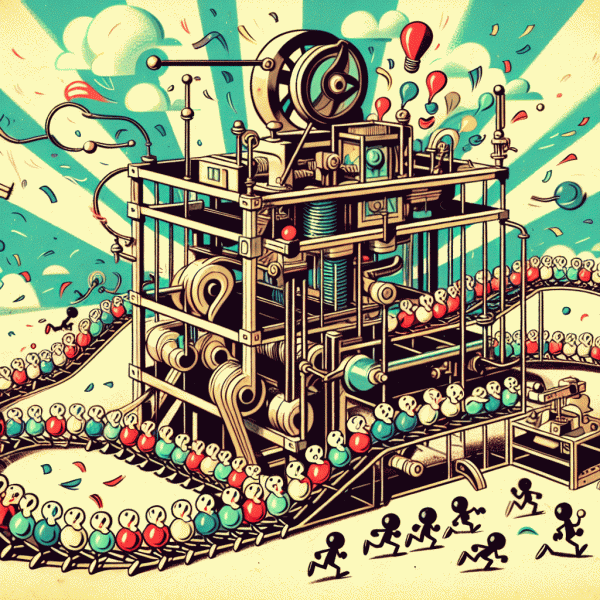
A thousand clicks is not a single event, it is a parade of tiny decisions and system handoffs that most teams never chart. The instant a cursor meets a CTA a chain of small, invisible actions begins: the browser checks cookies, DNS resolves, the landing page renders, third party trackers whisper to analytic platforms, and scripts decide what to show. Some visitors see the hero and convert in ten seconds. Others hit a slow asset or a confusing headline and leave before the third paint. That split is where the real story hides.
Every fragment of that story is actionable. Look at the micro signals: scroll depth, focus on form fields, mouse hesitation near a CTA, repeated visits from the same IP. These are not just numbers, they are clues. Reduce cognitive load by asking for only what you need, use clear microcopy to guide the next step, and preload the minimal assets that prove value. If a form has five fields, you will lose people; if the headline states a clear benefit, you will gain them. Test a single variable and watch how the flow downstream changes. Small experiments compound into big conversion wins.
Behind the scenes the user journey becomes a data runway. Event tags fire to segment intent, CDPs stitch sessions into profiles, and marketing automation decides which message to send next. For those who do not convert instantly, the system decides whether to nurture, retarget, or quietly archive the contact. These are the mechanisms that turn 1,000 raw clicks into long term value or into lost opportunity. Consider three simple reactions that every setup should enable:
- 🚀 Segment: Automatically group visitors by behavior so messages match intention.
- 💬 Nurture: Send focused follow ups that reduce friction and answer the most common questions.
- 🤖 Retarget: Serve context aware ads that remind visitors why they clicked in the first place.
Finally, measure the journey as cohorts not just totals. Track how the first visit, second page, and week two email combine to create a conversion path. Use heatmaps, session replays, and cohort charts to find the slow parts of the funnel and then remove them. Create a cadence of quick wins: reduce a field, rewrite a headline, speed up an image, then measure. After a thousand clicks you will not have a mystery, you will have a map and a list of priorities. Execute that list and the surprise will be pleasant: more conversions, happier customers, and a marketing machine that learns with every click.
The Great Disappearing Act Why 1,000 Clicks Rarely Become 1,000 Readers
Imagine a busy front door where 1,000 people ring the bell and a few dozen actually come inside to stay. That's what a click usually is: a polite knock, not a promise to sit down. Many clicks are accidental taps, quick curiosities, or bots pretending to be humans. Others arrive with high expectations and bounce within seconds because the page smells nothing like the headline they clicked. In a world where attention is currency, a click is a micro-transaction—you still need to deliver the goods before the bill comes due. Your opening seconds, the headline-to-content alignment, and load time decide whether that visitor becomes a reader or a ghost in your analytics.
Most of the vanishing acts happen for predictable reasons. You over-promise and under-deliver: a sensational headline that isn't matched by useful, scannable content. Or you ask for a login, subscription, or permission to play 27 tracking scripts before you give anything of value. Poor mobile layout, intrusive pop-ups and autoplaying media are classic deal-breakers, as are images that crush bandwidth on a flaky connection. The fix is simple in principle—remove friction and fulfill the promise immediately—but it's surprisingly rare. Lead with the answer, make your structure skimmable with short paragraphs and bolded key lines, and don't make people hunt for what they clicked for.
On the technical side, speed is your silent conversion hero. A slow page turns curiosity into churn; a fast, responsive page converts casual interest into read-through and scroll depth. Compress images, defer nonessential scripts, use a CDN, and test mobile layouts under real-world network conditions. Track the story of a visitor: where do they drop off—landing, scroll, or when a form appears? Add event tracking for time-to-interactive and scroll milestones so you can see which element is the escape hatch. A/B test headlines and hero paragraphs rather than guessing, because small wording or layout shifts often produce outsized improvements in the percentage of real readers.
There's also a behavioral playbook you can use immediately: give a micro-win in the first 20–30 seconds (a bold takeaway, a surprising stat, a clear next step), offer one low-friction action after that (read related quick links, download a short checklist), and sprinkle social proof so visitors feel they're joining a sensible crowd. If you want a tiny checklist to start today, do these three things: 1) shave milliseconds off load time, 2) align the first paragraph with the promise in the headline, and 3) remove any blocking modals until after value is delivered. Do that and you'll see the illusion dissolve: more clicks that actually become readers, and fewer disappearing acts that leave you wondering where your audience went.
Metric Makeover The Numbers That Actually Matter After the Click
Clicks are the cheap applause, not the standing ovation. The real story starts when someone lands on your page and decides whether to stay, explore, or abandon. Instead of celebrating raw click totals, trace the small wins that lead to value: micro conversions that show intent, time to first success that reveals friction, and the sequence of interactions that predict return visits. Treat the post-click path like a short mission with checkpoints. If a user clears the first checkpoint within minutes, they are more likely to come back. Instrument those checkpoints as events, give each a clear definition, and stop guessing which numbers matter. This is where you swap vanity for value and start building a map that turns a crowd of clickers into a cohort of customers.
Start by naming the metric that signals meaningful progress for your product. Is it completing onboarding, uploading a file, sending the first message, or making a micro purchase on a monetized page? Track velocity as well as outcome: how long does the average new visitor take to achieve that action, and how does that time vary by traffic source. Segment aggressively. Traffic that converts fast but churns is different from traffic that converts slowly and sticks. If you have monetization on the post-click flow, measure conversion to cash alongside engagement. For a concrete reference on conversion to payout paths check get paid instantly to see how a single change in friction can boost payout conversions without increasing clicks.
- 🆓 Activation: Define one clear first success and measure percent reaching it in 24 hours
- 🚀 Velocity: Track median time to first success by campaign and device
- 🔥 Retention: Measure 7 and 30 day return rates for cohorts that hit activation
Turn insight into action with a tight experiment loop. Pick one micro conversion, hypothesize a change that reduces time to value, ship the change to a slice of traffic, and measure both short term lifts and cohort retention over weeks. Calculate cost per engaged user, not just cost per click, and compare that to early lifetime value to decide where to scale. Use simple dashboards to watch cohorts mature, set alarm thresholds for sudden drops, and make the guardrails visible to everyone. The goal is to focus investment on the numbers that actually grow revenue and loyalty after the click. Do that and clicks stop being a vanity stat and start being the first line in a repeatable growth story.
Friction Fixes Five Tiny Tweaks That Multiply Conversions
Think about the moment when 1,000 people click your link: all that attention, and yet only a fraction converts. The secret is not traffic, it is friction. Tiny snags — a confusing button label, a surprise form field, a sluggish load, a noisy layout, or a missing social proof — are like pebbles in the shoe of your funnel. Each one chips away at conversions until your tidy 3% becomes a sad 0.9%. The good news is that these are not big initiatives; they are five tiny, testable tweaks that, when combined, multiply conversions far beyond what another round of paid traffic will get you.
Tweak 1: Simplify the ask. Reduce form fields, remove optional friction, and put the core action first. Every extra field drops completion rates — test a two-field vs four-field flow and watch the lift. Tweak 2: Make the CTA obvious and specific. Swap vague copy like "Submit" for "Get my checklist" and pair it with color contrast that truly pops on the page. Tweak 3: Speed up micro-moments. A button that takes 800ms to respond feels like forever; shave milliseconds by trimming scripts or deferring noncritical assets and measure the bounce delta.
Tweak 4: Remove distractions. If your goal is a signup, hide the extra navigation, unrelated CTAs, and autoplay media that compete for attention. Create a single task tunnel and run a heatmap to prove it. Tweak 5: Add trust scaffolding where it matters: a one-line testimonial, a simple privacy hint, or a recognized badge near the CTA. Tiny credibility lifts can cut anxiety and boost conversion by double digits in some tests. If you do not have in-house bandwidth to whip up variations, consider a quick team that can roll experiments this week — for example, hire freelances to build and iterate creative and copy hire freelancers online.
Now the actionable plan: pick one tweak, isolate it, and run an A/B test with at least 1,000 unique clicks per variant so your results are meaningful. Track conversion rate, click-to-submit time, and mobile vs desktop split. If you get a modest 10-20% lift from one tweak, layer the next and run another test; compounding wins are where the magic happens. Keep changes atomic, document hypotheses, and prioritize based on expected impact and implementation cost. Friction fixes are fast, funny little wins that scale — do five of them, and the surprise at the bottom of your funnel will be very pleasant indeed.
Retention Ripple What Those 1,000 Clicks Do for Your Brand Next Month
Think of those 1,000 clicks as pebbles skipped across a retention pond: the first splash is loud, but the concentric waves are where the real value lives. Not everyone who lands will buy, but a surprising number will bookmark, follow, share, or come back because something nudged them at the right time. That means next month you won't just measure a static conversion number—you'll measure momentum. Little behaviors (return visits, email opens, social mentions) multiply through algorithms and human networks, turning a single-day spike into sustained attention that boosts discoverability and lowers future CPA.
Start with the metrics that actually prove a ripple: cohort retention, 7- and 30-day active rate, repeat session frequency, and micro-LTV from re-engagers. A simple back-of-envelope formula helps: clicks × conversion rate × retention rate × referral multiplier = expected engaged users next month. So if 1,000 clicks give you a 5% signup rate (50 people) and 30% of those return within 30 days (15 active users), and each active user generates 0.2 referrals on average, you're not just sitting on 15 users—you're starting a mini-network of influence that compounds.
Turn that math into a 30-day playbook: day 0 send a short, value-first welcome with one clear action; day 1 surface a quick win in-app or via email; day 3 nudge with contextually relevant content (how to get more value); day 7 send social proof and an invite to share or refer; day 21 re-engage with a targeted offer or update. Instrument every step: UTMs, event tracking, and a visible cohort dashboard. Small tweaks to subject lines, CTA placement, or onboarding copy often have outsized effects on who sticks around.
Then amplify the ripple cheaply. Retarget the warm audience of clickers with creative that references what they saw (higher relevance = higher return). Create a micro-campaign to lookalike audiences based on the subset who returned in week one. Use dynamic emails showcasing content they viewed or products they left in a cart. Encourage micro-actions—save, favorite, follow—that make future re-targeting smarter and cheaper. Remember: a 10% lift in 30-day retention from these moves compounds downstream into higher LTV and friend referrals.
Finally, run one fast experiment to prove the idea: split the clickers into two cohorts—A gets the standard onboarding, B gets a condensed, benefit-focused sequence plus a single-share prompt—and measure 7- and 30-day retention and referral rate. If cohort B wins, scale the sequence and optimize. If not, iterate on the hook and timing. The key takeaway is practical: those 1,000 clicks are not a one-off vanity score; with a few targeted, low-friction plays you can convert that initial attention into a measurable retention ripple that pays you back for months.