The $10 Challenge: What We Asked For vs. What Actually Arrived
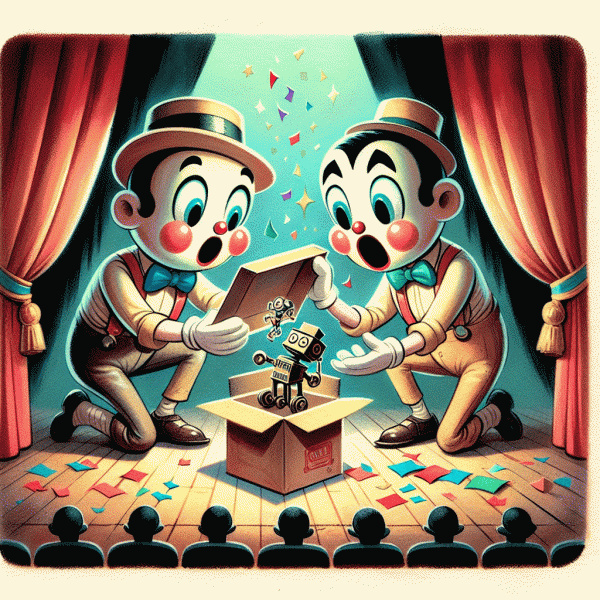
We handed over ten bucks and a short brief and watched the little economy of microtasks do its thing. What arrived ranged from exactly what we needed to charmingly off-brand improvisations that left us grinning and re-editing. Some sellers delivered tight, useful work that slotted straight into a project; others returned creative takes that required interpretation, cleanup, or a polite request for a redo. The common thread was speed and economy rather than finish-line polish — which is perfect if you plan for it, maddening if you do not.
Concrete examples make this obvious. We asked for a mini-logo and received a PNG with a white box instead of a transparent background; we requested copy edits on a 1,000-word post and got grammar-focused notes that missed poise and flow; an Excel task promised a formula and returned a manual workaround. One voiceover arrived with performative breaths and unexpected drama, while another sounded like it had been recorded in a cozy closet studio (in a good way). A set of social captions came back perfectly serviceable but generically safe, as though written by an algorithm that wanted to avoid controversy. The variety was entertaining and instructive.
Patterns emerged quickly: low-cost gigs favor templates, speed, and broad interpretation of briefs. To tip the balance toward useful, predictable outcomes, be surgical with your instructions. State file formats, attach examples, call out absolute dealbreakers, and specify whether source files are required. Request a quick draft or screenshot as a checkpoint before final delivery. Reward thoughtful questions from the seller—clarifying one good question often prevents several revisions. These moves do not raise the price but they raise the odds of getting a deliverable you can actually use.
Treat $10 tasks as experiments rather than final products: prototype a logo idea, test a headline or caption set, verify an editing approach, or unblock a tiny task that has been hanging around. When they succeed, you get fast proof of concept; when they fall short, you get valuable insight about how to brief better next time. Keep expectations realistic, instructions crisp, and a sense of humor close by—sometimes a cheap, slightly imperfect result sparks the next great idea.
Fast, Cheap, or Good? Grading Every Gig on a Tiny Budget
We approached every $2, $3 and $5 micro-task like mad scientists: equal parts curiosity, skepticism, and snacks. With only a tenner to spend, the mission was not luxury — it was discovery. The real trick was not just buying cheap gigs, it was grading them quickly and fairly so you can replicate what works without crying into your latte. We built a simple grading system that answers the stubborn question everyone asks: did this save me time, cash, or sanity? Spoiler: sometimes you get all three; sometimes you get a masterpiece that smells faintly of dollar-store glue.
Our rubric is delightfully unscientific: three buckets — Speed, Price and Quality — each gets a green (win), yellow (meh), or red (run). Measure Speed by turnaround time versus the promise, Price by how much value arrived per dollar, and Quality by whether you can use the result without heroic edits. Actionable tip: for repeatable tasks, prioritize Speed first and Quality second; for brand-facing work flip that order. Also, set a cutoff: if a gig hits two reds, it is a hard fail and a learning moment, not a shame spiral.
Here are the micro-criteria we actually used to grade every gig, so you can steal the cheat sheet:
- 🚀 Speed: Turnaround and responsiveness — did the seller hustle or go AWOL?
- 💥 Price: Value per dollar — bargain, deal, or false economy?
- ⭐ Quality: Fit-for-purpose finish — publishable, needs touch-ups, or dumpster-bound?
Concrete results: one $3 logo was fast and cheap but needed heavy cleanup (Speed: green, Price: green, Quality: red), another $4 proofreading job came in slow but spotless (Speed: yellow, Price: green, Quality: green), and a $2 voiceover surprised us with studio-grade clarity (all green — outlier alert). Every gig taught us one repeatable lesson: inexpensive does not mean unusable, but it often comes with caveats you should budget for (time, edits, or both).
Use our tiny-budget grading routine as a filter: sketch the job, decide which two buckets matter most, spend the tenner in experimental batches, and rank outcomes by the three-color rule. If you want one quick hack: when a seller nails Speed and Price, offer $1 extra for a small Quality test — that tiny nudge separates a gamble from a dependable shortcut. We spent $10 and gained a practical map for squeezing value out of micro-gigs; your turn to test it and laugh at how much competence you can buy for coffee money.
Hidden Gems and Total Duds: Where $10 Delivers (and Doesn't)
We turned ten dollars into a tiny research lab and the results were more theatrical than a late night infomercial. Some buys were genuine tiny miracles: a crisp 200 word product description that suddenly made a thrift listing sell, a thirty second voiceover that gave a demo video personality, and a quick CSS tweak that stopped an app from looking like a relic. Other buys were theatrical flops: piles of phantom followers that never engage, blurry logos that felt like ransom notes, and promises that vanished after payment. The trick is not magic. It is method. Spend like a scientist: control one variable per experiment and measure what actually moves the needle.
On the winner side there are reliable categories that repeatedly turned ten dollars into useful outcomes. Micro copy and product descriptions are low risk because impact compounds: better words convert. Minor design edits such as resizing, color tweaks, and icon polishing are cheap but visible. Short debugging or small script tasks can unlock features without a contractor engagement. When ordering, give a concise brief, attach an example, and ask for one revision up front. Look for sellers who supply samples or portfolio links and who answer clarifying questions quickly. If a seller can explain what they will deliver in plain language, you will get far more utility than from flashy promises.
Meanwhile the duds share a theme: scale without substance. Mass follower packs, automated view bots, or cheap bulk installs often inflate vanity numbers but deliver zero long term value and may even harm reach because algorithms detect fake engagement. Low cost translations from generalist mills tend to be literal and tone dead, and templated logos require heavy rework to become unique. If you are tempted by broad engagement schemes, consider targeted options instead; for instance explore tasks for social media groups that encourage real interaction in niche communities rather than blind numbers. Spend on relevance, not just quantity.
Here is a simple actionable checklist to make ten dollars count: 1) split the budget into two or three micro tests rather than one big gamble, 2) prepare a 3 line brief that states goal, audience, and unacceptable outcomes, 3) request a sample or preview when possible, 4) favor sellers with specific portfolio items similar to your need, and 5) measure a single metric after delivery such as clicks, replies, or time saved. Treat ten dollars as a probe that informs a larger decision. With smart briefs, small tests, and a focus on measurable impact, that ten dollar experiment will teach you more than hours of guessing ever will.
ROI on a Dime: The One Task That Punched Way Above Its Weight
We tossed ten bucks at a tiny, specific task and watched it act like it had spent a decade in the gym. The trick wasn't magic or luck — it was a hyper-focused, measurable swap: $10 for a single, high-leverage creative asset and a two-step split test. Instead of buying a dozen vague favors, we bought one sharp thing that either caused a reaction or told us exactly what to change. When you strip down ROI to the unit economics of curiosity and iteration, a single well-chosen micro-task can rewrite what you thought was possible for pocket change.
The playbook is simple and shockingly repeatable. First, pick one conversion choke point — hero image, headline, CTA copy — and treat it like the only thing that matters for 48 hours. Then spend $10 where it actually moves that needle: hire a micro-designer/writer for a rapid A/B concept, or boost two versions of the same post with $5 each to real audiences. The goal is not perfection; it's a live experiment with an immediate signal. Within a day you'll have quantifiable wins, zeros, or wild hypotheses to work from. That clarity beats three weeks of indecision.
Here's the rapid checklist we followed and you can copy in minutes:
- 🚀 Brief: Give one clear objective — increase click-through by X% — and a hard constraint like 24-hour turnaround.
- 💥 Test: Run two micro-variants (visual or headline) with equal spend so you get a clean winner fast.
- ⚙️ Scale: If one beats the other, double down on distribution or roll the copy into your landing page immediately.
If you want the shortcut version: treat $10 as a temperature check, not a campaign. It's tiny money designed to expose big patterns — the phrasing that hooks, the image that stops the scroll, the promise customers actually care about. Measure impressions, clicks, and time-on-page; if the math's favorable, pump more budget where it counts. If it fails, you've bought a lesson for less than a latte and a faster path to a better hypothesis. Either way, you've learned more than a week of guesswork.
Do This, Not That: Micro-budget Playbook for Your Next Experiment
Treat a ten-dollar experiment like a tiny, ruthless lab: one hypothesis, one metric, one channel, one weekend. Start by writing a single sentence that explains what you expect to happen and why — not a mission statement, a test sentence. Pick the simplest indicator of success (clicks, signups, replies) and a stop condition: if you don't hit X by Y hours, you pivot or pull the plug. That discipline turns scattershot spending into repeatable learning and keeps you from pouring your pocket change into shiny failures.
Here are quick swaps that save cash and get real answers faster:
- 🆓 MVP: Launch a one-field landing page (email only) and a free lead magnet instead of a polished multi-page site; you'll validate interest before you design.
- 🚀 Audience: Reach out to a tight micro-niche (100–1,000 people in a forum or group) rather than blasting a broad lookalike audience that wastes impressions.
- 🐢 Channel: Use manual outreach (DMs, comments, micro-influencers) or organic posts for traction instead of paying for raw traffic to an untested offer.
Now the operational playbook — do this, not that. Do write one crisp offer headline and test it with 10 targeted messages; don't A/B twenty visuals before you know the headline works. Do use free tools (a simple Carrd, Google Forms, or a shared doc) and a $5 boost or $10 promoted post if you need initial reach; don't subscribe to a month of expensive SaaS for the first signal. Do manually qualify leads and ask for the sale or the next step; don't build a funnel that relies on automation you haven't validated. Timebox the whole run to 48–72 hours: collect data, tally meaningful responses, then decide to iterate, double down, or kill it.
Finish every micro-experiment with one clean metric and one learning sentence: what changed and what you'll do differently next. If you get a win, spend the next $10 amplifying the winning move; if you get a failure, archive the hypothesis, keep the data, and celebrate the cheap lesson. Small bets + ruthless focus = more experiments, more fast feedback, and better instincts — all without mortgaging your marketing budget or your optimism.