The First 10 Minutes: Micro-wins, mini-panics, and your CTR's true colors
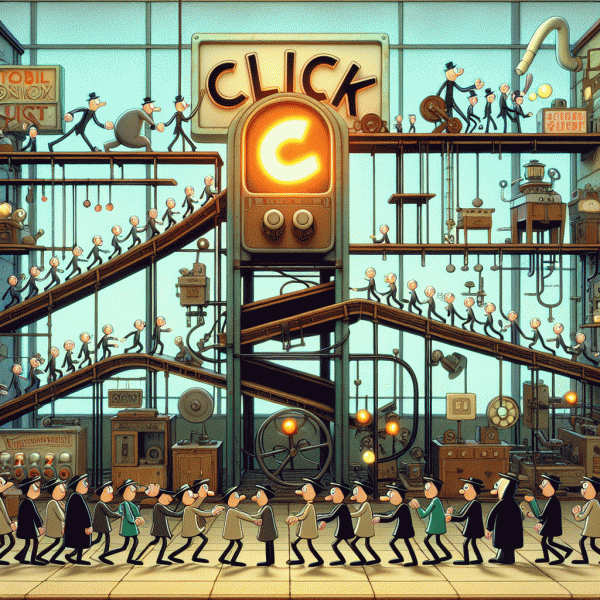
For the first ten minutes after 1,000 people converge on the same link you get a kind of marketing MRI: spikes, flatlines, and tiny victories that shout the truth about your CTR and creative fit. That window is not for slow, philosophical reflection — it is a sprint of triage and tiny experiments. Some clicks will be the equivalent of elbow nudges (low intent, quick bounces), others will be full-on hand-raises (long sessions, micro-conversions). Your job in minute zero through ten is to see the pattern before your brain turns those beeps into panic or triumph.
Do three things immediately to turn noise into insight:
- 🚀 Celebrate: Lock onto one positive signal — a micro-conversion, an above-benchmark CTR segment, or a rising time-on-page — and amplify it so you don't drown in false positives.
- 🐢 Throttle: If traffic quality looks suspicious (massive one-second sessions, repeat IP clusters), slow or block sources so bad clicks don't ruin your metrics or budget.
- 💥 Patch: Fix the single obvious friction point (broken CTA, 404 asset, misrouted URL) that will cost you multiply as the chain reaction cascades.
Beyond the triage list, interpret those micro-wins and mini-panics with intent. A sudden CTR spike from one creative variant means you have a hypothesis worth hardening — but don't rewrite the whole funnel. Swap in that creative to a small traffic slice, push a faster-loading landing experience, or surface the social proof that seemed to land. Conversely, a tiny panic — a landing page with high exit rate or a mismatch between ad promise and page reality — is usually fixable with a copy tweak, clearer CTA, or a quick A/B revert. Scour UTM tags and referrers: the first clicks often reveal whether you bought attention or borrowed it from a feed that doesn't convert.
Last, keep your metrics and mindset aligned. In minutes one through ten, CTR is a thermometer, not the whole diagnosis: it tells you who was interested, not whether they will buy. Use real-time dashboards, a lightweight heatmap, and a session replayer to prioritize changes that protect conversion rate while preserving momentum. Set hard rules: if conversion rate drops >20% after an intervention, roll it back; if a variant lifts both CTR and micro-conversions for three consecutive 5-minute windows, scale it. Treat the first ten minutes like a scouting mission — capture signals, patch obvious leaks, and seed the next wave of higher-confidence experiments before the chain reaction settles into its long-term trajectory.
Where They Land Matters: Tiny tweaks that turn curious clickers into committed customers
Think of the tiny tweaks on a landing page as the synapses of a human attention network: a misplaced headline, a blurry hero image, or a timid CTA can stop a journey cold, while a few well-placed nudges convert curiosity into commitment. Start by aligning the first sentence with the exact phrase that sent visitors there; when what they expect matches what they see, anxiety drops and engagement rises. Then shave milliseconds off load time, remove one unnecessary form field, and swap jargon for the plain-language benefit—these micro-adjustments compound fast.
Here are three high-impact experiments to run in an afternoon:
- 🚀 Headline: Test a benefit-first line versus a feature-first line; measure scroll depth and time on page to see which one hooks faster.
- 🆓 Friction: Replace a 6-field signup with a 1-click option or social proof popup and track completion rate; often the simplest path wins.
- 💥 CTA: Swap copy and color—replace generic "Submit" with a clear promise like "Start My 14-Day Plan" and watch the lift in clicks.
Make each test actionable and short. Use a visible control and one variable only, and collect more than impressions: capture micro-conversions such as video play, content reveal, or scroll past 50%. Write microcopy that answers the single biggest question on someone's mind within two seconds, and use contextual trust signals—a single testimonial near the CTA or a short money-back line under the button can change decisions. If personalization is available, show the most relevant offer based on source or past behavior; if not, segment by UTM and adapt the headline.
Finally, treat these tweaks like a chain reaction: small wins feed larger changes. Log results, celebrate directional lifts, and iterate—swap the next variable only after a meaningful sample size is reached. For teams that want a quick playbook, run five ten-minute experiments this week: headline, CTA copy, image, form fields, and a trust element. You will not fix everything at once, but you will engineer momentum, and momentum is what turns a thousand curious clicks into real customers.
The Hidden Drop-Offs: Why 1,000 clicks rarely equals 1,000 eyeballs
When a dashboard flashes "1,000 clicks," the image in your head is inevitably cinematic: a thousand people leaning in. The truth looks more like a messy Rube Goldberg machine. Email preview panes, Slack unfurls, and social platforms that prefetch content can all fire a click before anyone actually reads a word. Then there are the accidental taps on tiny mobile buttons, link-checking services that sweep the web nightly, and redirect chains that register a hit even when the final page never finishes loading. All of those tiny failures add up into a dramatic, misleading headline.
- 🆓 Bots: automated crawlers, link-checkers and monitoring tools that tick your counter without delivering a human view.
- 🐢 Load: slow servers, heavy images or blocking scripts that cause users to bail mid-load while the click has already been recorded.
- 🚀 Duplicates: prefetching, multiple taps, or analytics quirks that double- or triple-count the same intent.
There's a whole ecosystem of subtle leaks beyond the obvious culprits. URL shorteners and redirect services sometimes strip UTM context so you can't trace the real source; privacy extensions and ad blockers hide the pixels and JavaScript hooks you rely on to confirm a visit; AMP or instant-view pages may render a cached copy that never reaches your server logs. On top of that, many analytics platforms classify a hit as a conversion at the moment of redirection, even if the user experienced a 500 error or a blank screen on arrival. The result: an inflated numerator paired with a missing denominator of genuine attention.
If you want the click count to mean something, start treating the post-click experience as a distinct product. Eliminate unnecessary redirects and prefer server-side routing that preserves UTM parameters. Use first-party measurement and server-side event collection to survive client-side blockers, and deduplicate events with session tokens or deterministic hashing. Instrument micro-conversions — scroll depth, time-on-page, hero interaction — so you're measuring engagement, not just arrival. Add bot-filters and rate-limits to your analytics pipeline, and use server logs as a ground-truth cross-check against your tag-based data. Small engineering moves often convert a noisy metric into a reliable signal.
Next time someone hands you a shiny clicks number, slice and interrogate it: by source, device, landing variant and hour of day. Run quick experiments that swap landing templates, reduce payload, or remove a redirect and watch the engagement metrics, not vanity totals. Start with a short audit — check the redirect chain, measure TTFB, and validate your analytics against raw logs — and you'll turn a thousand deceptive clicks into a few hundred meaningful interactions. Clicks are cheap; attention isn't — chase the metric that proves you earned it.
UTM Clues & Cookie Crumbs: Track what actually moved the needle
Think of UTMs as tiny name tags left on every visitor. When 1,000 people click the same link those tags tell you which pockets to check first. Use a strict UTM grammar: lowercase, hyphens or underscores instead of spaces, and a limited vocabulary for utm_source, utm_medium, and utm_campaign so analytics tables are not an alphabet soup. Example query string to copy exactly when you build links: utm_source=newsletter&utm_medium=email&utm_campaign=spring_launch&utm_content=cta_top. Always include utm_content when you have multiple creatives on the same page so you can tell which creative actually nudged someone. Standardization reduces noisy dimensions and makes signal pop through instead of being buried under garbage.
UTM tags are only half the breadcrumb story. Cookies and client ids stitch those tags to people and sessions, but modern browsers and ad blockers can drop crumbs along the way. Capture original UTM parameters server side on the first hit and persist them to a first_touch cookie or to your user record if the user logs in later. Append a durable click id to the redirect (for example click_id=abc123) and persist that too; it becomes the glue for session stitching when cookies fail. Log timestamp, user agent, and client id with every captured click so you can reconstruct journeys even when attribution windows are messy.
Attribution models will disagree because they measure different things. Last click will favor recent channels, first click will favor initial discoverers, and multi touch will reward assisting channels. Do not pick a model on faith. Export raw click and conversion logs, join on client id or click id, and compute simple weighted credit as a diagnostic: maybe 20 percent to first touch, 50 percent to last touch, and split the remaining 30 percent across assists. Use that as your baseline and then run a controlled lift test or holdout experiment for the highest spend buckets to validate whether the attributed gains reflect real incremental value.
Make this operational with a short checklist you can finish today: enforce UTM naming conventions in every campaign template; capture original query parameters at redirect and write them to server logs or a first_touch field; normalize and dedupe campaign labels during ETL to stop fragmentation; stitch clicks to conversions by client id and keep raw logs for at least your longest lookback window; compare at least two attribution models and run a lift test on the top two channels; iterate and document the rules so the next marketer does not invent new spellings. Do these things and the crumbs left behind by 1,000 clicks will stop being confusing noise and start telling a clear story about what actually moved the needle.
From Clicks to Cash: A dead-simple funnel you can copy in 20 minutes
Imagine one tidy link that, when a crowd of people clicks it, starts handing you small bites of revenue like dominoes. This is not a treatise on funnel theory; it is a practical recipe you can copy and paste. The goal is to get from anonymous click to a paid transaction with as little friction as possible. Use plain language, a single promise, and an easy payment. Launch fast, learn fast. The first version does not need perfect branding or a 12-step nurture sequence—clarity and speed will prove the concept.
Sketch the funnel in four beats and keep each beat tiny: attract, promise, convert, deliver. Attract with that one link planted in a post, newsletter, or community. Promise with a headline and one supporting line that answers the question "what will I get?" Convert with a single-field checkout or one-click payment set at a low price point so hesitation is minimal. Deliver instantly via a PDF, short video, or gated page. Finish with one automated follow-up message that invites the next small purchase.
Here are the three essential pieces to set up right now:
- 🆓 Hook: Clear one-line benefit that mentions the deliverable and outcome, so people know what the click buys them.
- 🚀 Tripwire: A tiny paid offer priced to be impulse-friendly; think value-first, risk-low.
- 💥 Follow-up: A single automated email or message that thanks, delivers, and suggests the next step.
Build this in 20 minutes by using a template, a lightweight landing page creator, and an embedded checkout link. Pick a headline formula (Problem + Promise), three bullet benefits, and a straightforward CTA button. Hook up a payment processor and embed the checkout or use a hosted checkout link. Create the delivery page or file and set the post-purchase redirect there. Finally, write one short confirmation email that contains the delivery link and one soft upsell. Test the path once yourself and then send it live to a small group to measure conversions.
Measure the three numbers that matter: click-through rate to the landing page, conversion rate at checkout, and average order value. With 1,000 people clicking, even conservative conversion rates will produce meaningful insight and cash; use those early metrics to refine headline, price, or delivery. Iterate by changing one variable at a time, and scale the best-performing version. If this sounds like a chain reaction, it is—one simple link can spark a repeatable revenue loop when the mechanics are tight and the offer is obvious.