Click Farms, Bots, and the Illusion of Popularity
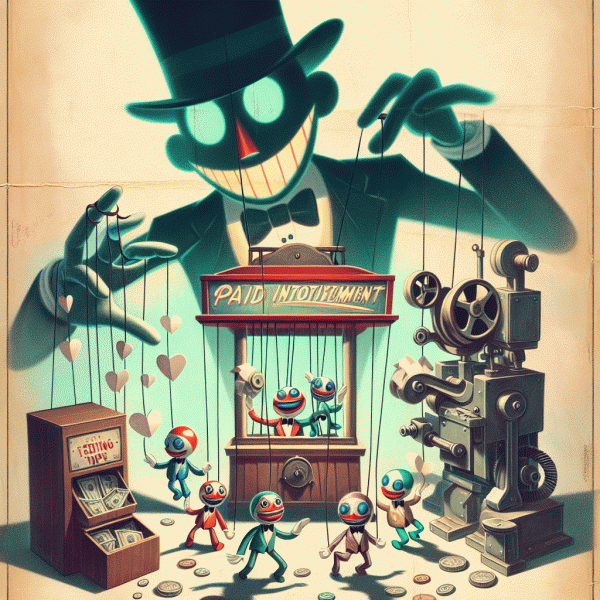
You're not looking at a groundswell of fandom so much as a well-oiled mirage. Click farms hire people to tap buttons in bulk, sometimes for pennies; botnets automate views, likes, and follows at scale; shady vendors bundle impressions, comments, and uploads into neat little packages. The goal isn't real attention but a veneer of momentum that tricks both humans and machines. Platforms reward early motion, so a paid burst can shove a post into more feeds; humans see numbers and assume value. That combination makes fake engagement dangerously effective: it buys visibility while pretending it bought popularity.
But the applause is hollow. Algorithms promote content that performs, so manufactured spikes can kickstart distribution, partnerships, and even press coverage — all based on vanity, not value. For brands and creators that chase those metrics, the fallout is often delayed and costly: poor conversion rates, wasted ad spend, reputational hits, and in some cases platform penalties for fraudulent activity. The short-term dopamine of a follower bump masks the long-term truth: if the people on your list aren't sticking, buying, or sharing, those numbers are just furniture in an empty room.
So how do you tell a rented crowd from a real one? Start with the basics: compare follower count to average engagement — if likes and comments scale nowhere near followers, that's a red flag. Look for unnatural growth patterns (huge spikes without a campaign), comment timestamps that cluster, and identical or irrelevant replies. Check audience geography against your target market and inspect profile bios for stock avatars or zero activity. Use native analytics for retention and click-through rates, ask influencers for native dashboards not screenshots, and run a small paid conversion test to see whether clicks lead to real actions. Tools and browser extensions can surface bot clusters; reverse-image search can reveal stolen avatars. These practical audits don't require a detective squad — just a methodical 30-day check and a healthy skepticism.
Finally, invest your energy where bots can't keep up. Prioritize metrics tied to business outcomes: repeat purchases, time-on-page, email sign-ups, and referral traffic. Collaborate with micro-influencers who can produce authentic UGC, reward customers for reviews, and design campaigns that encourage real responses (Q&As, behind-the-scenes, limited offers). Run A/B tests that measure downstream behavior, not just initial reach. The payoff won't be instant fireworks, but it will be sustainable: an audience that shows up, buys, and tells others. In short: skip buying applause and build something people actually want to stand up for.
The Psychology That Makes Fake Numbers Feel Real
Numbers are cheap, but their costume is convincing. A six-figure follower count or a post with thousands of likes acts like a neon sign saying "credible" even when the wiring is imaginary. That is because humans do not assess every signal from first principles; brains use fast, frugal shortcuts to decide what to trust. In a feed full of tiny decisions, a visible metric becomes a stand in for hours of investigation. The more a number appears, the more fluent it feels, and fluency breeds belief. In plain terms, repeated exposure plus a tidy statistic equals perceived legitimacy, even if the underlying audience is synthetic.
The mechanics behind this are part psychology and part interface design. Anchoring makes the first large number seen stick in memory and skew later judgments. Social proof turns any indicator of group behavior into an endorsement: if many others have engaged, the action seems safe. Authority cues like verification badges and curated lists bolster the story that "many" equals "good." Algorithms double down by promoting content that looks popular, creating feedback loops where fake popularity begets real visibility. Add the emotion of scarcity and FOMO and the combo becomes potent: numbers move brains before rationality gets a turn.
That is why fake engagement does not just look real; it often becomes real in practice. A visible audience attracts real visitors who follow the crowd, advertise platforms surface the content to more people, and organic interactions begin to pile up around a manufactured seed. This is the dark value proposition: a small injection of artificial metrics can bootstrap genuine attention and commercial outcomes. For brands and creators, that is an ethical and strategic fork in the road. For consumers, it is a fog that makes discerning authentic influence challenging without deliberate effort.
Cut through the fog with a few fast checks. Scan growth patterns for sudden spikes that lack narrative; look at like to follower ratios and whether comments feel human or templated; check timing and geography of interactions for odd clustering. Use public tools to inspect account age and activity patterns, and sample deeper by clicking profiles of commenters to see if they are real people or generic handles. Trust signals that are layered and consistent: genuine accounts show diverse content, varied engagement, and steady incremental growth. Finally, treat big numbers as prompts to ask two questions rather than as proof: why is this popular, and who benefits from that popularity?
Where Paid Engagement Backfires and How to Stay Safe
Paid engagement can look like a magic elixir: quick follower counts, apparent social proof, and the dopamine hit of rising metrics. The catch is that many of those numbers are smoke and mirrors. Platforms get smarter, customers get savvier, and the moment your audience senses inauthenticity the trust you built evaporates faster than a trending hashtag. Think of it as buying applause in a theater where half the seats are empty; at first it feels loud, and then the silence during the encore is cruel.
There are practical ways this backfire shows up and they are not subtle. Algorithms can identify botlike patterns and throttle reach; comments can read canned and invite ridicule; genuine influencers can refuse collaboration when their audience is contaminated with fakery. Even worse, engagement that is not aligned with true interest will not translate into conversions, retention, or useful customer feedback. That is why those shiny graphs can be worse than useless — they can be deceptive and costly.
Legal and reputational risks matter too. Regulators and platforms are tightening rules around disclosure and deceptive practices, and angry customers will call out inauthentic behavior publicly. A campaign that looks clever in a spreadsheet can become a public relations issue if people feel misled. The antidote is transparency: label paid promotions clearly, document deliverables, and avoid schemes that rely on misrepresenting who is interacting with your brand.
So how does one stay safe without surrendering growth? First, treat any vendor promise with healthy skepticism and test in tiny increments. Ask for verifiable case studies, insist on real-account proof, and put performance-based clauses into contracts. Monitor not just counts but quality signals: comment depth, sentiment, follow-through actions, and retention. Use third-party analytics and fraud detectors to flag suspicious spikes. Most importantly, keep a human in the loop to review samples; automation is helpful but will miss nuanced brand fit.
If the goal is sustainable traction, invest in channels that build genuine affinity: creator partnerships with aligned values, micro-incentives for authentic reviews, and community-first content that invites participation. For operational support that does not sacrifice legitimacy, consider legitimate microtask platforms where contributors complete real work for fair pay; one accessible option is tasks that pay real money, which can help scale authentic micro-interactions while keeping audit trails and payments transparent. Think of these as tools to amplify real voices rather than replace them.
In short, avoid the quick fixes that create noise without value. Set clear success criteria tied to business outcomes, enforce ethical vendor standards, and measure for quality as much as quantity. Treat paid engagement as a complement to organic community building, not a shortcut to it. With careful vetting, contract terms that protect your brand, and a focus on authentic experiences, you can get the benefits of scale without the fallout that turns short-term wins into long-term headaches.
When to Leverage It Without Selling Your Soul
Paid amplification can feel like a devil with a shiny suit: useful when the timing is right, toxic when used as a shortcut for value. The rule of thumb is not moralizing, but matching. Use paid engagement when it helps people discover genuinely useful content, when it amplifies real signals rather than manufacturing fake ones, and when you can state the relationship plainly. That means swapping tricks for guardrails: short experiments, explicit labeling, and a clear plan for what will happen after the boost fades. If the tactic erodes trust more than it generates traction, it is not worth the short term lift.
Turn the decision into an operational checklist that even a sleep deprived marketer can follow. First, ask whether the paid touchpoint complements an existing value exchange or substitutes for it. If users would happily share or pay for this content under organic conditions, paid engagement is likely a multiplier. Second, cap exposure and test small so there is room to learn without hammering your community. Third, create explicit exit signals: measure sentiment, retention, and referral behavior and stop if any of those trend negative. Execute that checklist with concrete limits: daily frequency caps, transparent labels on promoted content, and a budget slice reserved for long term brand building rather than instant vanity metrics.
- 🚀 Experiment: Run tiny, time boxed tests on a narrowly targeted cohort to validate that engagement lifts correlate with downstream value like signups or repeat visits.
- 💁 Complement: Use paid engagement to extend reach for content that already earns attention organically; never to prop up content that fails basic usefulness tests.
- 🔥 Guardrails: Set hard rules for transparency, frequency, and a kill switch tied to sentiment or retention drops and enforce them from day one.
Finally, make monitoring part of the tactic, not an afterthought. Track a handful of forward looking metrics that reveal whether the boost created genuine momentum: quality of new traffic, conversion downstream, community chatter, and churn. Pair quantitative signals with a few qualitative checks such as a quick user interview or a review of comments. If the investment moves those needles, scale slowly and document what worked. If not, fold the lesson into your content roadmap and double down on organic channels that compound without shortcuts. The best outcome is that paid engagement becomes a surgical tool in a responsible toolbox, used to accelerate things you would be proud to show your most loyal followers.
A Smarter Playbook for Real Growth in a Noisy Feed
Feeds are loud and cheap attention is cheaper: you can buy likes, clicks, even comments, but you can't buy trust. The smarter playbook starts by treating attention like currency, not a scoreboard. Instead of piling on vanity metrics, flip the question from "How many people saw this?" to "How many people did this move?" Build every piece of content to earn a next action — a save, a reply, a click, a signup — and measure the chain, not the applause. That one mindset shift separates hollow engagement from real growth.
Stop treating creative as an afterthought to distribution. Run rapid micro-tests: 3 hooks, 3 thumbnails, 3 CTAs on the same core idea and let performance tell you which creative earns the next step. Prioritize watch-time and engagement depth over raw impressions; those are the signals that indicate something worth amplifying. When a post outperforms, don't spray budget randomly — boost that winner with a narrow audience, then iterate on the creative that made it work.
Leverage human networks, not the illusion of them. Micro-partnerships with niche creators and authentic customers scale differently than paid pods because they deliver context and credibility. Invite co-creation: hand over a template, ask for a take, and seed the best user-generated versions. Use small paid boosts to seed momentum only after organic proof — think of ads as accelerants for real interest, not substitutes for it. That way your paid spend amplifies genuine signals rather than manufacturing them.
Design a lifecycle for attention. Capture a micro-commitment first (a save, a DM sticker response) and move people along a predictable journey: interest → value exchange → small ask → deeper relationship. Convert attention into value with low-friction offers — a quick checklist, an exclusive thread, an invite to a live Q&A — then use retargeting to nudge the warmed audience toward conversion. Keep score of conversion rates between steps so you can diagnose leaks: if lots of people engage but few opt-in, fix the offer; if many opt-in but few convert, fix onboarding.
Finally, institutionalize experimentation and ruthless honesty about what works. Dedicate a sliver of budget to hypothesis-driven experiments and a cadence for kills: if a variant fails to beat baseline metrics in two cycles, burn the learning and move on. Celebrate saves, forwards, DMs and conversions more than follower counts. In practice this looks like fewer purchased claps and more purposeful plays — craft better hooks, test faster, partner smarter, and turn noisy impressions into attentive customers.