Micro-What? A 60-Second Primer on Micro-Boosting
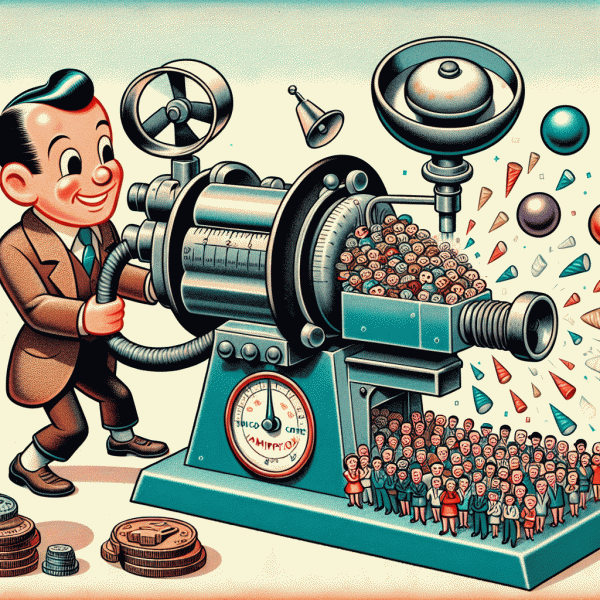
Think of micro-boosting as the tactical nudge that transforms good organic posts into small paid experiments with outsized returns. Rather than blasting a massive budget at a broad audience and hoping for a miracle, micro-boosting focuses on tiny injections of spend — imagine ten, twenty, fifty dollars — applied to specific posts, moments, or micro-audiences. The goal is not to replace organic reach but to amplify the right signal, fast. This is the advertising equivalent of seasoning to taste: a pinch here, a taste test there, and suddenly the dish is restaurant quality without the five-star budget.
Ready for a 60-second primer you can actually use? Follow this rapid checklist like a backyard chemist who has read the manual: pick a high-engagement organic post or a short video with clear intent, set a micro budget and a tight time window, and pick one crisp objective — link clicks, messaging, or conversions. Keep the audience narrow: interest slices, lookalikes from recent engagers, or custom segments of active shoppers. Run it briefly, measure a single KPI, then iterate. For clarity, here are three micro-boost archetypes to try immediately:
- 🚀 Experiment: Use a $5 to $20 boost for 24 to 72 hours to test a creative variant or caption change and watch for lift in CTR or saves.
- 🆓 Target: Spend a small amount to seed content to a hot micro-audience like cart abandoners or recent engagers and measure reengagement at scale.
- 🤖 Scale: When an experiment shows a consistent lift, duplicate that pocket of spend across 3 to 5 similar posts to confirm consistency before increasing budget.
Now the part most people skip: optimization and guardrails. Micro-boosts work best when you limit variables — do not change creative and audience at the same time. Watch frequency and creative fatigue; if a tiny boost yields strong early performance, pause after the test window and let the algorithm breathe for a full day before scaling. Pay attention to cost-per-action relative to your baseline and use short windows to reduce noise. If a micro-boost produces a small but reliable lift, you have a repeatable lever. If it produces nothing, you learned faster and cheaper than you would have by throwing money at a major campaign.
Finally, a quick playbook you can run in under an hour with whatever platform you use: pick three recent posts with above-average engagement, allocate a micro-budget of $10 each, target a 48-hour run with a single objective, and record the KPI delta. Repeat the top performer across three similar audience slices and measure consistency. That is the growth loop: tiny test, quick learn, replicate, then scale. Micro-boosting is not magic — it is disciplined cheap experimentation. Start today and watch reach compound while spend stays delightfully tiny.
The $20 Test That Saves $20,000 in Ad Waste
Think of this as guerrilla market research with a calculator. Instead of lighting a five figure budget on a mystery, place a single twenty dollar wager to reveal what is working and what is noise. In practice the test is simple: pick one clear hypothesis, create three tiny variants that probe that hypothesis, and split the twenty dollars evenly so each variant gets equal runway. The goal is not perfect statistical proof but fast directional signal that prevents you from pouring thousands into a dud. Small spend yields big learning when structured right, and that learning compounds every time you scale a validated winner.
Set up the experiment like a scientist with a marketer soul. Use three tightly focused variations and keep everything else constant so the signal is clean. Run them for a short window, for example 48 to 72 hours, long enough to collect meaningful clicks but short enough to avoid sunk cost bias. Use this quick checklist to build the test:
- 🆓 Offer: Test two different value props plus a control. One might be a free trial, one a limited discount, and one the baseline pitch. Split the budget so each offer gets about one third of the twenty dollars.
- ⚙️ Audience: Run the same creative to three narrow audience slices when you suspect fit issues. Each audience gets equal spend so you learn which micro segment reacts first.
- 🚀 Creative: Try three creative formats for the same offer and audience. For example, static image, short video, and a tightly captioned carousel. The winner becomes the seed for scaling.
Now the most important bit: how to read what comes back. Track CTR, cost per click, and cost per desired action in that short window. Look for clear gaps, not tiny wiggles: if one variant produces at least 30 percent better CPA or double the CTR relative to the others, treat that as a real signal to scale. If performance is flat, do not increase spend; instead iterate the creative or shift the audience thesis. When you decide to scale, do it with a micro boost method: increase budget by 2x and watch for metric drift for 24 to 48 hours before another step. This reduces the chance of triggering platform optimization quirks that burn money.
To wrap, here is a rapid action plan to deploy in the next hour: pick one hypothesis, create three low friction variants, split twenty dollars equally, run 48 to 72 hours, pick a winner on directional metrics, then scale gradually with 2x steps and close observation. The test is cheap, fast, and repeatable. Run it, learn, and multiply only when you have a clear winner. That tiny experiment will save the kind of ad waste that costs teams tens of thousands.
Precision Over Pressure: Targeting Smart, Not Spray-and-Pray
Think of your ad budget like a slingshot: small, precise pulls send a single stone farther than a frantic hail of pebbles. Micro-boosting is not about scattering pennies across the whole internet; it is about placing targeted, short bursts where conversion signals already exist. The trick is to push a focused message to tight cohorts for a short, measurable window so the platform amplifies what is actually working. That swap from volume to precision shrinks wasted spend and lets reach expand organically because the algorithm rewards clear winners.
Start by slicing audiences into narrow groups that really matter: recent engagers, cart abandoners who saw a pricing page, customers who spent above average, or visitors to a specific SKU. Aim for segment sizes that balance signal and scale—think thousands, not millions—so you can learn fast. Layer filters such as recency, purchase value, and page depth to craft a laser target. Then match each micro-audience with a single, tailored message that answers the exact reason they bounced or teetered. Small budgets plus repeated short boosts reveal what resonates without blowing the whole budget.
Run experiments like a disciplined lab. Choose one metric to move per test, such as click-through rate or add-to-cart rate, and set a tight time window of 24 to 72 hours for initial learning. Launch three creative variations per segment and include a small control group for baseline comparison. Cap frequency to avoid fatigue—one to three impressions per user in the test window—and do not scale winners by huge multiples overnight. Instead, increase daily spend by modest increments of 20 to 30 percent so CPA stays stable while the platform learns which combos deserve more distribution.
Measure with cohort thinking. Track conversions by micro-segment and by day of exposure, and watch how engagement ripples into lookalike pools. Use short attribution windows for fast signals and longer windows to capture revenue impact. When a micro-cohort produces a consistent lift, create a seed audience and build a lookalike at a tight similarity threshold to preserve quality. Scale additively: allocate more budget to proven segments and to geographic pockets that show stronger unit economics. Smart scaling is methodical; explosive scaling is wasteful.
Finally, make creatives feel handcrafted. Swap one line that references recent behavior, use localized imagery, or shorten the call to action into a direct nudge. Couple paid micro-boosts with tiny organic pushes—a story, an email, or a micro-influencer mention—to add social proof and extend reach. Test timing too: some micro-cohorts respond best to 9 AM nudges, others to weekend reminders. Precision over pressure means you will spend less, learn faster, and reach more people who actually convert, turning a small budget into outsized momentum.
Stack Small Wins into Big Growth: The Micro-Boosting Ladder
Think of growth as a flight of stairs you build one cheap plank at a time. Each tiny experiment is a plank: a boosted post to a narrow interest, a $5 spend on a 1000 person cold audience, a two day push for a single piece of creative. On their own these moves look modest, but when you stack them into a repeatable ladder you get reach that scales without the bloated budgets and creative churn of traditional campaigns. This is about engineering compounding momentum: small, measurable wins that inform the next tiny lift, not heroic last minute blasts that burn budget and hope.
Start with a crisp micro-playbook: Pick a seed by naming the narrowest audience that moves the needle, even if it is only a few thousand people. Test tiny by running one creative variant with a single CTA and a $5 to $15 daily cap for three to seven days. Measure a single KPI such as cost per click, cost per lead, or incremental purchases; keep the metric simple so decisions are fast. Boost winners by layering an additional small spend behind any creative that outperforms your baseline, not by immediately doubling everything. The point is to create a chain of predictable improvements you can repeat and automate.
Apply clear scaling rules so your ladder does not wobble. If a micro-test hits your target CPA or ROAS and accumulates at least 50 conversions or 5,000 engagements, clone it to a lookalike or slightly broader interest and increase spend by 20 to 40 percent every three to five days. If performance dips beyond a 30 to 50 percent degradation relative to baseline, pause and learn instead of doubling down. Use short remarketing windows from the most recent micro-steps to capture the warmest prospects, and repurpose winning creative into different formats and placements instead of inventing new concepts each cycle. Cross-pollinate by exporting top audiences and creatives into email, organic posts, or influencer briefs so one small win fuels multiple channels.
Keep the feedback loops tight. Log every micro-test into a single spreadsheet or lightweight dashboard with columns for audience, creative, daily spend, duration, and the one KPI you track. Review this log weekly and turn observed patterns into templates: a reliable winning audience segment, a creative angle that consistently beats others, and a scale sequence that preserves unit economics. The biggest secret is discipline: the ladder works because you persist with small, data driven steps instead of chasing big, noisy moves. Try one four step micro-boost sequence this week, measure, iterate, and you will find your reach expanding while your spend stays lean and surgical.
Your Week-One Playbook: Budgets, Timing, and Creative That Converts
Day one is for controlled chaos. Treat the first 48 to 72 hours like a lab: launch a handful of ultra-light boosts across different creative bones rather than pouring a single cannon of cash into one idea. Pick 4 to 8 variations that differ by a single element each — headline, first three seconds of video, thumbnail, or CTA line — so you can actually learn what moved metrics instead of guessing. The aim is to surface 1 or 2 clear winners with real engagement signals, not to chase vanity reach. Keep daily spends tiny but consistent so algorithms get enough signal to decide.
Money math that does not feel scary. Use a simple budget formula: number of variants times daily micro-bid times test days. For example, 6 variants x $4 per day x 7 days equals a week spend under $200. Start in the $3 to $6 per day range per variant on platforms that allow low bids. Favor automatic bidding if you are short on time, and cap overall spend with campaign limits. The micro-boosting edge comes from spreading small amounts across multiple tests so cost per learn remains low and you can iterate fast.
Timing and signals to watch like a hawk. Give each boost at least 48 hours for basic signals and 72 hours for conversions if volume allows. Early wins show up as elevated CTR and low CPC; set pragmatic thresholds like CTR above 1.2% and cost per click well below your maximal breakeven. After 72 hours, kill clear losers, keep ambiguous performers for another short run, and move scale budget toward top performers. Rotate placements and refresh creatives every 4 to 6 days to avoid fatigue. Schedule boosts to hit audiences when they are active in your top time zones rather than blasting constantly.
Creative rules that convert without a designer degree. Lead with an unignorable hook in the first three seconds, keep messaging single minded, and mirror the landing page so people land where the ad promised. Run one variable per ad to learn cleanly, and always test a short video against a strong static image because user attention behaves differently. Use social proof or a clear micro-commitment CTA for lower friction. By day seven, consolidate 60 to 80 percent of your remaining budget into the winners, put the rest into a fast new test batch, and repeat. Tiny bets, smart signals, and ruthless pruning are how reach explodes while spend shrinks.