Zero-Click Wins: Turn Impressions into Income Without a Landing Page
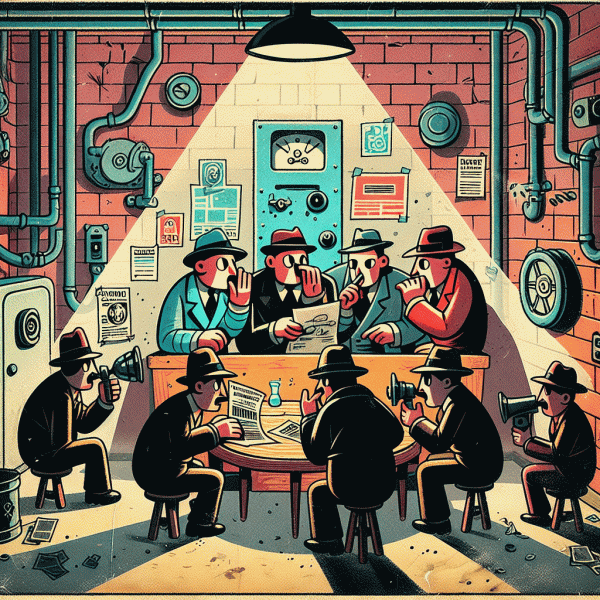
Think of the feed as a tiny storefront that opens and closes in milliseconds. The goal is not to drag people out of the platform and onto a landing page; the goal is to make the platform itself do the heavy lifting. That means designing creative that pre-sells in 3 seconds, packaging offers that look irresistible without explanation, and wiring up the platform tools that let people pay, reserve, or message without ever leaving the app. The result: impressions that become cash registers instead of just vanity metrics.
Start with the native commerce features each platform provides and use them like a scalpel, not a hammer. Tag products in posts and Stories, enable in-app checkout or shop tabs, add buy stickers to short videos, and host a quick live where viewers can tap to buy. If the platform supports saved payment methods such as Apple Pay or Google Pay, make that the default path to reduce friction. Design creative that calls out price, scarcity, and benefit in the first frame so a thumb scroll turns into a tap, and a tap turns into a purchase before attention wanders.
Measurement without a landing page requires creative engineering. Assign unique promo codes or SKUs to each creative or channel and treat those codes as your conversion pixels. Push order-level data into a simple spreadsheet or BI tool so creative-to-revenue mapping is crystal clear. Where available, wire up platform webhooks and server-side events to capture purchases and attribute them back to the creative ID. Rely on first party signals from the platform analytics as a sanity check, but use coupon and SKU tracking as your ground truth because they are direct, auditable, and resilient to privacy changes.
Build microfunnels that live inside the app. Comment-to-buy flows, DM automation, and prefilled chat links are powerful because they convert curiosity into action without a website. A good DM template could be as simple as Hi, I saw the red beanie in your post — I want one. Size M. Ship to 90210. Use code RED10. Automate the reply to include a secure payment link or a checkout widget hosted by the platform. Use chatbots to collect shipping, upsell a warranty, and send a payment reminder. Each interaction that removes typing or extra steps multiplies your conversion rate.
Finally, treat zero-click tactics like experiments with fast feedback loops. Test creative hooks, price points, and CTAs in short bursts, double down on winners, and clone them into lookalike audiences. Track revenue per impression using the coupon and SKU system and set bids based on real economic returns, not guesses. This approach keeps everything nimble: run fewer tests, learn faster, and scale the plays that actually turn views into income without ever needing a landing page.
Pixel-Less Pursuit: Tracking That Works Even When Cookies Crumble
Pixels are fun until they stop working, like a nightclub that locks the door at midnight. The good news is that tracking does not need to die with the cookie. Think of this moment as a creative compression exercise: squeeze more signal from fewer signals, move logic behind the scenes, and treat privacy rules as constraints that breed smarter measurement. This is where scrappy performance marketers gain an edge over the polished playbooks on social feeds.
Start by building a toolkit that respects user privacy while still surfacing action. Replace brittle pixel reliance with three foundational moves:
- 🚀 First-party: Collect owned data at touch points like forms, loyalty, and app logins and enrich it with clear consent so you can segment and activate without third party cookies.
- 🤖 Server-side: Send conversion events from your servers or a cloud function to ad platforms and analytics tools to reduce client side loss and prevent ad blockers from eating signals.
- ⚙️ Cohorts: Shift from individual targeting to aggregated groups where privacy preserving measurement works best; use cohort IDs for optimisation and reporting.
Take pragmatic measurement steps that map to revenue. Implement conversion APIs to push verified events directly to demand platforms, and centralize a cleaned first party data layer that normalizes identifiers (hashed emails, user ids). Use deterministic matching only when users consent, and fall back to probabilistic or cohort methods for broader trends. Deploy a privacy aware attribution window, align your reporting cadence with server side events, and use clean rooms when you need partnership level match capabilities without sharing raw PII. Also instrument quality signals like viewability, time on site, and micro conversions so models have durable predictors when cookie level granularity vanishes.
Here is an action checklist to move from theory to returns: map every conversion touch to either a first party capture or a server event, run a pilot sending purchase events via conversion API for one high volume campaign, validate match rates against your CRM, build a cohort based audience for one test and compare CPA versus previous pixel based targeting, and document privacy and consent flow for audits. Expect initial wobble; treat the first 30 days as calibration not failure. The upside is cleaner data and fewer surprises from browsers or regulators.
Bottom line: the cookie collapse is not an apocalypse, it is an invitation to be clever. Swap brittle tracking for resilient systems, prioritize owned signals, and run quick experiments that pair server side reliability with cohort level smarts. Do that and you will keep performance sharp while most of the feed continues to recycle the same old advice.
Budget Sleight-of-Hand: $5 Tests That Unmask $50K Channels
Think of $5 as your reconnaissance mission: tiny spend, big intent. Instead of launching a full-scale war across channels, run micro-missions that expose whether a platform even has an audience worth courting. The trick isn't grand strategy, it's tiny, repeatable experiments that ferret out signal from noise—fast creative swaps, single-audience probes, and one KPI that matters for your funnel stage. These are cheap, brutal honesty checks: they tell you which channels will scale and which will nickel-and-dime you into oblivion.
Here's a five-dollar play you can run tonight. Create one ultra-simple creative (single image or 10s video), one very specific audience (e.g., “owners of X in City Y” or “people who visited pricing page last 14 days”), and one razor-focused CTA (book demo, claim coupon). Spend $5 across 24–48 hours. Track CTR, cost per landing-page view, and a micro-conversion (email capture or button click). If CTR < 0.5% or landing < 10 views, kill it. If CTR > 1.2% and micro-conversions are decent, clone the test with a small variant (copy or audience) and run another $5. This is how you map the rough contours of a $50K channel without the budget shock.
- 🆓 Hypothesis: Test one clear assumption per $5 spend — e.g., “This creative will resonate with this niche.”
- 🚀 Probe: Use one creative + one micro-audience only, measure immediate engagement and micro-conversions.
- 🔥 Signal: If both CTR and micro-conversion rate beat your baseline thresholds, promote that combo into a $50–100 test.
Don't treat each $5 like a click-chaser; treat it like data collection. Log results in a simple sheet: creative, audience, CTR, micro-conversions, cost per micro-conversion, notes on time-of-day. Look for repeatable wins (the same creative or audience winning 2/3 times). When you see consistent signal, scale incrementally: move to $25 tests across three identical ad sets, then $100, watching that cost per micro-conversion doesn't drift up by more than ~20% per step. If the CPA balloons, pause and analyze—usually it's audience exhaustion, creative mismatch, or a tracking issue, not the channel itself.
Two quick cautionary pro tips: first, keep creatives brutally simple for these probes so you measure channel & audience fit, not production value. Second, always include a negative control (a wildly off-target audience or a deliberately poor creative) to calibrate your expectations. In practice you'll run dozens of $5 probes in parallel across different placements and times; the winners will reveal themselves like footprints in wet cement. The payoff? Instead of blowing $50K blind, you'll allocate that budget confidently to a handful of repeatable combos that already proved they convert.
Unscalable on Purpose: Micro-Experiments That Blow Up ROAS
Think of micro experiments as contraband for the cautious marketer: tiny, slightly messy, and devastatingly effective when timed right. The point is not elegance or repeatable automation at first contact. The point is to discover one small lever that moves ROAS by double digits, then turn that lever into a refined play. Start with a single, surgical hypothesis, pick a micro audience that magnifies signal over noise, and accept that human intervention will be part of the test. When you treat experimentation like a weekend garage project instead of an enterprise initiative, ideas move faster and ego gets out of the way.
Design tests so they are cheap and decisive. Use a single KPI, run no more than two creative variants, and limit the window to a few days or a clear sample size. Consider manual treatments that are technically unscalable but informative: handcrafted ad copy for a niche persona, bespoke landing page permutations, or a human follow up to a segment that normally only sees automated messages. These tactics reveal behavioral friction that automation hides. If you need extra hands to execute fast, recruit short term help from a freelance task marketplace and keep the work lean and focused.
Examples that actually move the needle often look ridiculous on paper. Swap an image from product glamour to user reality and watch CTR climb. Replace generic headlines with hyper specific problem statements from user research and see conversion lift. Test adding a single social proof element that mentions time or place. Try manual bid adjustments for a handful of high intent queries instead of neat automated rules. Each of these is simple to deploy, but only in a micro experiment do you learn whether the insight generalizes. Treat each win as a hypothesis to be stress tested, not gospel to be rolled out without scrutiny.
When a micro experiment wins, do not reflexively scale. Pause, audit the data, and check for leaks. Confirm the effect over a fresh audience slice and extend the test duration just enough to rule out noise. Then automate the repeatable wiring while keeping the original manual version as a lab for further tweaks. Use strict stop rules so you do not bake false positives into core strategy. Above all, build a culture that rewards fast failure and celebrates tiny, repeatable wins. That is how underground plays become standard operating procedure without killing ROAS in the process.
Dark Social, Bright Revenue: Mining DMs and Group Chats for Conversions
Think of DMs and group chats as the speakeasies of modern marketing: low profile, high trust, and full of people who actually listen. When a recommendation lands in a private thread it often carries more weight than a polished ad or a public post. That means revenue lives in places most performance teams treat like ghosts. The trick is not to spam those spaces but to become useful in them, to design tiny, human-first entry points that feel like a friendly nudge rather than an interruption.
Start with micro assets built for conversation. Short explainer images, a one-line benefit, and a single-action link or code fit neatly into a DM and remove friction. Use unique promo codes, vanity links, or one-click landing pages to attribute conversions that otherwise vanish into dark social. Train a two-step play: first a discovery message that provides value, then a permission-based follow up that asks to take the conversation private. Create templates for these steps so ambassadors and sales reps can copy human-sounding language instead of composing from scratch.
Listen before you pitch. Run rapid audits of the channels where your customers spend time, and then experiment with three focused tactics:
- 💬 Listening: Monitor common questions and objections in chats to shape micro content that answers pain points in one sentence.
- 🚀 Hook: Craft a one-liner plus a tiny asset (image, 8-second video, or single FAQ link) that makes sharing effortless.
- 👥 Follow-up: Use a short, permission-based follow up that offers help and a unique code; track redemption as the conversion signal.
Measurement will not look like classic last-click. Expect to stitch together signals: discount redemptions, bespoke landing page visits, cohort lift in referral channels, and qualitative feedback from chat threads. Use conversational CRM tags and simple dashboards that show which templates and channels generate the most replies, then iterate. Keep ethics front and center: never scrape private messages, always disclosure when required, and avoid broadcast messaging that feels like spam. Small-batch pilots win here: test three variations, double down on what sparks genuine back-and-forth, then scale with clear playbooks and training.
Quick starter template to steal and personalize: Hey — noticed you mentioned X. I helped a few people fix that by doing Y in 5 minutes. Want the quick resource? I will drop a link with a tiny code if you want it. It is short, useful, and asks permission. That kind of humility converts better than hype. Keep it human, track it creatively, and treat dark social as a revenue channel that demands craftsmanship more than ad spend.