Ghost Audiences: Target the Fans Behind Your Fans
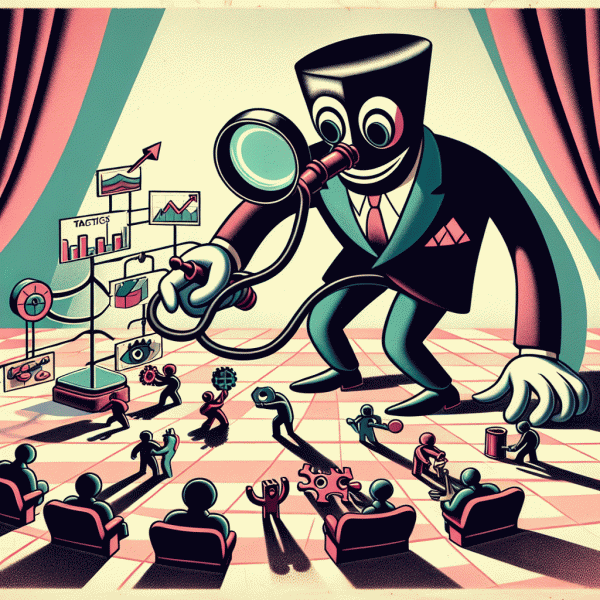
Think of your highest-value fans as the cast of a cult hit. They comment, share, defend, and quietly lead others to your corner of LinkedIn — the people who listen to those fans are the real gold: warmer, shorter path to conversion, and often invisible because the platform exposes broad targeting controls. These hidden clusters form around engagement behaviors rather than job title spreadsheets. When you move from targeting planets to targeting orbits, you trade volume for signal and gain a much cleaner path to meaningful actions. The payoff is lower wasted spend and higher conversion velocity if you are willing to stoop down from mass targeting and do some audience archaeology.
Turn that intuition into a repeatable workflow. First, create a seed list by collecting top commenters, frequent sharers, and repeat engagers from organic posts and thought threads; capture public profile links, role, company, and any topical notes into a CRM or spreadsheet. Second, convert seeds into audiences: upload a hashed CSV to LinkedIn Matched Audiences, build engagement retargeting segments via the Insight Tag for anyone who liked, commented, or visited high value content pages, and maintain a website retargeting bucket for content readers who spent meaningful time. Third, approximate when direct lists are thin by targeting company followers with audience expansion, focusing on shared hashtags and niche groups to mirror fan clusters. Finally, partner with micro-influencers or brand advocates for co-created posts that surface their engaged community into your measurable funnel.
Keep the tactical playbook compact and pragmatic, then iterate fast. Try these three quick experiments in parallel and treat them like scientific trials:
- 👥 Affinity: Build an audience of people who engage with posts that use your core hashtag or appear in the same niche groups; this finds people already orbiting your fans.
- 🚀 Trigger: Create an engagement retargeting ad that only serves to users who commented in the last 30 days; test a high relevance offer and measure uplift against a cold cohort.
- 🔥 Leverage: Upload a small, high quality list of engaged emails or account names as a matched audience to seed lookalikes or prospecting campaigns; treat that list as premium training data.
Measure like you mean it. Track engagement to conversion rate, cost per lead, and time to first meaningful action, and then compare those to baseline prospecting campaigns. Use creative that signals in-group status: a short clip referencing a recurring comment thread, a headline that uses an industry shorthand only fans use, or social proof featuring a known advocate. Exclude existing customers so you are testing net new potential. Run micro-campaigns for a minimum of two week windows, then scale winning combinations of audience plus creative. Ghost audiences will not deliver raw reach, but they will deliver efficient, predictable outcomes if you are disciplined about seeding, measuring, and iterating.
Creative Bait and Switch: The Decoy Ad That Trains Your Winners
Think of this as a lab trick: you create a deliberately bland, low-cost ad that attracts curious clicks and cheap conversions, not because it's your forever winner, but because it teaches the algorithm what a desirable action looks like. The decoy is a lean signal generator—simple creative, a friction-light offer, and a single conversion event you can measure. While that ad underperforms on long-term KPIs, it hordes engagement data that your true creatives can learn from. The payoff is subtle: the platform starts to understand which audiences and contexts react to your message mechanics, and when you swap in the higher-value creative, the system already knows where to find likely converters.
Set it up like a scientist. Build two creative families that look related: same color palette, similar headline rhythm, but different value propositions. Launch your decoy with 10–25% of the test budget and route conversions to the same optimization event you plan to use for winners (add-to-cart, demo sign-up, etc.). Keep targeting intentionally broad so the algorithm can explore, and use a short learning window (7–10 days) to collect diverse signals fast. Track CTR, conversion rate, and cost per event hourly at first, then daily; the decoy isn't judged on ROAS, it's judged on the quality and variety of engagement it produces.
When a winner starts to emerge, don't yank the decoy abruptly—use a staged handoff. Gradually shift budget from the decoy to the higher-value creative over several days while keeping creative structure consistent so the learned audience remains valid. Use retargeting lists seeded from decoy engagers to create higher-intent pockets, and consider a sequenced flow where decoy clickers see the premium creative next. If you're scaling, increase budgets in 20–30% increments per day and monitor CPA lift closely; if CPA balloons, pause and reintroduce a low-variation decoy to re-seed the learning. The trick is maintaining signal continuity: the more the algorithm sees similar behaviors across creatives, the faster it optimizes.
There are guardrails worth respecting. Never design the decoy to be intentionally deceptive in a way that violates platform rules or user trust—clarity keeps you out of policy trouble and preserves brand reputation. Run the approach on small budgets first, name experiments clearly so you can trace signal sources, and always include a control group that never saw the decoy to measure true incremental lift. Think of the decoy as training wheels: useful for teaching the system, removable once winners can balance on their own. Experiment with it enough and you'll turn what looks like wasted spend into a predictable path for scaling your actual winners.
Budget Waterfall: Drip Pennies, Flood Profits
If you treat a LinkedIn budget like a single firehose you will drown in waste. The smarter play is to trickle cash into many tiny pipes, watch which ones leak traction, and then join those pipes into a river of revenue. Start with micro tests that cost a handful of dollars per day and run them long enough to see a pattern. The platform gives you reach, but not mercy — you need to shepherd impressions into intent with surgical allocation rather than spray and pray. This is not theory; it is a repeatable operating model that turns expensive CPMs into predictable unit economics.
Run a three tier experiment. First, deploy 4 to 6 discovery pockets at $5–$15/day each, using broad but relevant targeting and a single hypothesis per pocket (audience type, creative angle, or CTA). Run for 5 to 7 days and grade by early KPI thresholds like CTR and lead rate, not vanity metrics. Promote the top 20 percent of pockets to a mid funnel where budgets jump to $30–$100/day and you layer in intent signals such as page viewers or form interactors. Finally, concentrate on those who engaged with a focused retargeting pool and use a higher bid posture for conversion events. As a rule of thumb, move only combinations that beat your CPA target or show a sustained uplift in conversion rate across multiple creatives.
Creative cadence matters as much as budget math. Treat creative like a conversion engine that needs parts swapped regularly: test three headlines, two visuals, and two CTAs per discovery pocket to generate meaningful variation, then retire losers after a week. Use sequential messaging once users show interest — soft value content, then a case study, then a direct convert ask — and cap frequency so you do not fatigue a small professional audience. Reserve about 20 percent of total spend for hypothesis tests and creative refreshes so you keep a pipeline of fresh winners while you scale evergreen winners. Finally, instrument everything with clean UTM tagging, consistent conversion windows, and audience exclusions so money does not chase the same people twice.
Here is a one week playbook to get started: create three discovery sets at $10/day and run for seven days, promote the two best performing sets to mid funnel at $50/day each, and set aside 25 percent of total spend for retargeting and experiments. If a mid funnel set sustains target CPA or better, scale it by 2x to 5x every 48 to 72 hours while monitoring conversion efficiency. This budget waterfall will feel conservative at first, but it forces discipline. The result is simple: less noise, fewer wasted impressions, and faster identification of the segments and creatives that actually drive profitable conversion on the platform.
Search-to-Social Piggybacking: Ride Competitor Intent for Cheap
Don't overpay for intent you can borrow. Instead of fighting for attention inside expensive social auctions, catch people while they're actively searching for competitors, then shepherd them back into LinkedIn when they're primed to convert. The basic math is charmingly simple: search CPCs for competitor terms are often much cheaper than LinkedIn CPMs, and a tiny, well-timed retargeting pool on LinkedIn can turn that scraped intent into high-value meetings.
Here's the tactical trifecta that makes the system hum:
- 🚀 Targeting: Bid on competitor + solution keywords in search to capture in-market traffic; send those clicks to a resource page that drops a pixel or cookie.
- 🆓 Creative: Serve contrast-led content — comparison sheets, teardown videos, or neutral checklists — so you earn attention without aggressive brand bashing.
- 🤖 Offer: Use a low-friction lead magnet (short demo, ROI calculator, template) to convert visitors into a LinkedIn-matched audience for precision retargeting.
How to run it, step-by-step: 1) Create search campaigns targeting competitor plus intent modifiers ('best', 'vs', 'pricing', 'review'). 2) Route traffic to a landing experience optimized for cookied retargeting and fast micro-conversions (email, calendar micro-form, or asset download). 3) Fire UTM parameters and a tracking pixel/server event so you can upload a clean audience into LinkedIn Matched Audiences or build lookalikes. 4) On LinkedIn, flip the script with Sponsored Content and InMail tailored to the context they just searched — reference the guide they downloaded, invite them to a product tour, or promote a timed demo slot. Small list, high relevance, lower bid competition = cheaper high-intent conversions.
Measure like a mercenary: monitor cost per captured intent (search CPC ÷ conversion rate into your retarget pool), then track LinkedIn CPL from that pool to actual MQL/SQL. If CAC creeps up, tighten the funnel: shorten the path to a micro-conversion, add exclusion windows so you don't re-chase converted leads, and A/B headlines that echo the original search query. Run a 2–3 week pilot with limited budget and a single competitor keyword cluster — you'll often see conversion velocity and quality beat direct LinkedIn prospecting within days.
Signal Stacking: Blend First Party Data With High Velocity Micro Conversions
If conversion pixels were citrus, micro-conversions would be the zesty squeeze that wakes up your campaign. Layering high-velocity micro-conversions on top of solid first‑party data creates a signal stack that tells LinkedIn more about who is actually warming up to your offering — long before they hit the dreaded purchase event. Think page scrolls, video completes, content downloads, demo clicks and form starts as tasty little nudges. Individually they are lightweight; together they become a persistent hum of intent that algorithms love to optimize toward. The trick is to make those nudges visible, reliable and valuable so automated bidding and creative testing stop guessing and start compounding.
Start practical: map the micro‑conversion ladder you can measure in hours or days, not weeks. Instrument clean, privacy-conscious events in your tag manager or server-side endpoint and make sure they feed into LinkedIn via the conversion API or partner integrations. Assign simple numeric weights to events so a video complete is worth less than a demo request but more than a page view, and prioritize sending the higher-frequency signals first. Use consistent naming conventions and UTMs so you can stitch sessions to users without fighting a data swamp. Once events stream in, set up prioritized goals inside your campaigns so the platform can learn from the frequent signals while still valuing macro outcomes.
On the LinkedIn side, translate your stack into audiences and bids. Build audiences from recent micro-converters for velocity — create a 7–14 day segment of “video completers + article readers” and pair it with a lookalike styled on your best customers. Use value-weighted conversion objectives where possible, or run parallel campaigns: one optimized for high-velocity signals to feed feeds and another for conversions to close deals. Rotate creatives quickly and A/B the calls-to-action tied to specific micro-conversions: if a 75% video completion tends to precede demo requests, test CTAs that push that next step. Beware of signal dilution: if you flood the system with noisy, irrelevant micro-events, the algorithm will learn poorly. Keep the stack focused and meaningful.
Finally, measure what matters and iterate like a lab scientist. Monitor conversion lag, signal density, and the proportion of micro to macro events; when macro conversion rates rise after promoting certain micro-events, you know your stack works. If models show gaps because of privacy or attribution limits, lean into modeled conversions and cohort-level lifts rather than brittle user-level claims. Make a habit: weekly signal audits, monthly weight adjustments, and a quarterly review to fold new event types in or retire stale ones. Do this and you turn a handful of small interactions into a high-velocity orchestra that helps LinkedIn's algorithms find buyers faster — without sacrificing control, creativity or privacy.