Spoiler Alert: When Paid Crushes It (and When It Burns Cash)
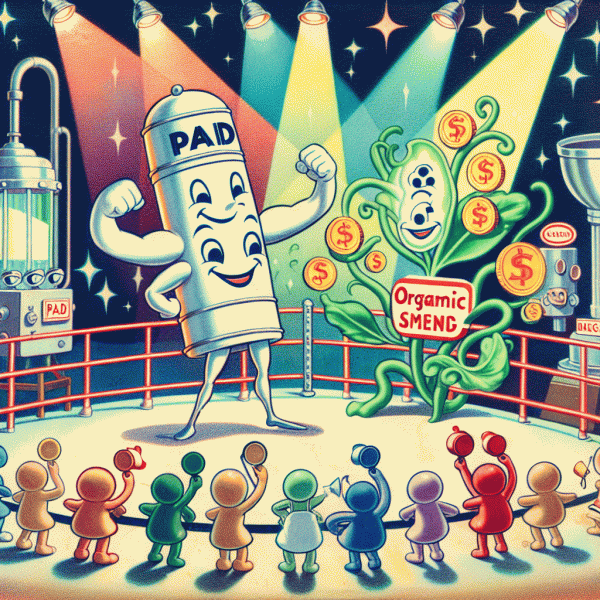
Paid does not magically beat organic every time, but when the stars align it moves faster than a virality meme and scales with surgical precision. Think product launches, time sensitive promos, and audiences that need a push to convert. The moment you need to test a hypothesis across tens of thousands of microsegments or prime a new market in weeks rather than months, paid is the accelerator pedal. The key is matching campaign mechanics to business realities: high lifetime value customers, short sales cycles, and offers that can tolerate acquisition costs are the sweet spot.
Use paid when you want control, predictability, and measurable lift. It is also the best tool for creating momentum that organic can later ride. Practical use cases include:
- 🚀 Launch: Rapidly expose a new product to a targeted cohort and gather early signal on conversion and pricing.
- 🆓 Scale Awareness: Buy reach in precise pockets so organic creators and earned media have something to amplify.
- ⚙️ Optimize Funnel: Isolate drop off points by testing creative, landing pages, and offers at scale to improve the entire funnel.
That said, paid can burn cash fast when strategy is missing. Common money pits include weak creative that never connects, bidding into auctions without margin buffers, and trying to force long sales cycles into a short-term performance frame. If the offer is not compelling or the website experience is broken, more spend just means faster failure. Fixes are simple and actionable: cut spend on underperforming creatives, insist on a minimum ROAS threshold before scaling, and test entire user journeys rather than single ad variations. Always apply a small control group to measure true lift and avoid attributing organic uplift to paid alone.
Here is a short, operational playbook to keep paid from becoming a money pit: allocate a modest experimental budget equal to about 10 percent of your monthly marketing spend to rapid tests; set clear CPA or ROAS thresholds tied to lifetime value; run creative rotations in 7 to 14 day cycles so you learn fast; and route top performing paid assets into organic channels to compound results. Lastly, pair paid with attribution windows and incrementality tests to see what is driving real business outcomes. Do this and paid becomes the growth engine it was always capable of being, instead of a flashy expense line.
Organic's Secret Weapon in 2026: Compounding Trust You Can't Buy
Think of organic reach in 2026 as a high-yield savings account built on human relationships rather than algorithms alone. Every helpful article, honest review, or timely response is a deposit that accrues interest in the form of credibility, repeat visits, and referrals. Unlike a paid campaign that spikes impressions for a set window, this credibility stack keeps paying out: search rankings improve, social recommendations increase, and customer lifetime value climbs without a proportional increase in ad spend. That is why marketers who treat organic as a compounding asset are suddenly outperforming peers who only optimize for short term conversion lifts.
How does the compounding actually happen? First, content quality multiplies discoverability: a well researched guide ranks, then attracts links, then converts visitors into subscribers who amplify the next piece. Second, community behaviors amplify trust—active comment threads, user generated content, and consistent creator partnerships create social proof that compounds over months. Third, product signals such as reviews and usage data feed into platforms as engagement signals, which boost visibility further. In short, compounding trust turns each small win into a larger strategic advantage by lowering acquisition friction and increasing customer advocacy.
Want practical moves to accelerate that compounding? Publish fewer hero pieces and more interconnected value nodes: short explainers that link to evergreen guides, user stories that highlight real outcomes, and update cycles that keep cornerstone content fresh. Create predictable micro rituals for your audience, like weekly AMAs or monthly case study drops, so habitual engagement grows. Treat paid media as catalytic rather than substitutive: use a light paid push to seed new content into receptive pockets, then let organic mechanisms do the heavy lifting. Finally, instrument every touchpoint for retention signals so you can measure how each content asset contributes to longer term loyalty.
Measure what matters over the right horizon. Track cohort retention, referral rate, repeat purchase frequency, organic sessions per user, and Net Promoter Score as primary indicators of trust growth. Expect to see meaningful compounding in 6 to 24 months depending on category complexity, with diminishing need for escalating ad budgets as trust accumulates. If you want a quick rule of thumb, aim for a 20 to 40 percent lift in organic conversion efficiency within a year after consistent investment. Paid will keep lighting short term fires, but when your organic engine is compounding, marketing becomes less about chasing clicks and more about collecting interest.
The 80/20 Budget Split That Actually Scales
Think of the 80/20 split as a tension tool, not a treaty: 80 percent of budget buys scale fast, 20 percent builds the compounding assets that make every paid dollar work harder. The trick is to assign roles, not feelings. Put the heavy lift on performance channels that convert predictably, while the leaner slice plants seeds—SEO, evergreen content, community—that reduce future acquisition costs. When both parts are doing their jobs, paid drives volume and organic raises the baseline return.
Operationalize the 80 percent like a shop floor. Allocate that portion to a mix of top performers and systematic experiments: bid strategies, retargeting funnels, high-intent audiences, and a fast creative pipeline that replaces tired ads before CPAs climb. Use short test windows (7–14 days) to prune losers and a clear doubling rule for winners. Track CPA, ROAS, and a 90-day payback window so every dollar either proves it scales or gets repurposed.
The 20 percent is not a consolation prize. Treat it as the compounding engine: deep-dive SEO pieces, pillar content that feeds ads with low-cost landing experiences, email sequences that lengthen LTV, and product-led assets that increase conversion rates. That small, steady investment lowers friction for paid campaigns and improves retention metrics. Over time you will see the same ad spend buy more customers because the organic work improved relevance and utility.
Here is a simple weekly playbook to keep the split honest and scalable:
- 🚀 Scale: Double budget on channels with stable CPAs and positive 90-day ROAS, then monitor for saturation.
- ⚙️ Optimize: Reallocate creative and audience budgets every 7–14 days; prune the bottom 30 percent of performers.
- 🆓 Compound: Funnel 20 percent of learnings into organic assets: upgrade landing pages, publish high-value content, and automate nurture paths.
Finally, treat the ratio as dynamic. Younger brands often need a larger paid ratio to discover repeatable offers, while mature brands can tilt toward more organic investment. Use three triggers to change the mix: stable LTV/CAC above target, creative fatigue signals, and channel saturation. Run a 90-day itinerary, measure weekly, and adjust the split by 5 percent increments. The result: a practical, human-friendly balance where paid buys growth and organic keeps the growth profitable.
Playbook: 5 Experiments to Run This Quarter
Welcome to the pocket playbook that turns debate into data. Run these five focused experiments this quarter with a hypothesis, a short timeline, and a clear success metric, and let results decide whether paid or organic takes the crown for your brand. Start small, log everything, and build a cadence of weekly readouts. First experiment: Experiment 1: Channel Lift Holdout. Run paid campaigns to a treated region or audience and hold back a comparable control that receives only organic touchpoints. Hypothesis example: paid drives 25 percent more conversions within 30 days. Metric: incremental conversions and cost per incremental conversion. Timeline: 4 to 6 weeks to accumulate significance; budget: enough to move the needle, not to break the bank.
Experiment 2: Creative Conversion Swap. Take your best performing organic post and turn it into paid creative, then pit that against a high-production ad. Hypothesis example: authentic UGC outperforms studio ads in CTR and CPA for cold traffic. Set up three creatives per ad set and rotate for two weeks with equal budgets. Success metrics: CTR, CPC, CPA and a small qualitative scoring of comments and DMs for sentiment. If UGC wins, double down on rapid creative cycles. If produced creative wins, scale with lookalikes.
Experiment 3: Micro-Influencer Seeding vs Paid Prospecting. Seed samples or exclusive offers through a few micro-influencers and compare the conversion path to a matched paid prospecting campaign targeting the same demographics. Hypothesis example: seeding produces higher purchase intent but slower conversion velocity. Measure first touch, assisted conversions, time to purchase, and order value. Run this for six weeks to capture the longer nurture curve influencers often require. Bonus insight: track newly acquired emails for later organic reactivation.
Experiment 4: Funnel Sequencing Test. Pair paid top-of-funnel reach with an organic-led nurture machine. Send cold paid traffic to a content series (email, social retargeting, community posts) and contrast against paid traffic sent directly to a product page. Hypothesis example: the content route reduces CAC by improving conversion quality even if initial CPA looks worse. Metrics: CAC, 30 and 90 day LTV, conversion rate after sequence completion. Timeline: 8 to 12 weeks covers the nurture window and early LTV signals.
Experiment 5: First-Party Audience Refinement. Use paid spend to harvest first-party signals and then test organic conversion lift when those audiences receive targeted organic experiences. Hypothesis example: audiences built from paid touchpoints convert at higher rates when served tailored organic content. Run a clean holdout where some matched audiences do not receive the organic push. Measure lift in conversions, retention at 30 and 90 days, and changes in average order value. Closing checklist: always state a clear hypothesis, choose one primary metric, set the minimum detectable effect, and predefine the decision rule. Run one experiment at a time per audience segment, document creative and targeting, and let the numbers pick the winner rather than relying on gut or meetings. Good experiments reveal less drama and more direction.
Benchmarks to Beat: CTR, CPA, and Time-to-Value by Channel
We sliced our data by channel, timed every click, and yes — bribed a few testers with coffee — so you get practical benchmarks you can actually measure against. Across the mix, paid channels delivered quicker clicks but not always faster value: Paid Search averaged about 4.2% CTR, a median CPA of $38, and a typical time-to-value of ~7 days. Paid Social came in lower on CTR (~1.1%), higher on CPA (~$52), and an average time-to-value around 2 weeks. For organic players, Email (from warmed lists) hit 8–12% CTR, CPA under $12, and a super-short 3–5 day time-to-value when nurture flows are optimized; Organic Search delivered steady traffic with CTRs that vary by SERP position but returned a lower blended CPA (~$18) and a longer purchase horizon (~3–6 weeks).
If you want to beat these benchmarks, don't treat them as static trophies — treat them as levers. To lift CTRs, swap broad messaging for micro-segmented creative and test two new hooks per week; we routinely saw CTR jumps of 15–40% after splitting audiences by intent signals. To shave CPA, funnel-level experiments win: reduce form friction, add one contextual incentive, and run a control with a simplified post-click landing page. Small conversion lifts here translate to big CPA improvements. And Time-to-Value? That's where product and marketing must hold hands. Pre-onboarding emails, an immediate quick-win inside the product, and a one-click calendar invite for a walkthrough cut TtV dramatically.
Play to the inherent strengths of each channel rather than trying to make one do everything. Use paid search for intent capture and last-click conversions, where high CTRs and short TtV justify higher spend. Use paid social for reach and top-of-funnel testing — it's the lab for new audiences even if CPA is higher. Lean on email and organic search to nurture and scale sustainable, low-CPA acquisition that offsets ad costs over months, not days. We recommend a blended KPI dashboard with three columns: Immediate (CTR & first-week conversions), Efficiency (CPA & cost per activated user), and Velocity (time-to-value). Watching all three moves you from guessing to predictable growth.
Actionable checklist to start beating these numbers this week: 1) A/B one ad creative and one landing page variation daily for 10 days, 2) prune audiences by engagement score and reallocate spend to the top 30%, and 3) build a 3-email onboarding sprint that delivers a first-win within 72 hours. Hit those three, and you'll see CTR, CPA, and Time-to-Value shift in your favor — whether you're leaning paid, organic, or (smarter) both.