Follow the Money: What $1 in Ads Buys You vs 1 Hour of SEO
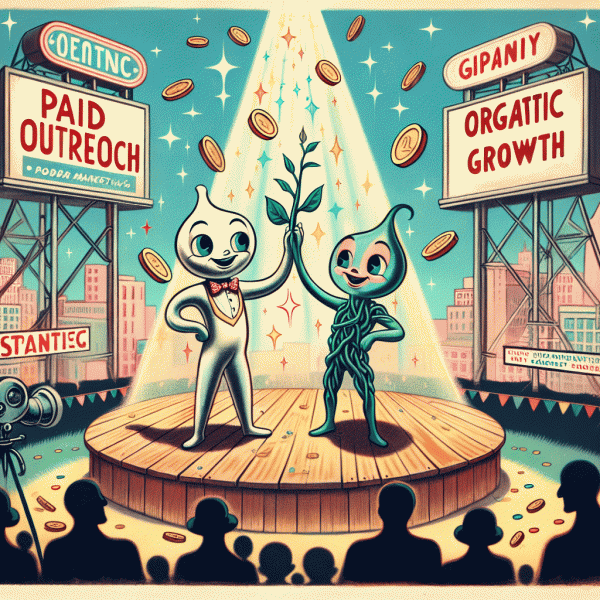
One dollar in paid ads buys a piece of right-now attention: an immediate impression, a click, maybe a microconversion. One hour of SEO buys structural advantage: better titles, a refreshed meta, a new internal link, or a short piece of content that can compound for months. Think of the ad as an espresso shot and the SEO hour as planting a coffee tree. The espresso wakes someone up immediately; the tree pays out for years. In practice that means paid channels will deliver clearer short term metrics (CPC, CTR, CPA) while an hour of focused organic work changes the baseline metrics that determine long term cost per acquisition.
When you translate those differences into business outcomes, the choice is never pure money versus time. It is about velocity, scale, and durability. Quick mental model:
- 🆓 Immediate: Paid ads convert attention into clicks instantly, useful for testing headlines, offers, and creative.
- 🐢 Compound: SEO work grows visibility slowly but keep producing traffic with near zero marginal cost once content gains traction.
- 🚀 Playbook: Combine both: use a dollar to accelerate validation, use an hour to lock in the wins for the long term.
Here is a short, actionable experiment you can run in a week with one dollar and one hour. Use the dollar to run a tiny creative test: one headline, one image, one CTA on a low cost placement to validate demand. Track CTR and cost per click. Then spend your hour on the one SEO move that maximizes leverage for that validated idea: rewrite a title tag and H1, add two internal links, and drop a 300 word explainer that targets the same keyword. Measure outcomes across a 30 day window and compare incremental conversions vs ad spend. If the ad test showed viability, reinvest more budget while the SEO asset accrues organic impressions. If the ad test failed, kill the idea fast and move on with minimal waste. The metric set to watch: incremental traffic, conversion rate change, and cost to acquire the first paying customer. That simple loop is the secret sauce: use paid to de-risk ideas and SEO to convert winners into evergreen growth.
Algorithms, Privacy, and Chaos: Why 'Free' Traffic Isn't Really Free
We love the idea of "free" traffic — organic reach, viral posts, and that sweet SEO windfall — but the engines and regulators running the show have gotten pickier, moodier, and more secretive. Algorithms are no longer a steady conveyor belt; they are a roulette wheel influenced by privacy shifts (cookieless futures, ATT, evolving consent rules), platform experiments, and the occasional viral panic. That means every pageview you thought cost nothing actually carries friction: creative refresh cycles, audience churn, attribution gaps, and the cognitive load of chasing platforms that change the rules mid-game. In short, free isn't fraudulently advertised; it's subsidized by your time, your content team's sanity, and increasingly by the data you don't own.
When you put a price on those invisible line items, the math starts to favor a hybrid approach. Here are the most common ways "free" traffic extracts payment:
- 🆓 Hidden Cost: Creative fatigue — organic reach demands fresh, native content constantly, which eats hours and marketing budget.
- 🤖 Algorithm Risk: Platform volatility — one tweak to a feed or a privacy policy can tank impressions overnight.
- 🐢 Slow Burn: Attribution lag — organic conversions often arrive after long nurture cycles, making ROI murky and optimization painful.
None of this means abandoning organic — it means being strategic. Start treating organic as a discovery and trust-building channel while using paid engagements to guarantee distribution, cleanly measure outcomes, and accelerate learning loops. If you need skilled help to run rapid paid experiments, consider marketplaces where you can hire freelancers online for micro-tests or creative sprints; outsourcing small, repeatable experiments lets you isolate platform variables without overloading your core team. Finally, prioritize first-party data collection (email, authenticated behavior, server-side events) so the next algorithm change bites less hard. Mix predictable paid reach with smart organic content, instrument your funnels, and you'll stop treating traffic as "free" and start treating it as a portfolio with clear returns.
The 80/20 Mix: A Battle-Tested Budget Split for 30, 60, and 90 Days
Think of the 80/20 split as your marketing firewall: 80% of the budget is the accelerator that drives immediate demand, and 20% is the long-game fuel that grows organic reach and brand equity. In 2025, platforms reward timely spend with velocity, but they also amplify content that gains genuine engagement. That means the smartest teams no longer treat paid and organic as opposing camps; they design one playbook that lets paid kickstart performance while organic multiplies and sustains the wins. The 80/20 framework is less dogma and more a rhythm for experimenting fast without burning the brand.
Put this into practice across 30, 60, and 90 day windows and you get distinct, battle-tested allocations with clear intent. For 30 days, it is 80% paid / 20% organic: blitz with high-velocity creative tests, conversion-focused audiences, and quick landing page optimizations. Use paid to find winners, and use the 20% to craft native posts that echo winning ad messages so earned engagement follows. At 60 days move to about 70% paid / 30% organic: begin stitching remarketing flows, nurture sequences, and longer-form content that turns ad clicks into community signals. By 90 days aim for 60% paid / 40% organic (or more toward parity if organic traction grows): invest in SEO assets, creator partnerships, and on-platform content series that compound audience growth beyond the campaign end date.
Here are three quick levers to deploy each cycle for measurable impact:
- 🚀 Test: Rapid A/B creative rotations on paid to discover top performers and lift into organic channels.
- 🐢 Seed: Use organic posts to amplify ad winners and to capture slow-burn discovery via keywords and community replies.
- 🔥 Scale: Reallocate spend weekly to the highest-return segments while letting organic assets accumulate engagement and backlinks.
Operationally, set clear triggers for moving budget: if a creative hits X CPA for three days, scale; if organic engagement rate climbs above baseline by Y percent, shift 5–10% into content production and creator collaborations. Track leading indicators (impressions, CTR, early conversion rate) and trailing ones (CPL, LTV, organic search lift) so allocation changes are evidence-led, not emotional. Keep creative libraries synced so paid ads re-use top-performing organic hooks and organic posts borrow ad messaging that resonated. That is how 80/20 becomes a living experiment: fast enough to exploit platform momentum, thoughtful enough to build assets that outlast the campaign cycle.
Creative That Converts: Hooks, Offers, and Proof for Paid and Organic
Think of creative success as three muscles you need to train: hook, offer, and proof. Train them for both paid and organic channels, but lift differently. Paid campaigns demand immediate visual and verbal punches to justify spend; organic needs emotional pull and shareability to earn attention without a budget. Start every creative session by naming which muscle you are working on, then script a simple experiment. Make creatives that answer: \"Why should someone stop scrolling now? Why should they care in 10 seconds? Why should they act later?\" Those three answers will save you from polished ads that look great but do nothing.
For hooks, brevity wins. On paid, lead with a visual or line that breaks the feed in the first 1–3 seconds: bright contrast, an unexpected motion, or a clear benefit like \"Cut meal prep time in half.\" Use captions that double down on the benefit for muted autoplay. For organic, favor curiosity and relatability: a two-line personal opener, a tiny cliffhanger, or a repeatable format people can copy. Templates to try: paid = \"Save X in Y minutes\"; organic = \"I tried X so you do not have to\". Swap words, not formats, when moving creative between channels.
Offers are where many creatives fall apart. Paid media needs a frictionless promise: clear price or outcome, simple steps, and a low-risk CTA (free trial, money-back, limited spots). Organic offers should be micro-commitments that build trust: a quick checklist, a behind-the-scenes clip, or an invite to a community thread. Turn your headline into an offer line: if your hook teases a result, your offer must be the obvious next step to get that result. And yes, anchors like guarantees, scarcity, or demos can coexist—use scarcity for paid funnels, social proof for organic funnels.
Proof is your credibility currency. In paid ads, lead with data bites, short testimonials, and recognizable logos—overlays and captions keep claims digestible. In organic posts, let proof breathe: UGC, comment screenshots, and short case stories are more persuasive than polished endorsements. Always pair a claim with a visible signal: a number, a face, or a before/after. Finally, test ruthlessly but simply: change one variable per test (visual, headline, CTA), run long enough to reach significance, then scale winning combos. Treat paid as the accelerant and organic as the long game—test like a scientist, sell like a human, and reuse your best hooks, offers, and proof across both channels.
ROI Receipts: Benchmarks and KPIs That Actually Matter in 2025
Think of ROI in 2025 like a grocery receipt that actually tells you which aisle to optimize: some line items belong to paid, some to organic, and the tax is the attention economy. To make marketing budgets defendable, you need receipts that are specific, comparable and forward-looking — not vanity metrics that smell like clickbait. That means swapping impressions-for-impressions for measurements that tie to value: customer acquisition cost adjusted for churn, marginal contribution per channel, and time-to-payback. In practice, you'll prioritize numbers that survive signal loss (cookieless world, anyone?), reveal true incremental lift, and help decide whether to scale paid or double down on organic assets that compound.
For paid channels, create a short list of action-oriented benchmarks and live by them. Aim to know channel-level CAC and CPA by cohort (not just by campaign), target ROAS ranges that reflect your margin structure (e.g., 3–8x for typical e‑commerce, higher for low-margin categories), and set payback period caps (SaaS often needs sub‑12 months; consumer goods can tolerate shorter windows). Track conversion rate by traffic source and creative, then monitor marginal ROAS on incremental spend. If a campaign's marginal ROAS drops beneath your blended CAC-adjusted threshold, pause and experiment — don't just pour more budget because surface metrics look pretty.
Organic metrics need the same rigor. Instead of celebrating raw reach, benchmark content by engagement-to-lead conversion, content half-life (how long that post drives visits), and organic amplification rate (shares or backlinks per 1,000 views). Practical targets: steady-state organic conversion often lives in the 0.5%–3% band depending on intent, but well-nurtured channels push qualified lead rates higher; a healthy content program should show month-over-month compounded traffic growth and rising average session quality. Treat the marginal cost of organic as the incremental investment in content and distribution, then calculate the implied CAC for organic-sourced cohorts to compare against paid.
Measurement upgrades are non-negotiable: use incrementality testing (holdouts and geo-tests), complement with media-mix modeling for large-scale moves, and implement server-side or first-party tracking to recover signal fidelity. Prioritize KPIs that answer the question "did this spend create additional value?" — not just "did this get clicks?" Quick KPI triage you can use right away:
- 🚀 Incremental ROAS: Measure revenue attributed to tested spend above baseline; this shows real lift.
- ⚙️ Retention Lift: Track changes in cohort retention after channel exposure to understand long-term value.
- 👥 Cost per Incremental Customer: The true acquisition cost after subtracting organic uplift and baseline demand.
Finally, operationalize those receipts with a tight testing cadence: weekly creative checks, biweekly budget reallocations based on marginal ROAS, and monthly deep-dive cohort reviews. Use dashboards that emphasize trends and cohorts over single-day spikes, and keep a playbook of next experiments for every result (win, flatline, or fail). Do this and you'll stop arguing about impressions and start defending decisions with receipts that CFOs actually keep — which, realistically, is the whole point.