Follow the Money: What Your Budget Buys in Clicks, Reach, and Real ROI
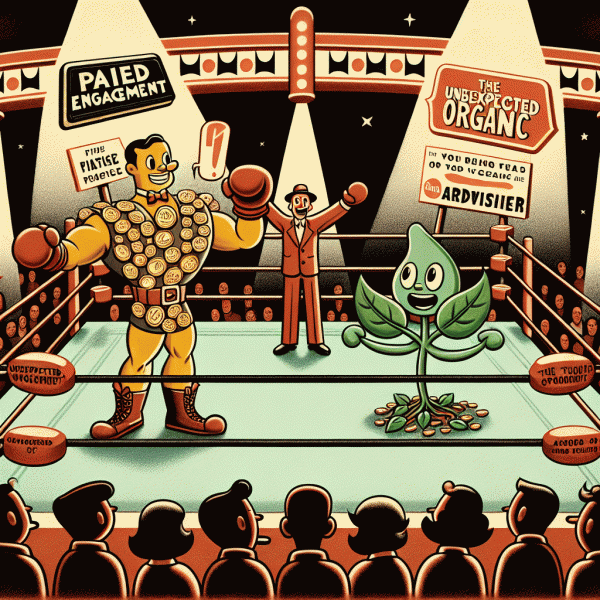
Money is not magic, but it buys predictability. When you allocate budget you are buying controlled exposure: a dial for reach, a lever for frequency, and a stopwatch for time to impact. Paid buys give you clear inputs (CPM, CPC, CTR) and therefore clear hypotheses to test, while organic earns trust and character over time. The smart play for 2025 is to treat budget lines as experiment budgets first, scale bets second, and brand insurance always. That mindset turns vague hopes about growth into measurable outcomes and makes the ROI conversation less mystical and more manageable.
Translate dollars into outcomes with two quick formulas: impressions = (budget / CPM) * 1000 and clicks = impressions * CTR, or simply clicks = budget / CPC. For example, a $5,000 monthly test at a $12 CPM yields about 416,667 impressions; at a 1.0% CTR that is roughly 4,167 clicks. If your landing conversion rate is 3.0 percent that converts to about 125 customers, implying a customer acquisition cost around $40. Alternatively, if your CPC runs at $0.80 you would see about 6,250 clicks and a different CAC. Use small tests to calibrate your CPM, CPC, and CTR for the audiences and creatives that matter to you rather than relying on platform averages.
The shape of what budget actually buys depends on scale and intent. Pick the archetype that matches your objective and budget window:
- 🆓 Organic: Low to no budget focus on content, community, and SEO; slow burn audience growth and high long term value but low short term scale. Tip: invest in one pillar content series that maps to search and social trends.
- 🐢 Slow Burn: Modest budget for steady traffic and nurturing; buy modest reach to fuel retargeting and email lists. Expect measurable clicks and a predictable cadence for conversions over months.
- 🚀 Rocket Fuel: Aggressive spend for immediate scale, high reach, and rapid testing; use this to capture market share or accelerate a launch. Pair with creative variants and real time attribution to avoid wasted spend.
Practical next steps: 1) Run a two week calibration test with 10 percent of planned spend to learn CPM, CPC, and CTR on your highest priority audience. 2) Use those metrics to model three scenarios for reach, clicks, and CAC before scaling. 3) Split budget so that paid buys feed organic growth pipelines via retargeting and owned channels. Above all, measure incrementality and lifetime value rather than raw clicks so that every dollar is judged by long term return and not just short term noise. Strong creative plus consistent measurement is the compound interest that turns paid buys into reliable ROI.
Algorithms vs Audience: Why Organic Still Punches Above Its Weight
Algorithms will keep reinventing the rules, but audience behavior moves at human speed. People form habits, favor voices they trust, and share content because it matters to them, not because an algorithm told them to. That is the secret weapon organic still carries into 2025: longevity and trust. While paid can buy attention in bursts, organic creates memory traces that compound—likes become follows, follows become repeat viewers, and repeat viewers become advocates.
That compounding effect is not mystical. It comes from a few repeatable levers: relevance, reciprocity, and resonance. Relevance is topical alignment with an audience's immediate needs; reciprocity is the tiny exchanges that build loyalty; resonance is the emotional or practical payoff that gets content shared. To turn those levers, try these three quick wins that re-center your work around people, not just signals:
- 🚀 Evergreen: Capture ideas that outlast trends by creating pillar posts and short-form riffs that drive search and repeat discovery.
- 👥 Community: Move followers into micro-audiences—comments, DMs, groups—where you can learn, test, and iterate faster than an algorithm will let you.
- 🔥 Amplify: Promote your most resonant organic posts with small, targeted paid boosts so the algorithm sees high-quality engagement and rewards the content further.
Operationally, build a simple cycle: create → surface → collect feedback → refine. Make creative iteration cheap by batching formats (one core idea, many cuts), reusing high-performing hooks, and keeping production nimble so you can respond to real-time audience signals. When a post gets unexpected traction, double down: repurpose the concept across formats and linked channels, then funnel new viewers into something that deepens the relationship, like a newsletter or a short sequence of value-packed posts.
Measure differently than you do for paid. Instead of solely tracking immediate conversions, track retention, repeat engagement, share velocity, and downstream value per cohort. Run small paid experiments to learn which creative frames actually move people, then let organic do the endurance work. In short, pay to learn and seed, organic to scale and sustain. Start with one audit: identify your top three organic pieces from last quarter, map why they worked, and build three derivative pieces. That micro-habit will keep you one step ahead of any algorithm while staying loyal to the only thing that really matters—your audience.
Speed vs Sustain: When to Go Paid, When to Play the Long Game
Deciding whether to sprint with paid or marathon with organic doesn't have to feel like flipping a coin. Start by naming the clock you're racing against: product launches, seasonal demand, funding runway, or the slow work of reputation and discoverability. If you need measurable lift in days or weeks, paid channels are the espresso shot — fast, concentrated, sometimes jittery. If you're building a brand, SEO equity, or community that compounds over years, organic is the slow-brew that keeps customers coming back without topping up your ad spend every month. The clever play in 2025 is to treat them as complementary moves in the same choreography, not opposing camps.
Here's a compact decision map to make choices less abstract and more actionable: match your timeline to the levers you can pull. If you're validating a new offer, allocate a small paid test budget to prove demand quickly and capture early learnings. If your funnel is clogged low, turn paid toward retargeting to unblock conversion velocity while organic content draws new users in the background. If you're launching in a noisy season, pay to cut through; if you're aiming for long-term margins, invest in guides, evergreen videos, and community-first content that accrues value over time.
- 🚀 Fast-Validate: Use paid to prove hypotheses, capture early adopters, and learn the message that converts.
- 🐢 Slow-Compound: Double down on organic for durability — SEO, product-led growth, and community nurturing.
- ⚙️ Hybrid-Scale: Seed organic reach with paid amplification, then let earned and owned channels take over.
Make experimentation your north star: run short paid experiments with clear guardrails (budget, KPI, timebox) and always measure incrementality with holdouts or geo-splits. Track both velocity metrics (clicks, trial starts, conversion rate lift) and sustain metrics (retention, CAC over 90 days, organic search visibility). If paid improves long-term LTV/CAC ratios after 90 days, it's not just a speed play — it's an investment. If organic drives steady organic traffic that lowers marginal acquisition costs, protect that channel even when paid looks irresistible. In practice, a simple calendar helps: earmark paid for events and launches, feed those campaigns into content ideas, and let organic content run the clock between bursts. That way you get the best of both worlds — the quick wins that fund the slow wins, and the slow wins that multiply the impact of the quick ones.
Hybrid Playbook: A Week-by-Week Plan to Mix Paid and Organic Without Wasting a Dollar
Think of this as a tactical calendar for people who hate guesswork and love results. Instead of throwing paid dollars at whatever post looks cute that day, you run a tight, week-by-week loop where organic content scouts opportunities and paid media primes the engine only when there is signal. The goal is to turn organic wins into paid levers and paid experiments into repeatable organic formats, all while keeping spend surgical and measurable.
Start with a short reconnaissance phase: one week of high-velocity organic testing across formats (short video, carousel, community post). Track engagement rate, saves, comments and which hooks get clicks. Week two is paid seeding: pick the top two organic winners and run tiny, highly targeted paid tests to validate reach and conversion in controlled pockets. Week three is optimization: tighten creative, shorten copy, swap thumbnails, and cut audiences that bleed budget with no return. Week four is scaling, but only for the combinations that clear your CPA and engagement thresholds. Weeks five and six are about retargeting and turning paid learnings into an organic content calendar that keeps the loop spinning without doubling spend.
- 🆓 Seeding: Use low-cost paid to jumpstart the best organic posts and gather clean conversion signals.
- 🤖 Optimize: Automate simple A/B toggles on headlines and creative frames to find the fastest lift.
- 🚀 Scale: Move budget to the winning creative-audience pairs and spin up lookalikes for efficient reach.
Guardrails matter more than glamour. Set clear KPIs for each week (engagement velocity, cost per action, and a minimum uplift threshold) and freeze any paid spend that misses targets two checks in a row. Repurpose top-performing paid clips back into organic formats — slice a 30-second ad into three story cuts, a captioned post, and a discussion prompt for the community. Finally, set a weekly review ritual: one meeting to decide what to kill, what to double, and what to archive for evergreen. Do that for two cycles and you will be running a hybrid system that looks accidental to competitors but is ruthlessly deliberate in practice.
Proof or Puff: 5 Data Checks to Tell Hype from Results in 2025
In a noisy 2025 where paid promos and organic reach both promise miracles, your job is to be the referee with a data whistle. Don't get dazzled by vanity metrics or slick creative — the real winners are those that survive five practical tests. Read these checks as a short litmus test you can run between campaign sips of coffee and quarterly planning marathons. They're designed to be fast, evidence-based and mercilessly useful whether you're proving that paid spend actually grew your audience or that organic work quietly won the day.
Start with three quick, high-impact signals you can pull from dashboards right now:
- 🆓 Incrementality: Run a holdout or geo test and ask: did conversions rise only in exposed groups? If not, you've bought attribution not acquisition.
- 🐢 Retention: Look past the click — did users return, complete second actions, or churn faster than a free trial? Short bursty spikes and flat retention signal hollow hype.
- 🚀 Attribution: Audit the attribution window and touch rules. If 90% of credit lands on last-click paid and organic gets none, you need a better model or an MMM touch.
Next, run two slightly longer checks that separate clever creative from real ROI. First, cohort LTV: segment new users by acquisition source and map 30/60/90-day revenue, engagement and churn. If paid brings lots of low-quality signups that plateau, your CPA looks cheap but your economics look broken. Second, cost-per-incremental-conversion: divide total incremental conversions (from your holdout test) by ad spend to calculate true CPI. If that CPI is higher than your organic-driven marginal conversion cost, you've got a paid-first illusion. Operationally, schedule a 4-week holdout, tag users by source at signup, and pull cohort revenue for 90 days — these are repeatable, auditable steps that force truth out of fuzzy dashboards.
Finally, use these practical decision rules and vendor questions to avoid the puff: ask partners for raw test results (not just percentages), insist on cohort LTV tables, and demand confidence intervals on incremental lift. Red flags: sudden reporting drops before audits, vendors refusing holdouts, or dashboards that hide sample sizes. Good signs: consistent lift across multiple geos, improving retention curves, and a CPI that beats or complements organic marginal gains. If three of five checks fail, don't tweak creative — revisit channel strategy and reallocate to where incremental economics win. Quick checklist to act on: 1) run a 2–4 week holdout, 2) pull cohort LTV for 90 days, 3) compute cost per incremental conversion and compare to organic marginal cost. Do this and you'll stop guessing and start choosing the real winner in the paid vs organic debate — with data, not hype.