Bots, Bucks, and Broken Metrics: What You’re Really Buying
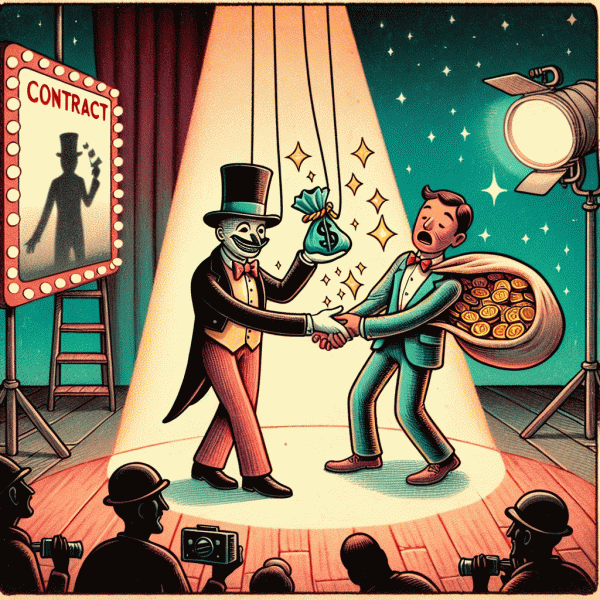
Every time you fund a paid engagement campaign, you're buying a mixed bag: human attention, automated scripts, incentivized clickers, and a few middlemen who are very good at poking your analytics. The dashboards reward volume, not truth, and that's where the romance with paid engagement turns into a toxic relationship. Engagement can look great on paper while your downstream funnel gets ghosted. If your goal is revenue, not applause, you need to read the receipt, not the applause meter.
Bots and low-quality interactions distort more than vanity metrics. They artificially boost CTR and engagement rates while collapsing session depth, conversion velocity, and customer lifetime value. Worse, they teach your machine learning models to optimize for the wrong behaviors — rewarding click-baiting creatives and dodgy inventory rather than genuine interest. The consequence is a vicious loop: you pay more to chase the same hollow signals, then raise bids because your models were trained on smoke.
Practical fixes start with being suspicious and instrumenting like a scientist. Consider these three non-negotiables:
- 🤖 Detection: Use anomaly and bot detection tools, watch for impossible session patterns (zero scroll, sub-second clicks), repeat IP clusters, and spikes that happen at 3 a.m.
- ⚙️ Prevention: Enforce pre-bid filters and viewability thresholds, require hashed device fingerprints, ban known data-center ranges, and run publisher audits before you scale.
- 👥 Measurement: Prioritize downstream signals — signups, trials, purchases — and run regular incrementality tests so you're buying lifts, not illusions.
Tactics you can apply tomorrow: tie part of vendor payments to post-click conversion cohorts, sample creative traffic for manual quality checks, and route a percentage of traffic through clean control lanes to validate claims. Add quality gates into programmatic buys and make verification reports a line-item in SOWs. When your models misbehave, cleanse the training data: blacklist bad sources, reweight positive outcomes, and retrain with human-verified samples.
The bottom line? Paying for engagement isn't inherently evil — it's powerful — but you must stop paying for volume that isn't correlated with value. Treat every campaign like a trust-but-verify experiment: measure incrementality, hold partners to SLAs, and be ruthless about chopping the tail that's dragging your metrics into nonsense. Do that and you'll turn paid engagement from a dirty little secret into a predictable lever for growth.
Social Proof Is a Drug: How a Little Fake Sparks Real Momentum
Social signals are tiny chemical hits for human attention. A little cluster of likes or a handful of enthusiastic comments gives observers a fast heuristic: if other people liked it, it must be worth a look. Platforms are tuned to amplify those early sparks, so a pinch of manufactured motion can look like organic popularity long enough to catch a real wave. That is the beautiful and slightly toxic feedback loop: a small nudge can feel like momentum, and momentum itself attracts real engagement.
Practically speaking, the trick is not whether small fake signals work—history and algorithm design say they do—but how to use that leverage without burning credibility. The goal is to buy algorithmic air cover, then convert that temporary lift into genuine interest. Do not treat the initial push as the product; treat it as a staged doorway to something customers will actually want. Tactics that tend to perform well include targeted early access for invested people, timing bursts when attention is already moving, and pairing seeded engagement with content that invites meaningful response.
Try a simple, repeatable playbook when you need to spark discovery but do not want to architect a house of cards:
- 🆓 Boost: Seed a small, tight cohort with exclusive access or freebies to create real, voluntary interactions that algorithms notice.
- 🐢 Cadence: Drip conversations and updates over several days so the signal looks steady rather than suspiciously explosive.
- 🚀 Surge: Coordinate a short, intense push with partners, employees, or micro creators to trigger discovery loops without fabricated depth.
Finally, measure the quality of the lift not by vanity totals but by what happens next. Track retention at day 7 and day 30, comment to like ratio, click through to conversion, and whether a first time viewer returns. If your seeded signal drives repeat visits and deeper actions, you bought something real. If it collapses when the push ends, you created nothing but noise. Use these nudges as accelerants, not crutches: spark curiosity, convert to value, then let actual recommendations and true word of mouth take over.
Algorithms Don’t Care About Purity—They Care About Signals
Algorithms do not judge intent. They catalog behavior. When a post gets clicks, shares, time-on-content, or conversions, the system tags that content as relevant, and the reach snowballs. That is why paid amplification still moves the needle: it is a fast way to generate the same signals that organic success demands. That does not mean burying ethics or buying fake metrics. It means being pragmatic about how to surface content that genuinely deserves attention and designing paid activity to feed positive downstream signals like repeat visits, longer sessions, and meaningful interactions.
Think of paid spend as a controlled nudge rather than a blunt instrument. Tune creative, placement, and audience so the paid lift produces the exact signals the algorithm rewards. Practical moves to try: run short creative variants, focus on first 3 seconds of video, use contextual placements, and prioritize audiences with proven propensity to engage. Combine these steps with a small experimentation cadence and you will learn quickly which combos produce durable signal improvement. A starter roadmap:
- 🚀 Launch: Use a tight paid burst to seed impressions and gather fast engagement data.
- 👥 Target: Prioritize lookalikes and high-intent segments to boost conversion-rate signals.
- 🔥 Iterate: Swap creatives and CTAs rapidly so the algorithm can amplify winners, not stale assets.
Measure with the right lens. Look past raw clicks and monitor session depth, return rate, and downstream conversions. Use uplift tests and simple holdouts to attribute performance without overclaiming. If you need micro-tasks to validate messaging or to gather quick qualitative feedback, consider low-friction options like website testing tasks to capture human reactions before you pour budget behind a creative. And set guardrails: frequency caps, conversion thresholds, and negative audiences stop paid signals from becoming noise or user fatigue.
Finally, make the practice repeatable and accountable. Treat paid engagement as a signal engineering problem: define the signal you seek, choose a minimal paid intervention to seed it, then optimize for retention of that signal. Prioritize content that improves user experience so the algorithm amplifies a genuinely useful outcome. With that mindset, paid spend becomes a lever for long term growth rather than a short term illusion, and marketers can balance effectiveness with integrity.
The Line Between Seeding and Deceiving (And Staying on the Right Side)
Seeding should feel like matchmaking: you give a creator a product, they fall in love or not, and an honest conversation happens in public. The dark side is when that handshake becomes a hooded exchange where the audience is left thinking an endorsement bloomed organically when it was really rented for the night. That gap between genuine trial and engineered praise is not only bad for brand trust, it is the clearest route to regulatory headaches and a fast way to make followers feel played.
The easiest way to stay on the right side is to treat transparency as creative fuel, not a chore. Put the disclosure where people will see it without hunting: up front in a video, in the lead of a caption, or as a visible sticker on a story. Use plain language like "ad", "sponsored", or "paid partnership" rather than cryptic tags. At the same time, protect authenticity by giving creators room to react honestly; overly prescriptive scripts that demand specific praise turn seeding into deception even if a tiny disclosure exists.
Make this pragmatic with a short operating checklist you can apply to every campaign. 1. Disclose early and clearly so the audience sees the relationship before the pitch. 2. Compensate creators fairly but avoid drafting lines that require forced enthusiasm. 3. Require that any edits or cuts preserve the disclosure and the creator voice. 4. Measure sentiment and comments, not just clicks and views, to spot whether the audience senses manipulation. 5. Keep contract language simple and public facing obligations explicit so creators know how to disclose. 6. Run small pilots to see how different disclosure placements affect performance and trust.
If you want the wins without the stink, remember that people trade attention for respect. Seeding done well builds advocates who will recommend your brand because they want to, not because they were paid to pretend. Treat disclosure as part of the creative brief, not an afterthought, and you will protect both ROI and reputation. That combination is the rarest kind of marketing magic: profitable, repeatable, and ethically defensible.
Do It Smarter: Guardrails, Clean Alternatives, and ROI Reality Checks
Think of paid engagement like espresso: a little kick moves the needle, too much leaves you jittery and poor. Start by installing simple guardrails that stop pouring ad dollars down the drain. Define one primary KPI per campaign (not a buffet of vanity metrics), set a realistic attribution window tied to your sales cycle, and codify an incrementality baseline so you can tell marketing-driven lifts from noise. Make your brief less about impressions and more about impact: who should act, what a successful action looks like, and what the minimum acceptable incremental return is. If you can't explain how a tactic will move that metric in one sentence, it's probably a distraction dressed as optimization.
Next, put rules that actually do the work. Audience hygiene earns back spend: dedupe across channels, purge stale cookies, and opt for match rates and hashed-email targeting where applicable. Cap frequency so the same five people aren't doing all the heavy lifting of your supposed reach. Rotate creatives every one to two weeks to avoid banner blindness and test verticals and value props with clear winner criteria. Require partner transparency (ask for raw logs or viewability rates) and bake performance SLAs into agreements: pause placements with high fraud signals, exclude low-viewability inventory, and insist on real-time reporting where possible. These are practical, enforceable guardrails, not buzzword policies—treat them like your budget's insurance deductible.
If paid engagement makes you uneasy, consider cleaner complements that still move the dial. Contextual targeting is back in fashion and avoids cookie headaches while often reaching higher-intent moments. Native content, long-form sponsored pieces, and creator partnerships can deliver both engagement and brand warmth without the same third-party data exposure—structure deals around measurable actions (UTMs, promo codes, affiliate links) to keep ROI traceable. Build a small cohort of creator pilots with clear performance clauses; pay partly for reach and partly for outcomes. Don't forget owned channels: amplify high-performing creative via email and CRM retargeting before you throw more budget at cold audiences. These alternatives don't replace paid engagement entirely, but they give you cleaner, less noisy levers to pull when acquisition costs spike.
Finally, get real about ROI with experiments designed to prove incremental value. Use holdout groups or geo-split tests to measure lift, not just last-click attributions. When you review results, compare marginal cost per incremental conversion to your true customer lifetime value (not just first order), and include churn and cross-sell potential in the math. Scale budgets only when incremental ROAS clears your threshold after factoring in creative fatigue, audience saturation, and delivery friction. If an acquisition tactic isn't demonstrably additive after two optimized cycles, pivot the budget to cleaner alternatives instead of doubling down on hope. In short: set guardrails, prefer cleaner channels when possible, and make every dollar earn its place on the media plan. That's how you keep paid engagement working for you instead of against you.