Budget Beatdown: Cost Per Action vs Vanity Metrics
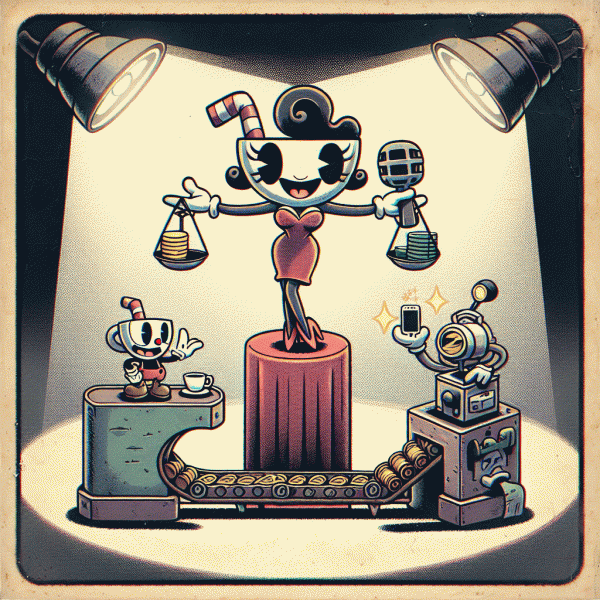
Numbers beat narratives when money is on the line. Instead of swooning over follower counts, flip the script and ask how much each desired action actually costs. Cost per action is brutally simple: total spend divided by the measurable action you care about. Vanity metrics give dopamine and slides for meetings, but they do not pay the bills. If a creator promises a million impressions but only a handful of purchases, the spreadsheet tells a different story than the hype reel.
Start with a quick back of the napkin test and run a tiny pilot where you can control cost per action. For a low risk experiment consider a trusted task platform that lets you pay only when a microtask or conversion is completed. Use a clear conversion definition, lock the maximum CPA you will accept, and compare that to your customer lifetime value. If your target LTV is 60 USD and your pilot shows CPAs at 6 USD, that is a path worth scaling. If influencer deals are projecting CPAs above your threshold, pause and reallocate before the fancy content eats your budget.
Do the math publicly in your team. Use the simple formula CPA = Spend / Conversions and then layer on customer value: ROAS = Revenue / Spend. A campaign that produces lots of likes but produces a CPA that is five times your break even is a vanity win and a financial loss. Microtask funnels tend to be modular: each action is measurable, attributable, and optimizable. Influencer initiatives can still be valuable for awareness or brand warmth, but treat them as a separate line item with different KPIs. If you want revenue or signups fast, prioritize approaches that let you iterate CPAs daily rather than waiting weeks for an engagement report.
Actionable next steps: define the smallest meaningful action you will pay for, set a hard CPA ceiling, run a finite pilot on a pay-per-action platform, and compare outcomes to any influencer offers on the table. Keep creative tests lean, measure early, and be willing to shift spend where the numbers win. In practice this means fewer vanity headlines and more margin in the bank. The budget beatdown is merciless, but it is also liberating: once you measure actions instead of applause you can scale what actually grows the business.
Big Names vs Small Tasks: When the Underdog Quietly Crushes It
Big celebrity spots feel like fireworks: instant, loud, and great for vanity metrics. But when the goal is predictable customer behavior—clicks, sign ups, purchases—the fireworks are expensive and fleeting. Break your campaign into micro-tasks and you trade spectacle for signals: dozens or hundreds of tiny, measurable units that reveal what works, who converts, and at what cost. In tests that ran across industries, campaigns that used micro-tasks to harvest creative variants, run targeted outreach, and test messaging produced steadier conversion curves and fewer surprises than single influencer pushes. The pleasant surprise is simple: you do not need a household name to trigger behavior; you need a repeatable loop that learns fast.
Micro-tasks win because they let you optimize the thing that truly matters—customer action—not just attention. With small tasks you can spin up dozens of creative variants, segment audiences narrowly, and iterate copy and offers in parallel while an influencer deal is still in contract negotiations. In one split test, a $10,000 influencer buy was pitted against the same budget split into a thousand $10 micro-tasks; the distributed approach found winning variants faster, delivered roughly three times the conversions, and cut cost-per-acquisition by a large margin. The math is simple: by running many mini-experiments you reduce the risk of single-point failure and compound learning across campaigns.
Think of micro-tasks as modular levers you can tune. Swap one module at a time, measure the lift, and scale what works. Three levers that often beat a solo celebrity punch are especially worth testing:
- 🚀 Reach: Use many small creators or distribution nodes to hit targeted pockets rather than one broadcast; precision reach often converts better than mass noise.
- 🤖 Precision: Run narrow tests on messaging, creative frames, and CTAs to find the exact wording that moves your audience.
- 💥 Speed: Iterate in days, not months—micro-tasks accelerate feedback loops so winners can be amplified while they are still fresh.
Actionable starter plan: pick one funnel stage, design fifty micro-tasks that feed that stage, set a single KPI, and let the experiment run for two business weeks. Measure conversion rate and cost per action, not vanity impressions; treat each failed micro-task as free insight. When a variant outperforms the benchmark, scale it intelligently and lock in learnings as reusable modules. Over time you will build a toolkit of reliable building blocks that combine like Lego: cheaper, faster, and often more effective than a single splashy endorsement. Try one pilot this week and let the tiny wins add up.
Pick Your Play: Match Goals, Budget, and Timeline to the Channel
Start by clarifying the one thing that will make the campaign a success. Is it a spike in traffic, a stack of sales, or a warmer relationship with an audience that keeps buying? Match that outcome to the type of channel that naturally produces it. If you need quick, measurable actions (clicks, installs, purchases) think task-based activations that scale and track cleanly. If you need narrative, trust-building, or premium positioning, think creator partnerships that layer storytelling on top of reach. The trick is to stop treating cost as destiny; instead treat it as a constraint to design around. A modest budget can still win if the goal and timeline are aligned.
To make the choice practical, use this compact rubric. List the objective, set a firm timeline, and attach a realistic budget band. Then pick the play that checks the most boxes. Below are three common scenarios and the play that usually wins them:
- 🚀 Awareness: Fast reach with social proof. Use creator collaborations or paid media that put a face to the brand and extend to lookalike audiences.
- 🐢 Conversion: Precise, measurable actions. Micro-tasks, performance gigs, and targeted CPC campaigns deliver predictable ROI when workflows and incentives are tightly defined.
- ⚙️ Retention: Long game relationship building. Micro-influencer series, owned-community activations, and repeat task cohorts create habit and loyalty over time.
Now get tactical. For short timelines under 2 weeks, lean on task-based channels and paid amplification where setup is fast and measurement is immediate. For 1-3 month timelines, a mixed approach often works best: start with micro-tasks to harvest early conversions and seed creator content that matures into stronger lifetime value. For anything longer than 3 months, invest in creator relationships, episodic content, and community mechanics that compound. Always build a minimal test that isolates the variable you care about: one creative, one CTA, one attribution method. Track a small set of KPIs — cost per acquisition, conversion rate, retention at day 7 — and commit to a decision point.
Finish with a short checklist before committing budget: define the single KPI you will optimize; set the absolute maximum you will spend to prove the channel; pick a test length; and decide the minimum effect size that will justify scaling. If you are tight on cash and need direct actions, prioritize tasks and automated funnels. If you have room to invest in nuance and brand equity, prioritize creators. And if the decision still feels fuzzy, run a tiny parallel test for two to three weeks and let the data be the tie breaker. That is how you align goals, budget, and time so the channel you pick actually delivers.
Make Creative Sell: Briefs, Hooks, and Offers That Actually Convert
Great creative doesn't start with a mood board — it starts with a ruthless, tiny brief. Whether you're buying influencer storytelling or batching micro-task videos, the brief is your conversion insurance policy. Start with the outcome first: what click, swipe, or sale counts as success? Follow with the concrete: target audience in one sentence, the single idea to communicate, the primary visual treatment, and one prohibiton (the thing that makes the content off-brand or legally risky). Add a reference clip and a one-line metric goal (e.g., 1.8% CTR on feed). When you hand that to a creator — macro or micro — you cut the feedback loops and get creative that's actually usable in campaigns.
Hooks live in the first three seconds. If your creative can't explain the benefit or surprise the viewer in that window, spend more time on the first frame than the last 20. Think in verbs: open with a problem (frustration), a spectacle (unexpected moment), or a promise (what you get). Test formats: a bold on-screen line, a micro-story arc, or a POV moment where the product is the punchline. For influencers, make the hook feel organic to their voice; for micro-tasks, use visual shortcuts and text overlays that telegraph intent immediately. Always include a micro-script for the opening line to avoid 30 variations that all start the same way.
Build offers that people can't ignore and brief them into existence. The cleanest way to convert is to combine a sharp hook, a clear value proposition, and a frictionless CTA. Use this three-piece checklist to brief every asset:
- 🚀 Hook: One-sentence opening that answers "Why should I keep watching?" — e.g., "Stop wasting money on X."
- 💥 Offer: The exact deal and why it matters now — e.g., "40% off, first 100 users, free shipping."
- 🆓 Brief: One visual reference, one forbidden element, one metric goal (CTR/CVR/CPA).
Finally, measure like you mean it. Track micro KPIs per asset: initial watch-through at 3s/6s, CTA clicks, view-to-conversion ratio, and early retention for post-purchase funnels. Run 5–10 micro-variations per concept if you're doing micro-task pools — you'll learn faster — and reserve 2–3 polished influencer cuts for brand lift and high-trust pushes. When a concept wins on CTR but flops on purchase, iterate the offer rather than killing the creative. Small shifts in copy or CTA placement often double conversion. Bottom line: brief with discipline, hook with purpose, and offer with urgency, and you'll turn creative experiments into predictable revenue regardless of who makes the content.
Run This Now: A 7-Day Test Plan with Scripts, UTMs, and Fast Wins
Start this 7‑day sprint by treating it like a science experiment: pick one tight hypothesis, one primary metric (CPA or conversion rate), and two lightweight tactics to probe it — one using small paid micro-tasks and one using short influencer activations. The goal is not to prove which approach is always better but to discover which moves faster for YOUR funnel this week. Assign budgets you are willing to burn fast: $150 for micro-tasks, $300 for influencer tests, and a strict stop condition at 3x CPA of your target.
Day 1: Deploy two crisp links with UTMs and a 15‑second video landing page. Example URLs to paste into task instructions or DMs: https://yourdomain.com/offer?utm_source=mturk&utm_medium=task&utm_campaign=7daytest&utm_content=variantA and https://yourdomain.com/offer?utm_source=insta_infl&utm_medium=partnership&utm_campaign=7daytest&utm_content=shortvideo. Outreach scripts are intentionally tiny so they scale: for micro‑task workers use "Complete this 90‑second task: watch the 15s clip at the link, answer 2 quick questions, earn $1 — click here: [MTURK URL]." For influencer outreach DM: "Hey NAME — love your recent post. Would you test a 15s story for a paid trial? $100 + performance bonus. Quick details & tracking link: [INFLUENCER URL]." Send these on Day 1 and collect impressions and first‑click data by end of Day 2.
Hit three fast wins early to sharpen signals and reduce noise:
- 🚀 Creative: Swap thumbnail and first 3 seconds to boost view‑throughs — use the same copy to keep the test clean.
- 🔥 Timing: Run tasks during peak engagement hours and schedule influencer stories within the same 4‑hour window to align exposure.
- 🆓 Retarget: Retarget anyone who watched 50% or clicked with a freebie CTA and a tiny discount to measure intent lift.
Days 3–6 are for optimization: pause variants that perform below a rule (for example, CTR < 1.5% or CPA > 3x target), double down on the top creative and the better channel, and add a short remarketing creative aimed at whittling down CPA. Track conversions with UTMs and a simple spreadsheet or dashboard that logs source, medium, content, spend, clicks, conversions, and CPA daily. Use this quick decision rule on Day 7: if one channel yields a CPA 20% lower than the other and has sustainable scaling potential, declare it the week winner and plan a 2x scale next week; if CPAs are within 10% of each other, prioritize the cheaper operational path (micro‑tasks if you need speed, influencers if you need credibility).