Turn Loose Change into Loud Buzz: The Micro-Budget Mindset
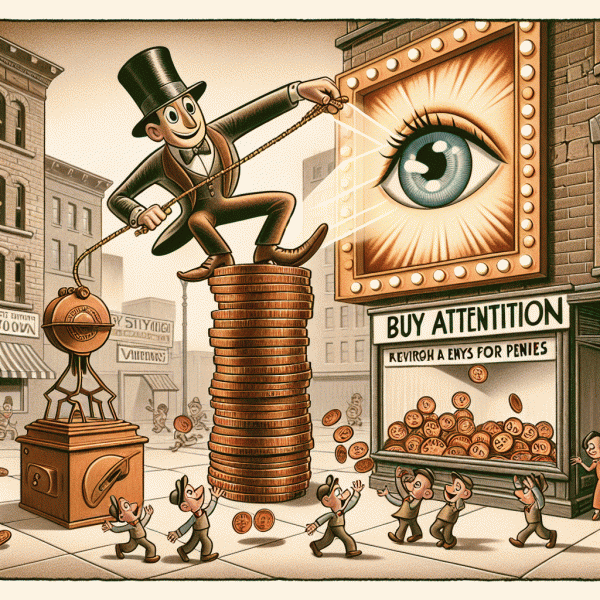
Think of spare change as the raw material for attention, not pocket clutter. The micro budget mindset treats each coin as a test tube for ideas: cheap, fast, and disposable until one produces color. That changes the math. Instead of waiting to drop a fortune on a single bet, you run many tiny experiments, prune the losers, and double down on the mini hits. The goal is not perfection up front. The goal is to learn, iterate, and amplify winners while keeping burn low and momentum high.
Start with fast, low friction plays that scale horizontally rather than vertically. Use a tiny creative, a razor thin audience, and a metric you can measure in hours. Try this trio of micro tactics to get volume without breaking the bank:
- 🆓 Experiment: Run a free or near free community post or giveaway with a one question entry. Use the feedback to shape your hook.
- 🚀 Target: Boost that community post with a five dollar ad to a 1 percent lookalike or a local zip. Small geo and tight interests keep CPM low.
- 💥 Amplify: Pay a micro influencer or brand partner a modest flat fee for a single story or reel. One authentic endorsement beats ten generic impressions.
Turn tactics into a repeatable blueprint. Pick a hypothesis, set a tiny budget cap per test, and track a single conversion metric with simple UTM tags and a spreadsheet. Example cadence: day one run the free play, day two boost the top performing copy for 24 hours, day three hand the best creative to two micro influencers and measure CPA. If the CPA stays below your threshold, reinvest 2x of the tiny budget into the winning channel. If not, shelve and rerun with a new angle. Keep experiments to cycles of 72 hours so learning is fast and momentum compounds.
This is not hustle for hustle sake. It is compounding micro wins until one becomes a breakout. Big brands often have slow approval cycles and prefer large centralized bets; that gives nimble scrappy teams a giant tactical advantage. Start with a single coin test, measure honestly, and scale what works. You will be surprised how loud small sums can be when spent with intent, speed, and ruthless measurement.
Borrow the Spotlight: Piggyback on Communities, Trends, and Partners
If you can't outspend the giants, out-think them: borrow their spotlight instead. The trick isn't begging for attention — it's hitching your wagon to an already moving star. Find the tiny, active communities and trends that have momentum but not a gatekeeper tax, then show up with something useful, funny, or plainly shareable. That's how pennies become impressions and impressions become buyers.
Start by listening like a private detective. Track three micro-communities where your ideal customer actually talks (subreddits, Discord servers, niche newsletters). Don't be seduced by follower counts — prioritize engagement rate and context. A 1,500-member Discord with daily threads and 20 replies per post will convert orders faster than a 200k account that posts ads. Practical steps: set keyword alerts, subscribe to community feeds, and build a swipe file of recurring questions or hot takes you can answer fast.
Next, design plays that look like gifts, not billboards. Offer community moderators a low-effort value exchange: an exclusive discount, a co-hosted AMA, or a giveaway that solves a real problem for members. For trend-hijacking, keep one creative template set aside so you can re-skin copy and imagery for the latest meme, audio clip, or TikTok format within hours. Partnering with micro-creators is cheap because they want content and credibility more than cash — prototype a $100 co-creation package (script + 30s video + pinned comment) and measure CTR and sign-ups. If the math works, scale to $500, then $2k.
Use three tiny, repeatable plays to get started quickly:
- 🆓 Quick: Sponsor a community giveaway that feels native — prize, entry task, and a useful how-to post instead of a pure ad.
- 🚀 Slow: Co-create a series with a micro-creator: three eps, each under 2 minutes, featuring real use-cases from community members.
- 👥 Amplify: Ride a trending format by swapping in your own hook and encouraging UGC with a low-friction prompt.
Run these as experiments with clear success criteria: cost per conversion, engagement per post, and number of organic mentions. Keep tests short (7–21 days), iterate quickly, and repurpose winners into paid ads or newsletter content. Most importantly, stay human — communities sniff out opportunism. If your first move gives value and sparks conversation, you didn't just buy attention; you earned a shortcut to far more, at pennies on the dollar.
Content That Prints Its Own Reach: Repurpose, Remix, Repost
Think of one great piece of content as a minting press that can print reach in multiple denominations. Start with one solid asset that carries your main idea clearly — a long form video, a podcast episode, a blog post, or a case study — and treat that asset as raw material, not an end point. From that single source, extract bite sized moments, quotable lines, screenshots, captions, behind the scenes clips, and micro graphics. The trick is to engineer each extraction so it stands alone on a platform while still linking back to the original. That way a single creative hour yields dozens of distribution moments that feed each other and reduce acquisition cost per view to a fraction of what a fresh build would require.
Adopt a repeatable micro process: record or write once, batch edit, template, and publish. Use a transcript to pull soundbites and headlines, then turn those headlines into text posts, short videos, and image cards. Build a few haircut templates for vertical short form, square feed posts, and story slides so every piece only needs minor resizing and caption tweaks. Batch production means you spend one creative energy burst and then harvest over days and weeks. For shoestring budgets this is gold because editing time is the new ad spend; minimizing it frees cash to boost the most promising variants.
Repurpose is not recycling for recycling sake. Remix trends and repost material that has earned an initial signal, then amplify selectively with paid micro boosts. When something gets organic traction, pin it, resurface it in a newsletter, turn the thread into a carousel, and feed clips into short form channels. Leverage audience behavior as proof when you put a few dollars behind a post: platforms reward content that already shows engagement. Also encourage user created echo by inviting simple actions that create more shareable artifacts: a duet, a comment reply that becomes a clip, or a challenge that requires minimal effort. Those ripples are where attention is cheapest.
Measure ruthlessly and iterate quickly. Track watch time, share rate, and cost per click across the repurposed versions and kill what underperforms. Double down on formats that convert attention into a visible action for a few cents. Keep quality steady but resist perfection paralysis; fast tests win over slow masterpieces when the goal is efficient reach. In short, design content to be reborn: plan for remixes at creation, chop into reusable atoms in production, and spend a few strategic pennies to fan the best sparks into a wildfire.
DMs Over Dollars: Scrappy Outreach That Actually Gets Replies
Outreach is the old fashioned cold call reinvented for the attention economy, but it can be cheap, clever, and human. A single well timed direct message costs you nearly nothing and can open a conversation that a banner ad cannot buy. The trick is to treat DMs like micro campaigns: testable, measurable, and built to scale without sounding like a robot. That means swap templates for tiny rituals — a one line opener that mentions a real detail, a value nugget that proves you read, and a simple next step that is easy to say yes to. Done right, DMs are pennies a reply and a way to cut past the noise big budgets create.
Start with micro segmentation and playbooks for three repeatable approaches. Keep messages under 120 characters for mobile skimmers. Use this quick checklist as a base and adapt for tone and channel. Then A B test subject style, send time, and offering until you improve reply rate by measurable increments.
- 🆓 Freebie: Offer a tiny win that costs you nothing but demonstrates value, like a one line tip tailored to their profile or a link to a quick case that mirrors their niche.
- 🚀 Hook: Lead with a specific insight that only a little research reveals, not a generic compliment, so the recipient feels seen not pitched.
- 💬 Close: End with a low friction ask, for example a two minute call or a yes no reply, so the decision is binary and easy to make.
Templates are fine as scaffolding, not as the message. Use three modular lines you can mix and match: opener, value, and micro CTA. Example frameworks to adapt: Quick idea for [Name] — then a single sentence value point that references a public signal; Found a quick win for your [channel or metric] — share one data based suggestion; Small ask: two minute chat to test it — or a yes if they prefer a test. Follow up twice on a diminishing cadence: gentle nudge at three days, social proof at seven days, final break up offering to keep the door open. Track reply rate, not vanity metrics. If you get a reply, convert quickly with a simple calendar link or an immediate resource that builds trust.
When it is time to scale, automate the scaffolding but never the nuance. Use tools to merge names and signals, queue sends, and capture responses, but loop humans in for any multi message thread. Keep metrics tight: cost per reply, reply to meeting rate, and test to reduce the number of touches per positive outcome. And mind etiquette — no mass copy paste, always allow an easy opt out, and do the work to make every message feel like it was written by someone who actually cares. If you treat DMs as a high focus, low spend channel you will get replies for pennies and build relationships that ads could not buy.
Track Every Penny: Tiny Tests, Fast Wins, Zero Waste
Think like a thrift-store data scientist: every dollar you drop into an ad or experiment should come back with a note saying what it taught you. Start with microscopic bets — $5 subject-line swaps, $20 thumbnail tests, $50 audience tweaks — and instrument them. Tag every creative with a UTM that encodes creative, placement, and hypothesis (yes, make the UTM your lab notebook). Hook simple engagement signals to those tags: click-through, view-through, time-on-page, micro-conversions like newsletter signups or content scroll depth. If you can't measure it, it isn't an experiment; it's an expensive guess. Keep tracking granular and centralized: a single sheet or dashboard that shows cost, attention metric, conversion, and a quick sanity check for incremental lift.
Design tests for speed, not vanity. Run 24–72 hour sprints that answer one question — “does this hashtag move attention?” — and set hard stop-loss rules so losers die fast. Use small audiences and the smallest budgets that still produce a signal: tiny sample sizes reveal strong effects quickly, and those strong effects are what you scale. When an element outperforms, duplicate it into a new test that tweaks only one variable; when it underperforms, kill it and reallocate the remainder to your best hypothesis. This creates compound wins: multiple tiny optimizations that together buy attention for a fraction of traditional spend.
Waste elimination is an operational habit. Automate kills and boosts with simple rules in your ad platform: if CPA rises 30% over baseline in two days, pause; if CTR doubles with stable conversion, increase spend by 20–30% increments so you don't over-inflate costs. Recycle creative assets — the headline that beat expectations in one channel can be A/B'd across others. Track true cost of attention, not just clicks: compute a lightweight metric like Cost Per Meaningful Action (CPMA) that weights time-on-site and micro-conversions, then compare that to your back-of-the-envelope LTV to prioritize where pennies turn into dollars.
Finally, make transparency the default culture: every experiment ends with a one-paragraph judgement — hypothesis, result, next move — pinned to the dashboard. That forces quick learning and prevents the museum of failed tests from collecting dust. Pair that with a weekly micro-review where you redistribute 10–20% of the budget toward the freshest winners. Over time those tiny, tracked bets stop being noise and become a predictable funnel that buys attention cheaply, repeatedly, and without the corporate-level waste that bloats so many campaigns. Treat each cent like a tiny recruit; train it, test it, and only scale the ones that salute.