The Boost Button Myth Busted: What Really Happens After You Pay
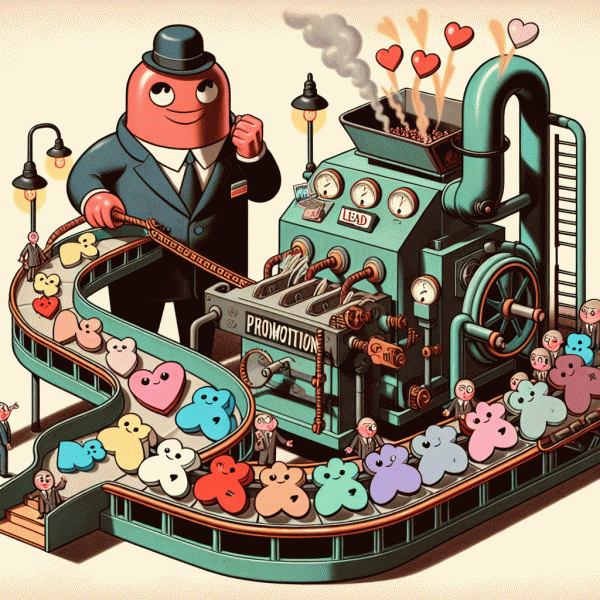
Hitting the boost button feels like rocket fuel: overnight visibility, a cascade of likes, and that warm glow of validation. In reality the boost is a paid distribution dial, not a magic switch that turns engagement into qualified leads. When you pay, the platform trades your budget for impressions and quick interactions, and the auction prioritizes cost efficiency over relevance. That often means your ad lands where attention is cheapest, not where intent is highest. Expect a burst of reach, an uptick in surface engagement, and a short-lived algorithmic lift — but not automatic interest in your product or service unless the rest of the funnel is aligned.
So what actually moves behind the scenes after payment clears? The ad is pushed into a wider pool, the creative is tested against a broader set of user signals, and automated bidding tweaks delivery to hit the platform objective. If the objective is engagement the system optimizes for reactions and clicks; if it is conversions the system chases actions that match the tracked event. Budget pacing, frequency, and creative fatigue start to shape performance by day two or three. Because the platform often relaxes targeting to find low-cost impressions, you can see an early dip in quality metrics: lower session duration, higher bounce, and poor conversion rates even as CPM looks healthy. That disconnect is why a high volume of likes rarely equals high-quality leads.
Make boosting work for lead generation by shifting from hope to design. First, set the right objective and instrument conversion tracking with UTM parameters and server or pixel-based events so you know which actions matter. Use a narrow seed audience that mirrors your best customers, then create lookalike or similar audiences rather than blasting broadly. Craft multiple creative variants with explicit, benefit-led CTAs and landing pages that reinforce the ad message; a mismatch between ad promise and page kills conversion velocity. Keep budgets modest while you test, measure cost per lead and on-site behavior, then scale only winning combinations. Use frequency limits to avoid ad fatigue, retargeting windows to capture warm visitors, and CRM integration to close the loop on actual pipeline value.
At the end of the day boosting is a tactical amplifier, not a strategy. When used thoughtfully it can seed top-of-funnel awareness and feed a retargeting engine that converts, but when used as a shortcut it will burn through budget and collect vanity metrics. Run disciplined experiments, treat boost campaigns like mini conversion tests, and reallocate spend to funnels that actually move prospects toward a sale. Do that, and the boost button becomes less of a flashy trap and more of a carefully controlled throttle that helps convert likes into leads.
Vanity vs Value: Metrics That Predict Revenue
Think of vanity metrics as applause after a good set and value metrics as the rent checks that keep the lights on. Applause feels great, but applause does not pay for ad spend. A lot of brands get hypnotized by impressions, follower counts and reach because those numbers are big and easy to brag about. The smarter play is to translate those surface signals into predictable revenue. Start by swapping headline-chasing numbers for indicators that map to the funnel: conversion rate, average order value, revenue per visitor, qualified lead rate and the lifetime value to customer acquisition cost ratio. Those are the dials that actually move profit.
Not all engagement is created equal. Instead of counting every reaction, measure micro conversions that precede a purchase: landing page clicks, email signups, add to cart events, checkout initiations and product view depth. Time on site and scroll depth are not magic, but when they improve alongside higher add to cart rates they are meaningful. Layer cohort analysis on top so you can see whether users acquired this month spend more over three months than users acquired last month. Multi touch attribution and server side tracking help, but the single most reliable test of value is observing whether paid traffic actually increases revenue in your CRM.
Prove it before you pour money in. Set up holdout tests, geo splits or randomized A B experiments so you can measure incremental lift instead of assuming every conversion is paid driven. Calculate CAC, payback period and LTV by cohort, then compare those to ROAS targets. If a campaign has a great CPM and CTR but causes CAC to rise faster than LTV, it is burning cash. Conversely, a channel with a higher CPC but lower CAC and a shorter payback period may be the sleeper winner. Build a simple dashboard that shows revenue per paid visitor and marginal cost per incremental customer so decisions become binary instead of aesthetic.
Here is a mini playbook to get out of vanity land and into value mode. First, define a single north star metric tied to revenue, such as incremental monthly recurring revenue or revenue per paid impression. Second, instrument micro conversions and link them into the CRM with UTMs and server events. Third, run incrementality tests to validate lift. Fourth, optimize creative and audience toward conversion signals not just engagement. Finally, scale what proves profitable and kill the rest. Likes will make the team smile, but conversions will keep the business smiling longer.
Targeting Tweaks That Turn Cold Scrolls into Warm Leads
Stop hoping a boosted post will do the heavy lifting on its own. If your ad is a loudspeaker and the target is a crowded subway car, you're shouting into noise. The real lift comes from sculpting who sees the message: slice your audience into intent-driven micro-groups (recent site visitors, cart abandoners, engaged video viewers), then serve a message that matches the stage they're in. Small, precise audiences let you deliver relevance instead of random reach — and relevance is what transforms a casual thumb stop into a warm click.
Start with layering: combine behavioral signals (page visits, add-to-cart, form starts) with contextual filters (job title, industry, or interest clusters) and then remove irrelevant traffic with exclusions (past converters, irrelevant geos, low-value customers). Use lookalikes seeded by high-value actions, not just page likes; upload a list of your best customers or LTV tiers and build models around them. Pair each audience slice with a tailored creative hook — a how-to video for cold viewers, a product benefit carousel for mid-funnel, and a short discount + urgency ad for the near-converters. That alignment increases conversion rates and reduces wasted ad spend.
Dial in timing and frequency: adjust retargeting windows by intent (72 hours for cart abandoners, 14–30 days for casual browsers), and test shorter creative loops for high-frequency audiences so repetition stays productive, not annoying. Leverage dynamic ads where possible to automatically show the exact product or content someone interacted with. And don't forget the power of exclusion to protect your budget — excluding converters and current customers keeps your CPA healthy as you scale.
- 🆓 Freebie: Offer a low-friction opt-in (guide, checklist, mini-course) to convert cold traffic into a contact you can message again.
- 🚀 Lookalike: Seed with high-LTV customers, not page likes, and iterate on similarity thresholds to balance scale vs quality.
- 💥 Exclude: Remove converters and irrelevant segments to avoid cannibalizing conversions and blowing budget on people who've already bought.
Creative That Converts: Hooks, Offers, and Thumb Stopper Layouts
Creative is the gatekeeper between a casual like and an actual lead. If the creative does not stop thumbs, clarify the benefit, and hand the viewer a tiny roadmap to action, then boosting is just throwing money at a party that left hours ago. Think like a short form director: open with a curiosity window, show the pain and the remedy in the same beat, and close with a single, irresistible next step. That is how you move from vanity engagement to pipeline fuel.
Start every asset with three priorities: hook, offer, and visual hierarchy. The hook earns the first second; the offer converts the tenth second; the layout makes every millisecond readable on a cramped phone. Use the following quick framework when briefing or building creatives so cost per lead does not become cost per regret:
- 🚀 Hook: Lead with an unexpected line or image that frames a problem in one beat. Use contrast, motion, or a question that pulls attention away from the feed.
- 💥 Offer: Make the value explicit and specific. Free trial, 20 percent off, or a clear time benefit beats vague promises. Tie the offer to a low friction next step.
- 🤖 Layout: Keep the primary message centered and legible at thumb scale. Big text, bold contrast, and a single focal face help the brain decide in 0.6 seconds.
On layout details, default to mobile first. Use vertical or square formats, place the main value line in the top third, and reserve the bottom third for a short CTA with clear branding. Avoid dense copy; instead layer short captions or animated text that emphasize the headline. If using video, load the first frame with a visual hook and deliver the offer by second five. Sound can amplify, but always make creative work without sound. For lead forms, show the form or a mockup in-frame so the viewer knows the ask is short. Finally, treat creative like inventory: rotate every two weeks, retire creatives that stall, and feed winners into incremental tests where you vary only one element at a time.
Testing and tracking are non negotiable. Set measurable goals per creative—click rate, lead rate, cost per lead—and run controlled A B tests across hooks, offers, and layouts. When a creative halves CPL and maintains lead quality, scale it with budget and slight variants to avoid audience fatigue. If the creative is merely getting likes and zero leads, strip it back: change the offer, tighten the hook, or move the CTA earlier. The skinny truth is this: boosting will pay when creative converts; when it does not, boosting will only burn cash faster. Make creative the core of every experiment and the rest becomes arithmetic, not hope.
Prove It Fast: Easy Tests to Track ROI and Kill Waste
If you're tired of paying for applause and not customers, start with one brutal truth: measure leads the way a CFO would. Set one clear KPI—Cost Per Lead (CPL) or Cost Per Qualified Lead—and a hard reject threshold before you launch. Use UTMs and a single, conversion-focused landing page so every click maps to a lead. Don't chase vanity metrics; track what fills the pipeline. A tight 7–14 day test window gives you enough signal to act without wasting a month of budget on a dud creative or an ill-fitting audience.
Run fast, tiny experiments: swap one variable at a time. Test the offer (free consult vs. download), a creative treatment, and one audience slice. Keep budgets low but consistent across variants so comparisons are clean. Include a control cohort — a small holdout audience that sees no ads — to baseline organic performance. If you're using paid social, tag each ad with its UTM and use a dedicated landing page to remove cross-campaign noise. Stop trying to be exhaustive; a few smart, repeatable tests beat a dozen unfocused ones.
Decide your early-exit rules before metrics arrive. Look for three clear signals: click-through rate, conversion rate on the landing page, and CPL trajectory. If CTR is decent but CPL is 30% above target after your first week, pause and diagnose creative or funnel friction. If a variant shows improving CPL by day 10, scale it incrementally—double budget, watch for saturation, then double again if performance holds. For true accountability, run a 5–10% incrementality test: hold back a small audience to measure real lift. If your ads aren't producing measurable lift within the test window, it's not performance—it's noise.
When a winner emerges, don't hoard it; systematize it. Clone the creative and try it across adjacent audiences, while keeping your original control to catch performance decay. Automate kill rules so underperformers are paused without manual babysitting: for example, pause any variant with CPL > 120% of target after 7 days or 100 leads—whichever comes first. Finally, start tracking downstream metrics—lead quality and early-stage conversion—to avoid trading cheap leads that go nowhere. Do this consistently and you'll turn what used to be a budget bonfire into a lean, repeatable machine that actually converts likes into leads and keeps the CFO surprisingly cheerful.