Boost or Bust: The Moments When Hitting Promote Pays Off
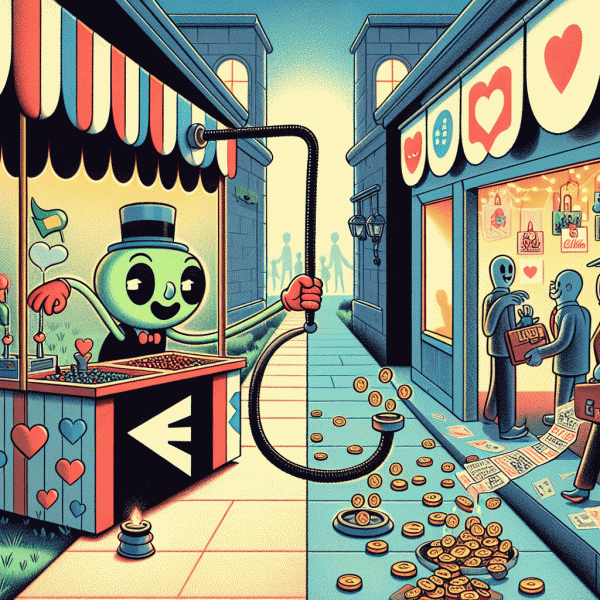
Think of paid promotion like a spotlight at a party: it amplifies what's already working, it doesn't invent the song. Before you hand your budget to the ads manager, ask three blunt questions: do you have a clear outcome (email capture, demo signup, sale), is the creative strong enough to convert on its own, and is there evidence people actually care—comments, shares, or saves are better signals than vanity likes. If you can point to a specific conversion event and some organic momentum, a modest promote test is a smart next step; if not, you'll just be lighting up an empty room.
When to actually hit promote? Here are moments that regularly justify the spend and where a tiny push returns real results:
- 🚀 Launch: New product or limited-time offer where urgency + reach drives measurable transactions.
- 🆓 Lead Magnet: High-value downloadable content that consistently converts organic visitors into subscribers.
- 💥 Social Proof: Posts with authentic testimonials or case studies that already show strong engagement—boosting amplifies trust to lookalike audiences.
Turn decisions into experiments. Start with a small, timeboxed test (think 48–72 hours) and a micro-budget allocated to an audience you can learn from—existing engagers, an intent-based custom audience, or a 1–5% lookalike. Use a strong landing experience: single, focused CTA, minimal form fields, and one clear metric (CPL, CPA, or Demo Requests). Measure quickly: if CPL is in line with acquisition targets and conversion lifts, scale; if not, iterate creative or audience before doubling down. Split budgets: 20% for exploration, 50% for validated performers, 30% for scale and frequency control.
Finally, give yourself exit rules and a sense of humor. Set a maximum CPL, a minimum engagement rate, and a hard stop if creative fatigue spikes or frequency snarls your metrics. Paid boosts aren't a magic wand, but when used at the right moments they turn attention into action—so promote like a scientist, not a gambler: test small, measure ruthlessly, and only scale what consistently moves the needle.
Reach is not Revenue: How to Turn Eyeballs into Inbounds
Throwing budget at impressions feels nice—like hosting a party where everyone shows up—but if the guests don't pick up the phone or join your email list, you paid for a crowd, not customers. The smarter first move is to turn broad awareness into a set of clear signals: what behavior suggests someone is close to buying? Map three intent cues (e.g., repeated product page views, price-comparison searches, demo-video completions) and design micro-commitments to capture them. Use those signals to gate creative and calls-to-action so you serve different messages to browsers versus buyers. Prioritize quality of attention over quantity of eyeballs; a targeted 10k reach that yields 200 qualified leads beats a 100k reach with zero follow-ups every time.
Ads that convert feel like friendly directions, not fortune-telling. Lead with a single, urgent value proposition and a tidy offer: a 15-minute audit, a free template, or an exclusive discount—something concrete people can accept in under two clicks. Make the CTA binary and specific (Schedule a demo, Download the kit), and mirror messaging from ad creative to landing page to remove cognitive whiplash. Sprinkle social proof where it matters: a quick stat, a short testimonial, or a recognizable logo. Small creative tweaks—a clearer benefit line, a photo of a real person, or swapping a generic CTA for a time-bound one—often multiply inbound rates far more than doubling reach.
Your landing experience is the conversion accelerator. Remove friction: reduce fields, leverage progressive profiling, plug in calendar booking or live chat, and make page load time a KPI. Above-the-fold should answer "What's in it for me?" and the form should ask only what you absolutely need to qualify the lead. If sales needs more data, automate a second-step survey after the first conversion rather than killing the initial clickthrough rate. Track micro-conversions too—video plays, clicks to pricing, scroll depth—so you can find leaks before blaming the campaign.
Measurement is where reach transforms into repeatable revenue. Tie every ad to UTMs and conversion events that feed your CRM so you can report cost per qualified lead, not just cost per click. Build a closed-loop: have sales flag lead quality, tag outcomes, and feed that info back into campaign targeting and creative. Automate fast follow-up—an SMS or personalized email within minutes converts a hot eyeball into an inbound meeting; letting leads sit for days is like offering coffee to a ghost. Finally, score leads and route the high-intent ones immediately to sales while nurturing the rest with targeted content.
Make optimization your default habit. Run short, hypothesis-driven tests on audience slices, creative variations, offers, and the landing funnel, then kill what underperforms and double down on winners. Prioritize experiments that plug the biggest funnel leaks—if your CTR is fine but form completion is low, don't blow budget on broader reach. Treat reach as fuel and conversion design as the engine: tune both, but start under the hood. If you want one practical step today, pick the page with the highest drop-off and change only the CTA and form length—measure impact and repeat.
Targeting Tweaks that Turn Casual Scrollers into Serious Leads
Think of your ad audience like a cocktail: too sweet and you've got a crowd sipping, not signing up; too bitter and you're paying for curiosity. The secret is less about pouring money into a boosted post and more about tuning the recipe so the right person gets the right flavor at the right time. That means shifting from broad strokes to signal-driven slices—people who viewed pricing, watched 50% of a product demo, or saved a comparison post. Those little intent nudges are gold; target them and you turn casual scrollers into people who actually consider handing over their email.
Start with surgical pruning: exclude recent converters and your current customers so your CPL doesn't balloon. Then layer attributes instead of piling them on at random—pair behavioral signals (cart abandoners, video watchers) with contextual interests that match your product language. Shrink retargeting windows to 7–14 days for high-intent events, and map creative to each segment: short social proof clips for fast decision-makers, detailed carousels for researchers. Use frequency caps to prevent ad fatigue, and split audiences by platform behavior (mobile-only vs. desktop researchers) rather than by vanity demographics alone. Small, precise audiences will often generate fewer leads but better ones.
Make these three targeting moves part of your playbook:
- 🚀 Lookalike: Seed with your highest-quality leads (not just top buyers) to build a tighter prospect pool based on real conversion signals.
- 💁 Behavioral: Target people who performed a specific action in the last 7–14 days—product page views, demo watches, or form starts—rather than anyone who 'liked' a post.
- ⚙️ Timing: Use ad sequencing and dayparting so educational content warms a prospect before you hit them with a hard CTA.
Measure with micro-conversions and iterate fast: track content clicks, CTA taps, form starts and score leads for quality, not just volume. Run A/B tests that change only one targeting variable at a time (audience size, seed list, or lookalike percentage) and let results stabilize over a week before shifting budget. If a boosted post gives a spike in vanity metrics but a terrible CPL, stop boosting and reassign that budget to targeted prospecting. Over time you'll learn the sweet spots where spend produces leads that actually close—then you can scale without falling into the budget trap. Tiny targeting tweaks, smart measurement, and relentless pruning are the difference between likes that flatter and leads that pay.
Creative that Converts: Hooks, Offers, and Thumb Stopping Visuals
Great creative doesn't just get a thumb to pause — it creates a clear path from curiosity to action. Start with a hook that answers the viewer's immediate question: what's in it for me? In practice that means leading with benefit, a bold stat, or an unexpected visual in the first 1–3 seconds. Examples: ask a provocative question, flash a striking result, or show the messy problem you fix and the tidy outcome. Use high-contrast composition, large readable text, close-ups of faces, and subtle motion to break the scroll. If your video will autoplay muted, make sure the first frames work without sound: captions, on-screen copy, and a visual that telegraphs the outcome. Limit on-screen text to three lines and pick a color palette that pops but stays on-brand. Think in beats — attention, clarity, and reason to click — and make that first beat the loudest.
Your offer is the conversion engine. Replace vague pleas with a single, testable promise: a free 7-day trial, a one-page audit, a downloadable template, or a time-limited credit. Keep the proposition simple (one benefit, one action) and reduce perceived risk with guarantees, social proof, or statements like 'No credit card required.' Craft CTAs that tell the user exactly what will happen: 'Get the free audit,' 'Claim your discount,' 'See a demo in 10 minutes.' Avoid multiple CTAs that dilute intent — one clear ask performs better. Match the offer to the funnel stage: soft content upgrades for cold audiences, bold incentives for retargeting. Use price anchoring and micro-offers to nudge hesitant buyers, and remember — clarity beats cleverness when the goal is conversion.
Build a creative testing system so winners can scale without blowing budgets. Run small, fast experiments: swap hooks, headlines, and offers across the same visual to isolate what moves conversion rather than vanity metrics. Use a simple matrix approach — a few hooks × a few visuals × a couple of offers — and measure lifts in CTR and conversion rate. Leverage UGC, customer quotes, and authentic demos for trustworthy social proof, and use template-driven editing so you can churn variants quickly. Set naming conventions for creatives and placements so analytics and billing don't become a maze, and make your feedback loop weekly: what won, why it won, and how to iterate. When a creative converts consistently, increase budget and adapt the format for each placement: vertical for feeds, short clips for stories, thumbnail-optimized cuts for discovery.
Quick, actionable checklist to convert more leads: 1) Sketch three 3-second hooks that answer 'what's in it for me?' 2) Write a single, specific offer with a clear CTA and a low-friction next step. 3) Produce one thumb-stopping visual variant that works muted and features a human or clear motion. 4) Test at least three variants and prioritize conversion metrics (CVR, CPA, LTV) over likes and comments. 5) Scale the winner, reinvest efficiency into audience expansion and retargeting, and keep iterating. Do this and creative stops being an expense and becomes the engine that turns attention into actual pipeline-ready leads — which, let's be honest, is the whole point.
Beyond Vanity Metrics: The Zero Fluff Dashboard for Real ROI
Stop rewarding applause. A zero-fluff dashboard is the antidote to feeding the ego with likes and shares while your funnel leaks cash. Think of it as a tiny control room that ignores applause and only lights up when a real business outcome happens: a contact, a demo booked, a paid trial, or revenue attributed back to an ad. Building that control room forces one question: what exact action moves someone from window shopping to wallet opening? Measure that, and the rest becomes noise.
Focus on the metrics that actually change decisions. Track CPL (cost per lead) and CPA (cost per acquisition) alongside conversion rates at each funnel stage, not just top-of-funnel engagement. Add a rolling MQL→SQL conversion and a simple LTV:CAC ratio to judge long-term value vs. spend. Don't forget pipeline influence: how many opportunities did a campaign touch, even if it didn't close immediately? Micro-conversions like content downloads or signups are your early-warning system for creative or targeting issues.
Practical setup beats theory every time. Pull ad platform UTM data into the CRM so leads carry campaign context, instrument server-side events for more reliable conversion capture, and standardize naming conventions so you can slice by creative, audience, and placement. Use a short attribution window for tactical optimization and a longer view for revenue attribution. Automate a daily feed for top KPIs and a weekly export for pipeline and revenue mapping. If data quality is poor, fix that before optimizing bids.
Turn insights into actions with a simple rhythm: run a 14-day test with a control cohort, measure CPL and downstream conversion, then shift at least 10% of budget toward winners while cutting repeat underperformers. Treat creative and audience as separate experiments so you can tell whether you're selling the message to the right people or just repeating the same post hoping it sticks. If a boosted post gets lots of reach but zero pipeline movement, pause it. If a lower-reach variation delivers leads at half the CPL, scale it and reverse engineer why it worked.
Here's a quick checklist to make the dashboard operational: 1) capture campaign context into CRM, 2) define 3 non-vanity KPIs to steer budget, 3) automate daily KPI pulls, 4) run short experiments and reallocate quickly, and 5) measure impact on pipeline and LTV not just clicks. Do this and boosting becomes a tactical dial, not a budget trap. Ready to stop paying for applause and start buying outcomes?