I Tried 7 Micro-Task Apps—Here's What Actually Paid
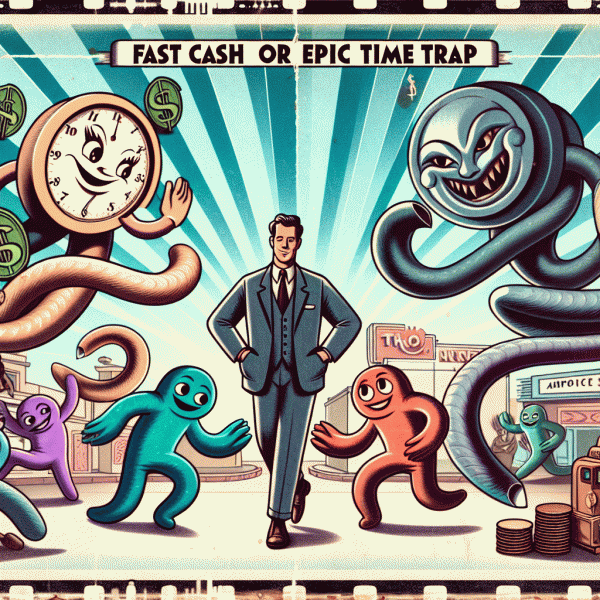
I ran a mini field study over two weeks and treated evenings like a tiny research lab. Seven micro task platforms got a fair shake: a mix of survey sites, HIT marketplaces, and data labeling apps. I did short surveys, image tagging, audio transcriptions, and a few usability tasks. Each session I tracked time, gross pay, cashout friction, and rejection drama. The goal was simple: find where a few spare hours actually translated to cash rather than vanishing into a vortex of low value chores.
The payoff spectrum was dramatic. Most sessions felt like slow pocket change, with effective rates clustering around three dollars per hour if every minute is counted. Good runs hit eight to twelve dollars per hour when I targeted specific task types and used requester filters. A handful of high clarity labeling jobs and well paid surveys pushed into the higher band, but those were exceptions not the rule. Gift card sites paid reliably but required lots of tiny tasks to reach payout, so raw convenience was often paid in time.
What truly paid was repeatability and low friction. Platforms that let me filter tasks, see requester histories, and cash out quickly gave the best returns because lost time is the hidden tax on micro work. Prioritize platforms with fast payouts and transparent rejection policies. Favor tasks with clear instructions and no weird qualification hoops. If a job requires long onboarding for a single low pay unit, skip it. If quality checks are brutal and rejections mean lost earnings, move on. Always check the actual cashout method and timing before investing hours.
Time traps showed up in predictable ways: long qualification funnels that pay nothing, HITs that silently disappear if you take too long, and surveys that end midstream for being out of quota. To avoid the worst of these, set a hard hourly target and a session length cap. Use simple automation tools like autofill snippets and a reliable stopwatch. Keep a tiny spreadsheet that logs task type, earnings, and time so you can compute effective hourly rates quickly. Maintain a low rejection rate by submitting clean work and favor requesters with positive histories.
If the aim is quick pocket money rather than building a freelance career, use a short experiment plan: pick one platform, commit four sessions of two hours each, cherry pick five high clarity tasks per session, and compute net hourly pay including wait times. If the math looks poor, bail and try a different app. Micro tasks can deliver bursty fast cash, but only with a small amount of strategy and ruthless avoidance of time sinks. Think of this as a tiny side hustle that rewards systems more than hustle; with the right approach you can get small green wins without letting the clock eat your evening.
Math vs. Hype: How Many Taps Equal $100?
Let's cut through the marketing fluff and do the math: to hit $100 you need X taps × Y cents per tap. That's the simple algebra platforms never highlight in the flashy screenshots. If a task pays $0.01 you need 10,000 taps; at $0.05 you need 2,000; at $0.10 you need 1,000. Now add the clock: if each tap takes 10 seconds, 10,000 taps = ~27.8 hours. What looks like instant cash quickly becomes a marathon unless the per-task pay or speed changes.
- 🐢 Speed: shave seconds off tasks by mastering one type until it's muscle memory.
- 🚀 Rate: prioritize tasks paying at least $0.03–$0.05; tiny increments multiply over thousands of taps.
- 💥 Reality: account for unpaid time — app load, qualification tests, and payment thresholds can kill your net.
Turn that math into action: time each average task for a session to calculate your true effective hourly rate (100 ÷ hours spent = $/hour from that $100). If you're averaging under $8–10/hour after the math, re-evaluate. Ways to push the needle include specializing in higher-paying task types, stacking similar tasks to reduce context-switching, and using hotkeys or templates where allowed. Also watch for platform withdrawal minimums and fees — that $100 on paper could be $90 in your pocket.
Concrete scenarios to bookmark: low-pay grind ( $0.01/task, 10s/task ) → 10,000 taps → ~27.8 hours → ~$3.60/hour. Mid-range hustle ( $0.03/task, 12s/task ) → 3,333 taps → ~11.1 hours → ~$9.00/hour. Targeted approach ( $0.10/task, 8s/task ) → 1,000 taps → ~2.2 hours → ~$45.00/hour. These aren't hypothetical — they're the arithmetic reality behind every promotional quote. Flip the math: decide your hourly floor and compute how many cents per task you need given your realistic seconds-per-task.
Final playbook: track one session, calculate your real $/hour, then apply a simple rule — keep only opportunities that meet your personal minimum. If you want a true side income rather than an epic time trap, aim for faster tasks, higher pay, and smarter batching. Small optimizations compound: a few extra cents per tap and a few seconds saved per job turn a slog into something you actually want to repeat.
The Hidden Costs: Taxes, Time, and Brain Bandwidth
The shiny appeal of quick gigs hides a taxman, a clock, and a mental meter that all want their cut. Micro-tasks can feel like pocket change that stacks up, but the headline pay is rarely the money that reaches your bank once taxes, platform fees, and the time sink are factored in. Think of every task as having three invisible toll booths: a tax toll, a time toll, and a brain-toll. Miss one of them and the comfortable-looking hourly rate becomes a grind that barely covers coffee.
Taxes and fees: Do not wait until April to discover you owe more than your balance shows. Many micro-task platforms treat you as an independent contractor; that usually means you owe self-employment tax on top of income tax. Platforms also take processing fees, charge for withdrawals, and sometimes hold funds until verification. Actionable move: immediately set aside a percentage for taxes. A practical rule is to reserve 25–30% of gross earnings into a separate account until you get clearer numbers. Use simple bookkeeping tools or a spreadsheet and tag every receipt. When you hit thresholds for 1099s or VAT in another jurisdiction, the paperwork is easier if your records are tidy.
Time is the sneaky thief: A 5-minute micro-task is rarely just five minutes. There is onboarding, reading guidelines, waiting for approvals, and handling disputes. Context switching between tasks takes an extra psychological minute or more, and the accumulated seconds become hours. Calculate an effective hourly rate by timing a full session: include search, setup, and interruptions. If your effective rate is below a floor you set, stop doing those tasks. Practical tactics: batch similar tasks into blocks, use timers, and set a minimum acceptable hourly rate before you start a session. If a task pays only pennies but costs momentum, it may be useful as a warmup or to test a new platform, not as steady income.
Finally, brain bandwidth matters. Micro-tasks are attention tax: repetitive choices drain willpower and reduce capacity for higher-value work. If you rely on micro-gigs for 'free time' income, you may actually be trading mental energy that would be better spent on skill-building, product development, or networking. Two quick brain-saving tips: create response templates and automation snippets, and reserve focused blocks for tasks that require concentration. Treat micro-tasking like a tool in a toolkit, not the whole workshop. When you run the numbers — taxes + fees + true time + cognitive cost — you will be able to pick the gigs that actually pay, and ditch the ones that only feel like cash.
Side-Hustle Fit Test: Are Micro-Tasks Your Match or Mismatch?
Think of micro-tasks like convenience food for your wallet: fast, satisfying in the moment, but not always nutritionally sound for long-term goals. Before diving in, give yourself a quick personality and calendar check — do you love tiny wins, have unpredictable pockets of time, and tolerate repetitive work? If you crave variety, promotion paths, or building marketable skills, micro-tasks can feel like chewing the same flavorless gum. On the other hand, if you need immediate cash for an emergency, enjoy low-stress tasks that don't demand deep focus, or you want something you can pick up between class, commutes, or childcare, micro-tasks might be exactly the comfort snack you need.
Now make this practical: run a two-minute math test. Track a sample batch of tasks for one hour and calculate your effective hourly rate = total payout minus fees divided by time spent (including review and retries). Set a minimum you won't accept — a rule of thumb for many people is to aim for at least what you can earn elsewhere for low-skill work (use $12–15/hr as a baseline, but calibrate to your local cost of living). Also factor in non-monetary value: does the task build a skill, expand your network, or let you learn a new tool? If the money is low but the learning curve is steep and relevant, it might still be worth a temporary tradeoff.
If you decide to try, run the experiment like a mini-operations upgrade. Batch similar tasks into focused sprints, create templates or canned responses where allowed, and use browser extensions to filter for high-paying or quick-approval jobs. Prioritize platforms with fast payouts and clear dispute policies, and avoid tasks that carry long unpaid review periods. Protect your time by setting minimum time blocks (no micro-tasking in slices under 20 minutes unless the rate is exceptional), and track distraction costs — five minutes to start/stop kills efficiency. Finally, treat automation and skill-building as the exit ramp: if you can script a repetitive step or learn a tiny skill that multiplies earnings, invest a little of your micro-task time into the upgrade.
Close your experiment with a crisp decision matrix: after two weeks ask three questions — (1) Did I meet my hourly threshold? (2) Am I getting any resume or skill value? (3) Is this sustainable with my energy and life rhythm? If you tick mostly yes, lean in and optimize. If it fails the money and energy tests but teaches something useful, pivot toward higher-value gigs that build on that learning. If it's a net time-suck with no upside, cut it loose. Keep the tone playful but ruthless — micro-tasks are great quick cash, terrible long-term careers unless you're deliberately using them as a bridge. Run the test, measure the math, and use the results to choose fast cash, steady progress, or a smarter side-hustle altogether.
Pro Tips to Maximize Earnings (Without Burning Out)
Think like a small business owner, not a busy bee on a hamster wheel. The single best move is to start every session with a micro plan: pick one task type, set a realistic timebox, and decide a minimum acceptable rate before you accept work. Track your results for a week and calculate your effective hourly rate (total payout divided by active task time). If a gig cannot clear that threshold, let it go. This makes low paying, high time tasks obvious and stops you from trading hours for crumbs. Small experiments and clear rejection rules will rescue hours that would otherwise evaporate into endless click loops.
Design a workflow that treats micro work like production, not hobby time. Batch similar tasks so your brain can stay in one mode instead of context switching every two minutes. Use text snippets, canned replies, and keyboard shortcuts to shave seconds off every repetition. Timebox with 25 to 50 minute sprints and a 5 to 15 minute break; you will get more done and feel less fried. Where permitted, use lightweight automation or browser extensions to speed approvals, but follow platform rules to avoid penalties. Finally, factor platform fees and payout delays into your bid math so a seemingly decent job does not become a cashflow trap.
Not all platforms are created equal, so spend a few hours scouting and then specialize. Do a trial batch of ten tasks on any new app and record how long each took, the approval rate, and the net pay after fees. That data will quickly reveal which sources are worth your time. For discovery, bookmark curated lists and trusted directories like best micro job sites to compare niche apps and payout histories without the noise. Diversify across two or three reliable channels so slowdowns on one do not wipe out your income, and drop platforms that saddle you with long review windows or frequent unpaid rejections.
Protect your sanity with simple limits: set a daily earning cap, a weekly hour cap, and a stop loss for any task that repeatedly pays below your rate. Rotate task types every few sessions to keep the work feeling fresh and reduce repetitive strain. Use short rituals to reset between sprints — refill a glass, step outside, stretch — and celebrate small milestones to keep motivation high. In short, make micro tasks a system rather than a slog; with rules, timers, and the right platforms, you can squeeze steady cash from short gigs without burning out like so many one hit comets.