Seed, Spark, Surge: The Crowd Playbook That Builds Demand
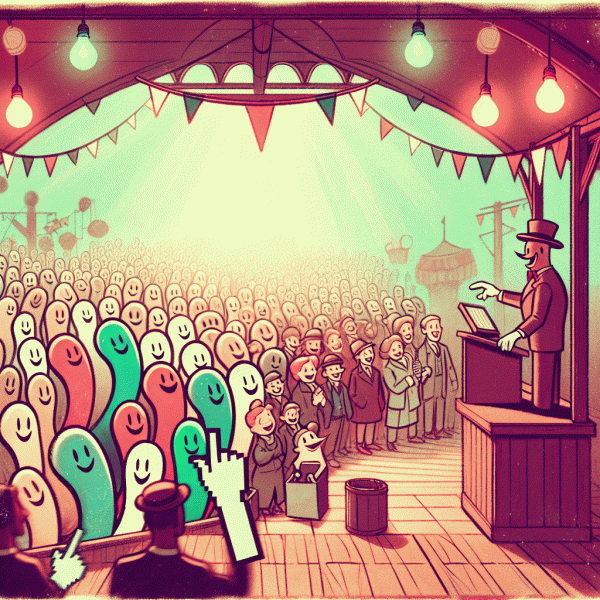
Think of this playbook as a social chemistry set: small, deliberate doses of attention that react into a buying moment. Start quiet and thoughtful, planting stories where early fans and curious browsers live. Craft micro-moments that feel natural rather than broadcast, and let conversational geometry do the rest. That first stage is all about planting credibility and curiosity — samples, seeded reviews, beta invites, helpful tips dropped into niche groups. Keep the ask tiny and the value obvious so people will pick it up and pass it along without thinking about it as marketing.
Once planted, move to fast, visible signals that something is happening. Spark activity by amplifying the best micro-content: boosted posts of authentic microreviews, short video clips that highlight one delightful product detail, and live Q A sessions with a friendly expert. Use time bound hooks like limited tests or small rewards to compel action now. Coordinate 8 to 12 touchpoints across social proof channels within a 72 hour window so the spark looks like momentum not noise. Track referral threads and double down on the formats that create comments, saves, and shares.
Use this quick checklist to operationalize the three phases in every campaign:
- 🚀 Seed: Identify 10 to 20 niche nodes and deliver value first; invite feedback not sales.
- 🔥 Spark: Amplify the top 3 authentic assets with paid bursts and creator reposts to accelerate social proof.
- 💁 Surge: Open a clear path to conversion with time based urgency, social proof panels, and checkout nudges.
The surge phase is where casual curiosity turns into must buy behavior. Create a clean conversion funnel with obvious next steps, frictionless checkout, and layered social proof that reinforces the earlier signals. Use retargeting to nudge warm audiences with proof heavy creatives and user generated content. Monitor cadence so you do not fatigue the same communities; rotate messaging every 48 to 72 hours and archive the variants that stop producing social lift. Real time listening will tell you when to stop pushing and when to inject a fresh creative riff.
This is a playbook built for iterations, not miracles. Run compact experiments, measure the delta between seeded channels and conversion lift, and codify the repeatable signals that predict surge behavior. Keep creative formats simple, scale the ones that convert, and keep a small budget for playful bets that might unlock the next viral vector. If you want results that compound, treat each campaign as a learning loop: plant smartly, spark visibly, and surge with conviction.
Find Your Hive: Where to Drop Mentions for Maximum Pull
Think of your ideal buyer as a flock, not a faceless mass. Start by mapping where that flock spends its time and what they trust before clicking buy. High visibility places like mainstream social feeds bring impressions, but high pull comes from places where intent and context align: review sites, niche forums, community chats, and creator posts that already solve the problem your product fixes. Do the legwork: bookmark the top threads, note recurring questions, and record the tone that lands best with members. That intel tells you whether to be helpful, humorous, technical, or downright sentimental when you drop a mention.
Targeting is easier when you categorize hives by purpose. Use a short taxonomy to decide where to plant your message and how to shape it.
- 🚀 Product Hubs: Quick comparison pages and review platforms where shoppers are already evaluating options. Mentions there need evidence and social proof.
- 💬 Conversation Nooks: Subreddits, Discord channels, and Facebook groups where people ask for real advice. Be useful first, mention second.
- 👥 Micro-Influencer Pods: Small creators on TikTok, Instagram, or YouTube whose followers mirror your niche. Authentic demos outperform polished ads.
Now the how. Drop mentions that add one clear value: answer a question, rescue someone from a bad choice, or share a brief case study. Use a three-step structure for every mention: 1) empathize with the reader, 2) state what you tried and why it worked, 3) offer a low-friction next step (a link, a gif, or an invite to a trial). Timing matters: engage early in the thread lifecycle before the conversation fragments. Keep cadence human—one meaningful mention in five relevant threads beats twenty bland drops across dozens. Track engagement signals beyond vanity likes: follow thread reply depth, question waterfalls, owned-traffic spikes, and microconversions such as wishlist adds or coupon usage tied to that channel.
Finish with a quick playbook to repeat and scale. First, pilot two hives for two weeks each and record top messages and formats. Second, refine the message length and CTA based on which threads generated replies or clicks. Third, automate where possible but never fully outsource tone; templates should guide creative, not replace it. Use simple experiments: A/B a testimonial sentence, swap an image for a short video, or change the CTA from Learn More to Try Free. Measure lift per mention and double down on the combos that move people from curious to convinced. Above all, be the helpful neighbor in every hive, not the door to door salesperson; relevance plus restraint is the formula that turns casual clicks into must buy momentum.
From Comment to Checkout: Micro Steps That Move Buyers
Think of each comment as a tiny handshake — brief, friendly, and full of potential. Instead of waiting for the big pitch, design a string of micro-steps that progress someone from curiosity to confidence to checkout. Start with tone: match the commenter's energy and vocabulary so your reply feels like a real person, not a promo bot. Follow that with a revealing micro-offer — a one-line benefit, a quick stock check, or a variant suggestion — so they get a small win fast. These little confirmations build psychological momentum; people who accept one small help are far more likely to take the next, slightly bigger action.
Operationalize that momentum with mini-conversion plays you can use again and again. Have a short reply template ready that includes a clear next move and a frictionless link: for example, “Love that pick — we have it in Medium and you can snag it with 10% off here: grab it now”. Automate the first reply to acknowledge the comment within minutes, then follow with a personalized DM that contains a direct add-to-cart link or a one-time code. Small conveniences — auto-filled size, single-click cart links, an honest ETA — convert far better than long explanations.
Social proof is your secret micro-multiplier. Replying with a short, specific proof point — “Just restocked, 200 sold this week” or “Here's how it looks on real people” and a UGC image or customer quote — reduces doubt in one sentence. Turn great comments into content: a delighted buyer comment can become a repost, a story highlight, or a pinned testimonial that future commenters see in context. Also use subtle scarcity honestly: if only 3 items remain, tell them. That tiny pressure nudges decision-making without feeling pushy when it's truthful.
Finally, track, test and iterate. Tag replies and links with UTMs so you can measure comment→DM→checkout rates, then A/B test copy length, CTA phrasing, and timing. Try a playful variant one week and a helpful, detail-rich variant the next — you'll be surprised which wins. Keep experiments small, celebrate tiny lifts, and compound them: a 2% improvement in reply-to-click becomes a meaningful revenue stream at scale. Treat every comment as a micro funnel, and you'll turn casual interactions into predictable, repeatable sales.
Measure the Magic: UTMs, view-throughs, and signals that prove ROI
Start measuring like a detective: UTMs are the fingerprint that links a hundred tiny community posts back to a single sale. Design a compact UTM taxonomy that answers who, where, and why: source=forum or source=uplift-group, medium=organic or medium=sponsored, campaign=sku2025_launch. Keep parameters short and consistent so data stays tidy when different contributors paste links. Use campaign content to encode creative variant and placement. Send UTM-enriched links to all crowd channels and make them default in short links so no traffic falls into unattributed mystery. Finally, lock UTM conventions in a shared doc and automate checks for typos with a quick CI test or link generator. That effort pays back by turning messy noise into analyzable signals.
View-through measurement is the bridge from exposure to demand. Decide on a sensible window based on product buying cycles; for impulse buys a 24 to 72 hour window may capture most view-driven conversions, while considered purchases need longer. Instrument impressions and impression IDs in your analytics, and persist matching keys in server logs so you can tie a later purchase to an earlier view even when a click never happened. Run controlled holdouts or creative ABs to estimate incrementality and subtract background demand. Treat view-through as probabilistic evidence and combine it with lift testing to avoid overclaiming credit for sales that would have happened anyway.
Do not stop at clicks and view-throughs; assemble a constellation of signals that point to purchase intent. Track micro-conversions like product page visits, add-to-cart events, coupon redemptions, and local store lookups. Weight these signals by their predictive power and create an assisted-conversion funnel that shows how crowd content nudges attention over time. Stitch client-side pixels with server-side event receipts to reduce attribution loss and use hashed identifiers to respect privacy while enabling matching. Build cohorts of exposed users and compare LTV and repeat purchase rates to unexposed cohorts to prove that crowd efforts create durable customers, not just one-off spikes.
Operationalize the insights into dashboards and experiments. Feed UTM fields, impression logs, and event data into a pipeline where analysts can run incremental ROAS calculations and cohort lift analysis. Monitor hit rates for each UTM source, the view-to-conversion latency curve, and SKU-level uplift so optimization is granular. Run quick experiments where you vary exposure frequency or creative swaps and measure the delta. Make reports readable for marketers with a few clear metrics: adjusted conversion rate, incremental revenue, and cost per incremental acquisition. Measure, iterate, repeat, and watch casual clicks turn into buy decisions that stack up on your P and L.
Steal These Lines: Irresistible CTAs and reply-ready snippets
Think of calls to action as tiny scripts that steer crowd conversations toward buying. The goal is not to shout louder but to offer a short, clickable promise that feels personal, obvious, and worth the tap. Keep language tight, benefits front and center, and reduce friction to a single, obvious next step.
Use this simple formula: Verb + Benefit + Easy Win. Examples that work in community threads and comment funnels include Get 10% Off Now, Try Free for 7 Days, Join 1,000+ Happy Customers, Reserve Your Spot, and See the Demo. Each one answers the reader's first question: what do I gain and what must I do next.
Drop these three quick templates into replies or pinned comments for immediate lift:
- 🚀 Urgency: Claim the limited slots — get in before midnight.
- 💥 Value: Unlock a free guide and instant savings with code SAVE10.
- 💬 Reply: Curious which plan fits you best? Reply with your use case and we will advise.
For reply-ready snippets, keep them under 20 words so community managers can copy and paste without editing. Examples to stash in your swipe file: Great question — quick tip: start with the free trial to test results., We use that exact setup and cut time by half; DM for the template., Here is a one minute demo link that answers this. Rotate CTAs by channel, A/B small wording changes, and pair each CTA with a short social proof line to turn casual clicks into confident buys.