The Crowd Playbook: Where to Find Ready-to-Buy Audiences
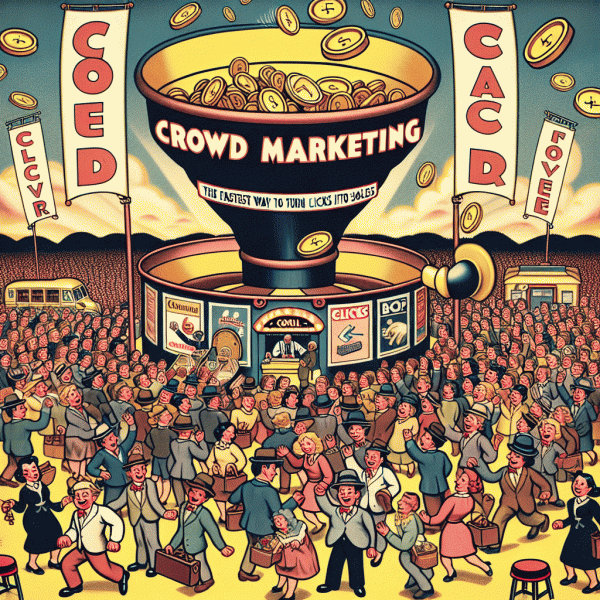
Think of ready to buy audiences as crowds already mid checkout mentally. They are people using purchase intent language, comparing brands, asking where to buy, or ranting about a solution they still need. Start by listening where purchase signals are explicit: product review pages, marketplace Q and A threads, Reddit subs with buying guides, and niche Facebook groups where members ask for recommendations. Those places compress the buyer journey: questions are warm leads, not cold prospects. Your job is to meet intent with helpful context, not a billboard interrupting dinner.
Hunt these pockets with search strings and platform filters. Use keyword patterns like "best X for Y", "where to buy", "alternatives to", and "shipping to" to surface threads that mean business. Scan Amazon and Trustpilot review sections for recent complaints you can solve, find competitor mentions on Twitter lists and product forums, and monitor subreddits and Discord channels dedicated to your vertical. Set alerts for brand and product keywords and follow community moderators who curate high quality threads. Granular listening beats broad advertising when time to convert is measured in hours, not months.
When you engage, be useful, brief, and specific. Offer a one line problem diagnosis, a concrete recommendation, and a low friction next step like a direct link to the product page or a short coupon code. Leverage micro influencers and trusted community members to amplify social proof; a single respected voice in a tight niche will move more carts than a mass ad blitz. Test thread level approaches: answer one high intent question per day, seed a short case study in a comment, then escalate to a light promotion once the community has validated the suggestion.
Measure fast and iterate. Track conversions by source so you know which forums and threads actually turn clicks into sales, then scale winners with targeted crowd campaigns and lookalike audiences built from engaged users. Use retargeting to catch people who clicked but did not buy and experiment with three offers in rotation: a small discount, free shipping, and a time limited bonus. Crowd marketing wins by being surgical, social, and repeatable. Find the right corners where buyers gather, show up with real value, and the rest will be an execution problem, not a discovery one.
Buzz to Bucks: Craft Posts That Convert in Any Niche
You don't need a million followers to convert clicks into customers—what you need is a repeatable post formula that makes people stop scrolling, nod, and act. Start by swapping flashy promises for tiny, relatable wins: a single-line pain point, a quick nugget of proof from a real user, and one crystal-clear next step. Keep language native to the crowd you're tapping (slang where it lands, professional tone where it sells), surface social proof early (ratings, short quotes, real numbers), and put the offer right beside it. Remember: in crowd-driven feeds, relevance beats cleverness. Make each post feel like a friend whispering a helpful tip, not an ad screaming for attention.
Build posts from a tight three-part template so contributors can reproduce success without guessing. Template A: Hook: 6–10 words that name the problem; Proof: 1 sentence with a user result or stat; Action: 1 short line with the offer + link. Template B (emotion-driven): Relate: begin with a tiny confession; Relief: show how your product fixed it; Ask: invite them to try a free sample or discount. Template C (authority): Fact: open with a surprising stat; Trust: drop a stamped credential or micro-testimonial; Push: limited-time nudge. Swap nouns and verbs to fit niches: for coffee, swap "tired" for "drag at 3pm"; for SaaS, "slow reports" for "billing headaches"; for skincare, "redness" for "confidence."
Scaling these posts across a crowd network means replacing one-off creativity with repeatable slots. Give contributors a short brief: one preferred hook, two acceptable proofs (quote or stat), and three CTAs of varying urgency. Provide swipeable assets—headline options, two image crops, and a branded short URL/Coupon—for fast deployment. Track each contributor with unique tracking parameters so you can tie impressions to conversions. Run 3–5 post variants per batch and kill anything underperforming; double down on the top performers. Pay contributors not just for impressions but for quality actions: shares, clicks that reach cart, and actual conversions rise above vanity metrics.
End every campaign with a tiny, ruthless measurement routine: capture conversion rate, cost-per-acquisition, average order value, and share rate. Keep a one-page playbook of winners—templates, exact wording, best-performing CTAs—so contributors can reproduce the tone that sells. Test one new hook and one new CTA each week; if a tweak improves conversion by even 10%, you've bought yourself a lot more gas for growth. Friendly reminder: the crowd is your amplifier, not your creative director—give them templates that convert and let authenticity do the rest.
Micro Influencers, Macro Results: Partnerships That Build Trust
Micro creators are the secret weapon of modern crowd marketing because they come with built in trust and tiny megaphones that punch well above their weight. They speak in the language of a real human, not a polished ad script, and that relatability turns curious clicks into confident purchases. When you treat a micro influencer as a co-creator rather than a billboard, the audience senses authenticity and the conversion path shortens. Think of these partnerships as a trust relay: the creator hands off credibility to your brand, and that handoff is what drives faster, cheaper sales.
If you want macro results without the macro budget, treat influencer selection like talent casting. Look for consistent engagement, honest commentary, and niche relevance more than raw follower counts. Write briefs that leave room for personality: a one line creative direction plus three approved talking points beats a 10 page script. Offer clear incentives—short affiliate windows, product bundles, exclusive promo codes, or creative fees—and track links per creator so you can attribute outcomes. Keep relationships continuous; repeat collaborations raise familiarity, which raises trust, which raises conversion. Finally, use micro-scale pilots to test creative angles and messaging before scaling up with multiple creators in parallel.
Use simple, tactical activations that are easy for creators to adapt and audiences to act on. Here are three high-impact ideas to get started:
- 🚀 Playbook: Run a 7 day story series where the creator tests the product in everyday scenarios, ending with a swipe up or link to a limited time offer. This builds narrative and urgency.
- 💬 Offer: Give an exclusive bundle or code that is only redeemable through the creator. That scarcity converts browsers into buyers and lets you measure direct lift.
- 👍 Metric: Use a micro landing page with UTM tagged links per creator and a simple conversion funnel. Track conversion rate, average order value, and repeat visits to identify your top performers.
Measure, iterate, and protect authenticity as you scale. Prioritize engagement rate and conversion lift over vanity metrics, and use cohort tests to compare creators against your control audiences. Once a creative formula proves out, recruit similar creators to amplify reach while keeping creative direction decentralized so content stays native. The best crowd marketing campaigns feel like a chorus, not a megaphone: many different voices saying the same honest thing. Start with a handful of thoughtful micro partnerships, capture clear data, then expand—your cost per credible recommendation will fall as your network and trust increase, and the clicks you paid for will finally start buying something.
Comment to Checkout: Funnel Shortcuts That Actually Work
Think of comments as tiny storefront windows under your posts: they're noisy, curious, and — when nudged the right way — shockingly efficient at moving people from curiosity to cart. Most funnels make buyers click through product pages, reviews, upsell screens, and checkout forms; comments let you compress several of those steps into a single social interaction. On Instagram, TikTok, Facebook or YouTube, a smartly managed comment thread becomes a live FAQ, a trust amplifier, and a real-time conversion engine. The trick isn't shouting louder — it's orchestrating the crowd so helpful replies and buy cues rise to the top.
Start with a pinned-comment play and treat that top reply like a micro landing page. Pin a short CTA with one clear action: a one-click checkout link, a DM keyword, or a promo code and an expiry. Seed the thread with five authentic answers from staff, micro-influencers, or early buyers that address price, fit, and delivery in plain language. Use simple reply templates such as: "Hi! Use code SAVE10 for 10% off—link in pinned comment" or "DM 'BUY' for a fast checkout link." Those small scripts turn questions into transactions because they remove guesswork and give buyers an immediate next step.
Leverage social proof like a shelf-stacker: encourage customers to post photos, receipts, or one-line reviews in the comments and reward them with a tiny perk or a public shoutout. When a lurker sees three recent buyers saying the product arrived fast and fits true-to-size, their mental demo has been done for you. Run quick comment-driven promos — "Comment 'SHARED' for a 24-hour flash code" — and showcase winners in the thread. The visible, recent, and human proof in comments converts better than polished but static testimonials because it reads as live validation from peers.
Automation should scale authenticity, not replace it. Use lightweight comment-capture tools to tag intent (keywords like 'price', 'size', 'buy', 'link'), DM a tailored checkout link, and push high-value leads to a live rep. Feed that data into your CRM and run retargeting ads at commenters who didn't convert within 48 hours. Keep escalation rules simple: high-intent keywords or repeat engagement = human follow-up; casual praise = nurture track. The result is a hybrid funnel where bots handle speed and humans rescue nuance, so you convert more without sounding like a dialer.
Try this 48-hour experiment: publish a product post, pin a clear CTA, seed five genuine replies that remove common objections, add a reply with a limited coupon, and configure a bot to DM anyone who comments with a one-click checkout link. Measure comment-to-checkout conversion, average order value, and time-to-purchase; you'll often see conversion rates spike when social friction is replaced with conversational shortcuts. Iterate on tone and timing, then double down on the threads that perform. When the crowd is trained to answer, validate, and nudge, your funnel stops being a tunnel and starts behaving like a busy, friendly shop — and that's the fastest way to turn clicks into sales.
Proof, Not Puff: Metrics to Track, Tests to Run, ROI to Win
Numbers are the secret handshake of good crowd marketing: flattering you when results are strong and kicking you under the table when they are not. Start by instrumenting the basics: UTM parameters on every link, event tags for micro and macro conversions, and a clean attribution window that matches your sales cycle. Track traffic quality (engaged sessions, time on site), click performance (CTR by placement and creative), and conversion funnel rates (landing page to cart, cart to purchase). Always pair volume metrics with value metrics: average order value, repeat purchase rate, and customer lifetime value turned into per-acquisition targets.
Design tests like a scientist who enjoys flair. Run A/B creative tests where the only variable is the social proof element (testimonial vs. user-generated photo), then test CTA copy, then test placement and timing. Use holdout groups or geo experiments to measure incrementality instead of relying on last-touch attribution alone. Make sample size and test duration non-negotiable: small samples produce pretty numbers that do not survive reality. If you are unsure about power calculations, start with conservative estimates and let your analytics platform or a simple online calculator tell you when you have a meaningful result.
When the data arrives, treat ROI like a real equation, not a slogan. Calculate incremental revenue from the test period, subtract all campaign and fulfillment costs, then divide by the same cost base to get true ROI: ROI = (Incremental Revenue - Campaign Cost) / Campaign Cost. For quick sanity checks, compute cost per incremental conversion and incremental ROAS as complements. If a pilot costs 3,000 and yields 12,000 in new revenue attributable to the crowd tactics, the math is simple and persuasive: (12,000 - 3,000) / 3,000 = 3.0, or 300% ROI. Use cohort analysis to check if the lift is frontloaded or sticky; a one-week promotion that drives one-time buyers is less valuable than one that boosts lifetime value.
Now for the operational playbook: start with a tight hypothesis, instrument every touch, run a short, powered pilot with a clear control, and escalate the winners while killing the losers fast. Build a dashboard that shows the handful of KPIs that matter to your CFO and the granular signals your growth team needs. Set a test cadence—one new creative or placement change per week—and keep tests independent to avoid confounding effects. Let your reports show proof, not puff: when your numbers can show incremental lift, reduced cost per acquisition, and improved LTV, you will stop selling crowd marketing and start showing why the market should buy it.