From Buzz to Buy: How Real Crowds Drive Real Conversions
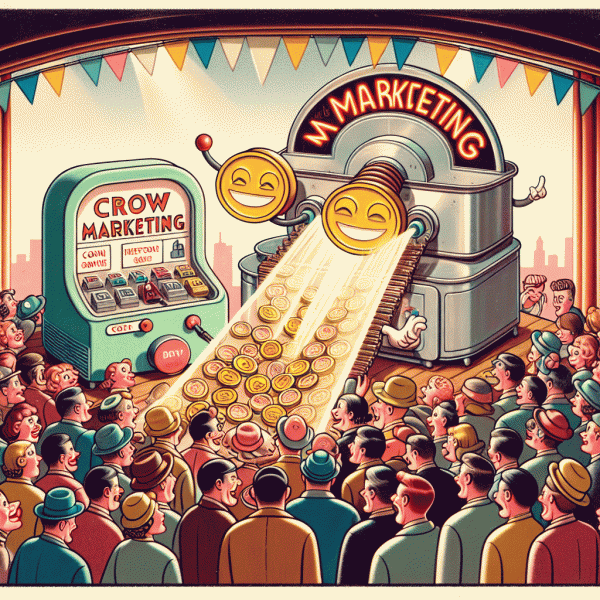
Think of a crowd as a momentum machine rather than a simple audience. When real people start talking, liking, sharing, and recommending, that social signal feeds the algorithm, brightens brand credibility, and nudges strangers down the funnel. Buzz alone is not enough; the magic happens when that buzz is guided. Turn casual chatter into intent by giving the crowd clear, shareable actions: a review template that makes praise effortless, a click path that removes friction, and a timely incentive that aligns with social norms. That is how passive attention becomes purchase intent, one tiny group nudge at a time.
Start with tactical moves that scale authenticity. Activate micro communities where relevance is high and trust is strong, then surface user generated content across paid and organic channels so stories meet buyers wherever they browse. Seed conversations with short, human prompts instead of canned scripts and reward participation with experiences, not just discounts. On the product page, show live signals such as recent purchases and trending tags to convert curiosity into urgency. These practices reduce friction and let social proof do the heavy lifting, turning a stranger scrolling at midnight into a buyer by breakfast.
Measurement keeps the engine tuned. Treat each crowd campaign like a mini experiment: A B test messaging and creative across two similar communities, track conversion lift in a 14 day window, and measure cost per incremental conversion rather than raw ROAS. Key metrics to watch include engagement to conversion rate, assisted conversion share, and average order value for cohort members. Run simple incrementality tests to separate organic momentum from paid reach, and use cohort lifetime value to justify initial investment. With clear hypotheses and tight windows you can prove which crowd signals truly move revenue and which are just noise.
Ready to run a micro pilot? Start with three communities, two creative angles, and one sharp conversion goal. Collect short testimonials, syndicate the best ones across your paid feeds, and measure lift with a clean control group. Keep creative honest, timing aligned with real conversations, and incentives meaningful but not manipulative. Iterate quickly, scale what drives incremental sales, and keep the crowd at the center of your strategy. With that approach you are not chasing viral fairy dust; you are building a predictable clicks to sales pipeline powered by human momentum.
Where to Post: Finding High-Intent Communities That Actually Click
Think of high-intent places like boutique stores in a mall: smaller crowds, sharper needs, and shoppers who already know what they want. Your job isn't to shout across a noisy food court — it's to stroll into the shop, show a product demo that solves the exact problem people came in for, and hand them a reason to check out now. That means swapping vanity metrics for signal-based scouting: look for concentrated conversations about purchases, troubleshooting threads where people ask what to buy, and spaces where recommendations stick long after messages scroll away.
Start your hunt with signals, not platforms. A subreddit with weekly “what should I buy” threads, a Discord server with product-focused channels, or a niche forum where members post receipts and setup photos all scream intent. Scan recent threads for questions dissolving into product talk, check whether posts get follow-up “how did that work for you?” comments, and note if moderators allow promotional mentions — that's often a shortcut to permission. Use search operators (site:forum.com "best" + "recommend") and social listening tools to map pockets where purchase intent is explicit instead of implied.
Targeting types can be surprising, so prioritize three community archetypes that convert reliably:
- 🚀 Niche Forums: Tight, topic-focused boards where members share deep product experiences, photos, and long-form reviews — ideal for case studies and detailed how-tos.
- 💬 Expert Discord/Slack Channels: Real-time groups with power users and moderators; post quick wins, AMAs, or exclusive offers to spark immediate clicks.
- 👥 Product Review Threads: Aggregated threads on Reddit, Facebook, or industry sites where intent is near purchase—answers to “which one should I buy?” often direct buyers to links.
How you show up matters more than where you show up. Lead with utility: answer a burning question, offer a short checklist, or post a one-page setup guide rather than a landing page dump. Use clear formatting — headlines, bullet tips, and images — and include a low-friction next step (free trial, short demo, or a tracked link) rather than a hard sell. Personalize: mention a recent thread you're replying to, tag top contributors respectfully, and A/B test two post styles (story-led vs. tip-led) to see what unlocks replies and referral clicks.
Finally, don't fly blind. Track engagement beyond likes: capture click-through rate from that community, conversion rate on the offer, and micro-metrics like comment sentiment and follow-up questions. Set a simple hypothesis for every community experiment, run it for two weeks, and decide: double down on formats that spark genuine conversation and drop or tweak the rest. Start with two high-intent spots, treat them like lab experiments, and amplify the winners — that's how crowd marketing turns traffic into customers without begging for attention.
What to Say: Comment Formulas and Thread Tactics That Sell
Comments are not minor noise. In crowd marketing they are the threaded storefront: short, social proofs that whisper trust into a stranger's scroll. Think of each reply as a microad designed to convert attention into curiosity and then into a click. The trick is to make every line feel native to the platform, useful to the reader, and impossible to ignore. That requires a mix of rhythm, utility, and a little personality. Below are repeatable, ready to deploy tactics that help your crowd turn casual scrollers into prospects without sounding like a billboard.
Start with simple comment formulas and make them modular. A reliable template is: Problem + Tiny Proof + Micro CTA. Example: "Struggling with slow uploads? I switched to [X setting] and cut time in half — see my step by step." Swap in voice, proof, and direct next step to fit niche threads. For reviews or testimonial threads use: Empathy + Result + Specifics. Example: "I had the same issue. After two weeks of [product], my output doubled. I can share my setup if you want." For FAQ or tactical threads use: Quick Answer + How To + Link. These patterns are short, repeatable, and invite replies which boost visibility.
Thread tactics matter as much as what you say. First reply within the first hour if possible, because early engagement signals relevance. Follow up twice: once to add a small resource, and once to answer a follow up or ask a clarifying question that nudges the user to respond. Use comment threading to build a mini funnel: initial comment plants curiosity, a second comment provides a micro win, and a third includes the CTA or link. Staggered replies feel conversational and keep your comment near the top. Vary tone between informative, playful, and authoritative to avoid robotic repetition.
Authenticity is the conversion engine. Avoid over hyped language and claims that are impossible to verify. Use microproofs such as screenshots, measurable outcomes, or concise before and after comparisons. Match the community voice: if the thread is technical, be precise; if it is casual, be witty. Maintain compliance: disclose affiliations when required and do not spam the same link across unrelated threads. Track which formulas move clicks to conversions and iterate. A/B test small wording shifts — sometimes a single word like "tried" versus "used" can change response rates significantly.
Here are three quick, copy ready bites to insert and test right away:
- 🚀 Hook: Try this one line opener to stop the scroll: "If you want faster results, swap X for Y — I saw immediate change."
- 💬 Nudge: Use this mid thread to generate replies: "Curious which model I used? I can post settings if that helps."
- 👍 Close: A low friction call to action that converts: "If you want the step by step, DM me or tap the link; first 10 get a quick guide."
Proof and Pixels: UTM, Attribution, and the Metrics That Matter
Think of UTMs as the bloodstream and pixels as the nerve endings of your crowd marketing engine: UTMs carry the origin story of every click, pixels tell you what that click actually did once it hit your site. Without clean tagging and reliable event fires, you're arguing about performance with seat-of-the-pants intuition instead of cold, convertible facts. That doesn't mean you need a PhD in analytics—just a handful of rules and a ruthless QA habit.
Start with a UTM taxonomy that's boring enough to be consistent and flexible enough to scale. Use lowercase, no spaces (dashes or underscores), and a standard set of keys: utm_source, utm_medium, utm_campaign, utm_content, utm_term. Prefer campaign IDs for utm_campaign to avoid name collisions and append human-friendly labels for reporting. Centralize all link generation in a shared sheet or tiny app so influencers or communities don't invent 37 variants of the same campaign. Always test that your redirects preserve UTMs; if you use short links, make sure the redirect service forwards query strings. Tip: include a campaign_id in the URL and map that to metadata server-side so you aren't forced to rely on query strings for long-term joins.
Pixels are where the rubber meets the revenue. Client-side pixels are easy but fragile—ad-blockers and browser changes will eat them. Server-side tracking (server events or postbacks) gets you more reliable completions and lets you send hashed identifiers for privacy-safe stitching across touchpoints. Standardize event names (e.g., purchase_completed, lead_submitted) and include a revenue parameter when relevant. De-duplicate events by sending a unique event_id and timestamp so a single conversion doesn't get counted multiple times across SDK, pixel, and server logs. And yes, set up a debug mode for QA: dev-only test orders and a replay tool to validate end-to-end.
Attribution is less about picking a «correct» model and more about answering the question you actually care about. If you need to reward partners for last-click conversions, use last-click—but run parallel multi-touch and incrementality analyses so you aren't paying for what you would have gotten anyway. Run simple lift tests with randomized holdouts when possible: put a statistically significant sample of your crowd in a control group and measure incremental sales. Track both immediate metrics (CTR, CR, CPA) and downstream value (LTV, repurchase rate, ROAS). Build dashboards that show both attributed conversions and incremental conversions, and always surface confidence intervals—not just single-number vanity metrics.
Quick cheat-sheet to operationalize this today:
- 🆓 UTM: Centralize link generation, use campaign IDs, test redirects preserve query strings.
- 🚀 Attribution: Run randomized holdouts for incrementality, compare last-click with multi-touch for context.
- ⚙️ Lift: Instrument server-side events with unique event_ids, revenue param, and QA pipeline to avoid double-counting.
Combine those pieces and you'll turn noisy crowd signals into repeatable insights: organized tags for traceability, robust pixels for data fidelity, and attribution methods that tell you what actually moved the needle. That's how clicks graduate into sales—predictably, measurably, and with a lot less arguing in meetings.
Avoid the Backfire: Anti-Spam Etiquette and Scalable Playbooks
When crowd marketing scales, the line between clever outreach and full blown backlash is thin. The easiest way to avoid that spiral is to treat every placement as a human interaction, not a checkbox. Begin with a mindset shift: prioritize relevance, not reach; give moderators clear context and full creatives so contributors can match tone; and respect pacing so channels do not get flooded. A single well placed, genuinely useful mention will generate more downstream trust than ten clumsy pushes. Consider every post a tiny brand ambassador moment and build rules that protect it: no copy paste, always native phrasing, and mandatory disclosure where it matters.
Turn those rules into a playbook that scales. Keep templates minimal and modular so contributors can adapt instead of parroting. Use rotational assets and variable hooks to prevent identical text across placements. Establish clear frequency caps per target site and per contributor, then automate scheduling around those caps. For onboarding, create a two page cheat sheet with examples of good and bad placements, plus a short quiz to verify comprehension. Step 1: vet channels for audience fit. Step 2: supply variants of headlines and first lines. Step 3: set automatic throttles and human review triggers for edge cases.
Scale safely by mixing automation with human safety nets. Automate tagging, delivery, and basic QA, and then layer human review for nuance and sentiment. Use a reliable microtask provider to recruit quality contributors, and set up a rapid feedback loop: fast corrections, praise for on-brief posts, and calibrated penalties for off-brief work. For fast campaigns, pipeline rehearsals pay off: run a small batch, audit performance and tone, refine the brief, then ramp. If you need vetted contributors quickly, tap options on microtask marketplace to fill bursts without sacrificing control.
Finally, monitor more than clicks. Track placement retention, engagement quality, sentiment, and the proportion of organic follow ups to spot true signal. Build an incident playbook: immediate takedown request, apology plus correction if needed, and a restorative content push that adds value rather than trying to bury the issue. Keep records of what caused friction so future campaigns do not repeat the same mistakes. With systems that favor human context and simple automation guardrails, crowd marketing becomes a repeatable engine that amplifies trust instead of eroding it.