Five Bucks, Big Bet: What the Feed Gods Actually Favor
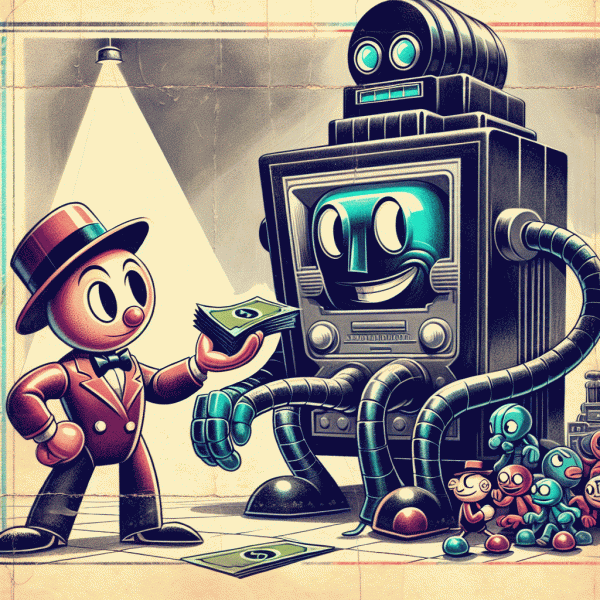
The social feed does not bow to drama or flair alone; it answers patterns and payoffs. With five dollars you cannot buy virality, but you can buy a tiny nudge at a moment when the platform is deciding whether to amplify your work. The feed gods favor early, concentrated signals that prove a piece of content will keep people watching, clicking, or saving. Think of that five dollars as a test token: will this creative convert a cold scroll into an engaged moment? If the answer is yes, the algorithm will hand out more distribution like a curious bartender pouring shots to the crowd that keeps tipping.
So how do you get that proof? Keep tactics simple and surgical. Use the budget to guarantee a short burst of impressions aimed at a highly relevant microaudience rather than sprinkling pennies across the globe. Pair the spend with a sharp creative hook in the first two seconds, a clear call to action that invites a low-effort engagement, and a thumbnail or lead frame that sets expectation. Launch the boost at a time when your followers are most likely to be active so that organic reactions and paid impressions reinforce each other. Track three metrics in the first 24 to 72 hours: view-through rate, engagement rate per impression, and click or save rate. Those are the signals that move the needle from paid exposure to organic momentum.
When you are ready to execute, consider these compact plays that stretch five dollars into something the algorithm can read and reward:
- 🚀 Target: Aim the spend at a tight interest or location cluster that matches your niche so early watchers are likely to care.
- 🤖 Hook: Promote a clip that opens with a clear, unexpected visual or question in the first two seconds to maximize watch time.
- 💥 Prompt: Include one low friction action in the caption such as a one word poll, a save request, or a simple tag ask to drive measurable engagement.
Finally, treat this like an experiment rather than a campaign. Run three micro-tests over different creatives or audience slices, each with a similar five dollar lift, and compare the early signal quality. If a clip gets strong watch and interaction rates within the first day, scale the creative organically by resharing, repurposing into Stories, or adding a slightly larger follow up budget. If none of the tests clear the threshold, iterate on the hook and lead frame before pouring more money in. With curiosity, attention to timing, and one tight execution play, five dollars becomes not a miracle ticket but a meaningful hypothesis test that tells the algorithm something useful about your content.
The $5 Blueprint: Setup, Spend, and the One Lever That Moves the Needle
Think of the $5 blueprint as a laboratory protocol for algorithm experiments: small inputs, fast feedback, and one variable dialed up until the graph moves. Start by picking one clear objective — clicks, saves, signups — and limit your ambition to that signal alone. Decide on the platform where your audience actually hangs out, craft a single crisp creative that conveys the value in three seconds, and set a one-day test window so you don't bleed your whole budget on slow-learning campaigns. Treat this like a sprint, not a marathon: the goal is to learn, not to conquer the market.
Here's a tight setup you can copy in minutes: split the $5 into micro-bets (five $1 tests or one $2 + three $1 variants), run identical creatives with tiny changes, and isolate only one variable per test — headline, thumbnail, or CTA. Use simple tracking: a unique UTM per variant and a single KPI dashboard. Keep targeting narrow but not so narrow the algorithm can't find patterns. If the ad manager lets you, leave auto-placements on and let the platform bring the cheapest impressions; you're hunting for signal, not vanity reach.
The single lever that actually moves most algorithms isn't budget, it's engagement quality: the small actions users take that tell the system your content matters. That could be a click-through, a watch-to-end, a save, or a comment. Your job is to design for that micro-yes. Hook with curiosity in the first frame, remove friction from the action you want, and prime users with a tiny commitment request ('tap to see', 'swipe for tip', 'save this'). When those micro-actions spike, platforms amplify — even on pocket-change budgets.
Measure smart: don't expect immediate sales on $5, expect directional signals. Track CTR, watch-through, engagement rate, and cost-per-engagement instead of CPA or ROAS for this stage. When a variant wins, funnel the remaining pennies into that winner to let the algorithm pick up momentum. And if you need a quick way to source micro-tasks or side income to fund more tests, consider trying a trusted task platform that lets you earn small amounts quickly so you can keep the experiment loop humming.
Final bit of marketing honesty: $5 won't buy virality, but it will buy insight. Run three rounds, record what changed, and let those tiny wins inform a $50 test next. Repeat, learn, and when the algorithm responds, scale the thing that produced real engagement. If you keep the experiments tight and the asks tiny, you'll be surprised how much you can learn — and how efficiently a few dollars can teach you to speak the algorithm's language.
Creative That Clicks: Hooks, Thumbnails, and Micro Tests on a Micro Budget
Think of the first two seconds of your clip as a tiny movie trailer that must either hook or lose. Start with a conflict or a clear benefit, then cut. Use bold, high-contrast thumbnails with one readable line of text and a face or object that directs the eye. For micro budgets there is no room for elegant ambiguity: make the value obvious, use motion in the frame to pull attention, and lead with audio that establishes tempo and emotion within the first beat. The goal is to force a click, not to tell the whole story. Once you have a working hook, compress it to a 1–3 second opener that can play as a standalone test asset.
Micro testing is a game of quick iterations, not sweeping campaigns. Run three tiny variants at once and let raw signals decide. Try these focused mini experiments:
- 🆓 Thumbnail Sprint: Swap one visual element only, like face vs. product, and compare click through rates over 24 hours.
- 🚀 Hook Swap: Record three intros: curiosity, benefit, and shock. Keep everything else identical to isolate what pulls viewers in.
- 🔥 Caption Edge: Test overlay copy: question, bold claim, or time sensitive prompt. Small copy shifts can double CTR on tight budgets.
When you are ready to put five dollars behind the experiment, split the spend across the three variants and set clear cutoffs: kill any variant with CTR under 1.5 percent after a minimum of 200 impressions, and double down on any with both CTR above 2.5 percent and average view length above 3 seconds. Use platform metrics that reward early engagement, and do not confuse vanity numbers for real signal. If you need a testing ground or alternative distribution channels, check tools and listings like make money apps to find low friction buyers and traffic sources. Keep a simple spreadsheet to track creative, thumbnail, budget, and outcome so you can learn faster than you spend.
Finish each micro test with a single tactical change and another round. Repeat the cycle until you hit a reproducible winner, then scale that winner with creative variants rather than fresh concepts. A cheap test that proves a hook works is worth far more than an expensive campaign that never isolates why people clicked. Be ruthless about pruning, playful about variations, and treat five dollars as an artistic constraint that forces clarity and speed.
What Worked, What Flopped: Real Metrics From a 24 Hour Sprint
We funneled exactly five dollars into a 24-hour poke at the feed and watched what bubbled up. The headline: small bets buy quick signals, not long-term dominion. In plain terms, the money bought impressions, a handful of curious clicks, and one or two micro-conversions that felt suspiciously like the algorithm sampling a new snack. The best part was the feedback loop — raw numbers that told us which creative and targeting combos were worthy of a second, slightly larger bet.
The cold metrics were surprisingly generous for the budget. Total impressions landed around 3,700, with 67 clicks (about a 1.8% CTR) and two measurable conversions, which puts the measured cost per click at about $0.075 and cost per acquisition at roughly $2.50. We split the spend across two placement types: cheap reach buys for volume and laser tests for CTR. Reach gave us data; CTR tests gave us direction. If you need quick help scaling creative tests, hire freelancers online to crank five headline variants and two thumbnails — you will thank yourself when the algorithm picks a favorite.
- 🚀 Boost: Spend a dollar on a single bold variation to force the algorithm to compare — it accelerates learning.
- 🐢 Timing: Run short bursts during high-activity windows; the algorithm reacts faster to fresh signals than to slow drips.
- 💥 Creative: Test big visual changes, not just copy tweaks; thumbnails and hooks move CTR far more than punctuation.
The flops were obvious: trying to buy sustained reach or expect reliable conversions from pocket change is wishful. Small budgets expose what we call “signal winners” — clear, repeatable cues that deserve a reinvestment, but they do not replace a launch budget. Actionable next steps: double down on the one creative that beats baseline in CTR, reallocate subsequent micro-budgets to placements that delivered meaningful engagement, and track early indicators (CTR and CPC) rather than waiting for conversions. In short: five dollars is excellent for reconnaissance, terrible as a full-bore strategy, and perfectly suited to teach you what to scale next.
Your Turn: A Step by Step $5 Challenge You Can Launch Today
Think of this as a tiny, scrappy experiment that's more curiosity than cash: you're about to see how far five bucks can push a single idea. Start by choosing one clear objective (for example: reach, watch-time, saves, or clicks) and one platform where your existing assets already have traction. If you have a 15–30 second vertical clip, aim for TikTok or Reels; if you have a striking image and caption, Instagram might be best; if your strength is a short, punchy headline, consider X/Threads. Set a micro-goal that's measurable and believable—think 1,000 views, 10 saves, or 20 clicks—not “go viral.” That constraint turns guesswork into a playbook.
Make the creative and the setup ridiculously simple: spend most of your time on the first 3 seconds and the caption. Create one asset with a clear hook ('Wait till the end', 'You won't believe this tip', or a bold one-liner), and pair it with a short call-to-action: a question, a request to save/share, or a link click. For the $5 spend, choose either a one-day micro-blast ($5 in 24 hours for fast signals) or a slow drip ($1/day over five days to test sustained interest). Target narrowly—either by interest/hashtag or by a tiny audience segment of similar creators/customers—because broad = wasted pennies. Name your test so you can compare results later (e.g., 'HookA_24h_TikTok').
Measure fast, tweak faster: watch the first 48 hours like it's ticking down to winning a prize. Key signals the algorithm rewards are watch-through (how long people stay), early engagement (likes/comments/shares in the first few hours), and retention spikes. If watch time is low, change the thumbnail/opening second; if CTR is low, rewrite the caption to a curiosity-driven line. You don't need a complicated A/B framework—run one focused variation, learn, then recycle the winning element into a second $5 test. Track simple metrics in a spreadsheet or note app: spend, impressions, watch-time %, saves, clicks, and any qualitative comments. If something performs well, consider reinvesting a small portion of your next $5 into a scaled follow-up.
Remember: this is a playful, low-risk experiment, not a marketing war. The point is to build intuition about what the platform rewards at tiny budgets, so you can iterate quickly without burning cash. Document the setup, the headline that worked (or didn't), and one tweak you'll try next. If you're feeling bold, report back with your results—there's nothing we love more than seeing creative tiny-budget wins. Go on, launch the $5 challenge, and treat the algorithm like a game you're learning to beat, one small, smart experiment at a time.