Pocket-Size Budgets, Big Buzz: The spend-smart mindset
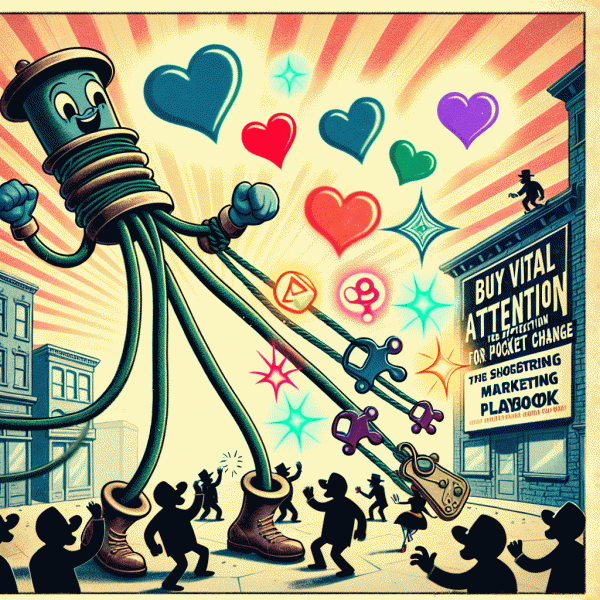
Think like a scrappy director: you've got a tiny budget and a huge desire for attention, so design everything to amplify ROI, not impress stakeholders. Start with one measurable outcome — signups, shares, store visits — and give it a realistic cost ceiling. That constraint forces creativity: prioritize tactics that deliver asymmetric returns (a $50 trial that sparks 500 organic shares beats a $500 banner that nobody clicks). Budget-smart also means embracing imperfect, fast content. Short, bold hooks that spark curiosity will travel farther than polished 90-second explainers no one finishes.
Work the leverage points where pennies turn into views. Micro-influencers with tight niches, user-generated content, clever PR hooks, and community seeding are your friends. Instead of chasing a celebrity endorsement, find three creators who already talk to your exact audience and offer a small fee, product sample, or co-created mini-campaign. Repurpose one idea across formats: a 30-second clip becomes a carousel, a quote card, and a caption challenge. Make every asset shareable by design — add a one-line prompt, a bold visual, and a tiny incentive like early access or a discount code for people who tag friends.
Test small, scale fast is your operating principle. Split your tiny budget into many micro-experiments: different hooks, thumbnails, CTAs, and audiences. Measure early indicators — click-throughs, share rate, and time watched — and double down on winners with predictable multipliers. Track costs with UTM tags and simple dashboards; don't let vanity metrics seduce you. Use cheap retargeting to recapture warm viewers and nudge them toward conversion, and set frequency caps so your ad doesn't become background noise. If a creative variant gets traction organically, boost it. If it tanks within a handful of impressions, kill it and move on.
Finally, run operations like a clever barter market. Exchange product for promo, swap content with complementary brands, and build a roster of micro-partners who rotate promotions for minimal cash outlay. Reward superfans with exclusive perks and a clear path to becoming early advocates — a little recognition creates huge multiplier effects. Keep a lightweight calendar to squeeze more juice from each idea: plan rapid repurposing windows and schedule follow-ups when momentum peaks. Treat every dollar like a curious intern: nimble, experimental, and obsessed with results — that's how pocket-change budgets turn into real buzz.
Free-ish Fame: Leveraging owned and borrowed audiences
Cheap virality starts by being practical and a little mischievous: you are not buying attention, you are buying leverage. Owned audiences are your email list, push subscribers, followers and community members. Borrowed audiences are other people's attention streams: newsletters, partner socials, forums, podcasts and micro-influencers. When you treat both as channels to deliver real, immediate value rather than as billboards, small ideas can ripple. The trick is to engineer tiny, repeatable plays that fit your resources and the partner's audience tone.
For owned channels, volume is not the point; relevance is. Segment by behavior not by demographics, and bake shareability into every asset. Examples: turn a best performing blog post into a 60 second video, a two line tweet thread, and a single image carousel with a clear call to action to forward or tag. Use email subject line experiments that promise utility, not hyperbole. Time releases around moments when your audience will have bandwidth to engage: morning commutes, lunch breaks, and Sunday evenings are windows that reward creativity. Finally, make reuse automatic: every campaign should have a repurpose checklist so you do not reinvent the wheel.
For borrowed audiences, think like a value courier. Pitch partners with a one paragraph summary, a clear audience overlap metric, and a low friction offer they can give away with confidence. Micro-influencers and niche newsletters often prefer exclusives, rapid collabs, or turn-key content that saves them time. Offer swaps that are asymmetric in perceived value: give them early access, co-branded templates, or a custom piece of content their community can use immediately. Do not pitch a cold idea; pitch a plug and a free tool or insight that their audience can test in five minutes. Track every partner link with UTMs so you know which ladders are worth climbing again.
- 🆓 Freebie: Create a tiny, high value giveaway tailored to the partner audience to remove friction and boost shares.
- 🚀 Rapid Collab: Propose a 48 hour co-created piece that each side can post with minimal edits to capture momentum.
- 👥 Community Plug: Offer an exclusive how-to or AMA for a niche group in exchange for a pinned mention or newsletter spot.
Measure like a scientist and move like a scrappy artist. Use short experiments, collect the signal (clicks, forwards, signups), and double down on the smallest wins. Convert top performing borrowed placements into owned assets by capturing emails, saving conversation threads, and turning partner posts into landing pages. Over time the compounding effect of tiny exposures will outperform one big push. Treat owned and borrowed audiences as two halves of the same engine: one fuels retention, the other fuels discovery, and together they let you buy viral attention for pocket change.
Creativity Over Cash: Low-cost content that stops the scroll
Leave the gear envy at the door. Big budgets do not guarantee attention; tight constraints do. Start every piece with a one sentence premise and a 60 second time cap. Break the story into three beats: shock, show, and close. Use a phone, a sunny window, and one prop to force creative choices. Create a 10 second teaser and a 50 second payoff, then trim aggressively. Limit palette to two colors, two fonts, and one sound to build a signature look without a studio. The point is to make choices that are repeatable and fast. Repeatability means more content for less money, and that is the pocket change play.
Hook like your feed depends on it because it does. Treat the first three seconds as prime real estate: start with movement, a bold text overlay, or an unexpected sound. Use simple, proven openings: curiosity via a weird fact, transformation with a clear before and after, or a punchy challenge. For captions, lead with the value or the twist so viewers know why to stay. Pair a loud visual with a quiet voiceover for contrast, or the opposite. Templates help speed production: commit to a hook formula and swap in new ideas each day. Over time the formula becomes a machine that reliably stops thumbs.
Ship with scrappy production values and clean execution. Use vertical framing, five foot camera height, and a table or chair for consistent composition. Natural light is free; bounce it with white poster board. Record audio with a cheap lapel mic or the earbud mic, and normalize levels in any free editor. Cut to the beat: three to five cuts per 10 seconds keeps energy high. Add captions automatically so videos are watchable without sound. Free apps provide pro transitions and motion text; learn one app well instead of juggling many. Always export one raw cut for repurposing: short hook, medium length, and long form, three versions from one shoot.
Think like a flea market merchant: place content where attention already flows. Seed new videos to a small engaged group first, ask for feedback and early shares, then amplify. Use pinned comments to direct the next action, or reply with a dupe style video to fan responses. Prompt viewers for tiny contributions to drive user generated content: finish this sentence, show your version, or tag a friend who needs this. Micro collaborations with creators who have 1k to 50k followers are cheap and high ROI because their audiences are active. When people contribute, they do free work to extend your reach, so treat them like partners, not stats.
Measure what matters: attention span and shares beat vanity plays. Track retention curves and identify the drop point, then rewrite that moment for the next batch. Run small paid tests of winners with five dollar daily budgets aimed at lookalike or engaged audiences, not cold broad stacks. If a variant lifts retention or share rate, scale incrementally and keep the creative consistent. Finally, schedule a content sprint every week: 10 ideas, three shoots, seven posts. Constraint breeds creativity, and when you master low cost content that stops the scroll, viral attention becomes an affordable repeatable tactic.
Channels That Compound: Tiny spends that snowball reach
Small bets across the right places produce an upward spiral: $10 to a micro-influencer lands a post; that post pulls traffic; a $5 boost to the top-performing clip nudges an algorithm to show it to more people; an email capture turns one-time clicks into repeat visits. This is the compounding idea in action — you don't try to buy overnight fame with one heroic spend, you build a chain: reach → engagement → signal → algorithmic amplification → lookalikes → organic spread. Treat each channel like a tiny snowball you roll toward a slope; mixed together they become an avalanche.
Channels that tend to compound are cheap to test and generous with the signals platforms crave: micro-influencer seeding (a few paid posts or product samples), boosted native posts with hyper-targeted audiences, community placements in niche Discords or subreddits where one upvote multiplies visibility, discovery ad formats (TikTok Spark, Pinterest Promoted Pins) and low-cost newsletter swaps. The secret isn't exotic tech; it's linking actions so one touch hands off to the next — click becomes signup, signup enters a drip, the drip incites a share, the share triggers platform mechanics and impressions climb while CPMs fall.
Operationally, run pocket-sized experiments: pick three channels, allocate $5–$50 per creative variation, and run short windows to learn signals like CTR, watch time, signups and share rate. When a creative or placement outperforms, double down fast and retarget that warm cohort with a different message or incentive. Stitch creatives across channels so the second touch picks up where the first left off — same hook, amplified offer, clearer CTA. Save winners as assets: turn a high-performing 15s clip into an ad, a newsletter blurb and a pinned post. Each reuse compounds the initial investment and reduces future creative cost.
Measure with pragmatic impatience: don't demand perfect conversion on day one, but watch leading indicators and how CPA moves as you scale. Protect margin with automatic scaling caps and ruthless throttling of underperformers — let winning channels compound, don't let experiments sink your budget. At shoestring scale, creativity beats cash: a sharper hook, tighter audience and a quick retarget loop will outgrow a single expensive play. Start small, stitch smart and let those tiny spends snowball into disproportionate reach.
Measure Like a Cheapskate: Micro-tests, fast wins, zero waste
Think like a bargain hunter who found marketing in a clearance bin. The goal is not to be cheap for cheapness sake but to squeeze big, visible wins from tiny bets. Run tests that return answers faster than a weeknight pizza, waste less ad spend than a bad coffee run, and give clear directional signals you can act on immediately. This is about ruthless simplicity: one hypothesis, one metric, one decision at the end of the sprint.
Here is a micro-test recipe you can use right now. Pick a single hypothesis that would matter if true, for example that a conversational hook increases shares. Choose a tiny audience slice or channel where impressions are affordable. Create 2 variants that differ by only one element, such as headline or thumbnail. Set a minimum exposure rule, like 300 impressions or 100 clicks, and a timebox of 24 to 72 hours. Budget each variant with pocket change, such as a $5 to $50 ad spend or an organic push into a community. When the test ends, compare the primary metric and kill the loser.
Measure with a bias toward speed and signal. Use a leading metric for quick feedback, such as click through rate, play rate, or email capture rate, and a lag metric for validation, like purchase conversion or retention. Adopt simple stop/scale thresholds: stop anything that shows negative lift or under 10 percent relative improvement, and scale winners that hit 20 percent lift or meet cost per acquisition targets. If statistical rigor is desired, lean on repeated short tests instead of one giant experiment. That saves cash and builds a library of repeatable wins.
- 🆓 Hook: Swap the opener on a short social video and measure share rate over 48 hours. Cheap creative, fast signal.
- 🚀 Button: Test three CTA texts on the same landing page with a $20 traffic spur. Measure email signups as the primary success metric.
- 💥 Audience: Run the same creative to two micro-audiences and compare cost per click and micro-conversion. Find the sweet spot without blowing budget.
Log every test result in a simple spreadsheet. Add columns for hypothesis, variant, metric, cost, and decision. Automate a kill switch by setting a hard stop on spend when a variant underperforms. Recycle winners into larger campaigns, rinse, and repeat. Over time, those small, frequent, cheap experiments compound into a stack of reliable plays that scale. Consider this a frugal laboratory: low waste, fast learning, and the occasional delightful spike that looks like a viral miracle but tastes like good, thrifty work.