AI copilots go from hype to hands-on — smarter targeting, faster creative, bigger wins
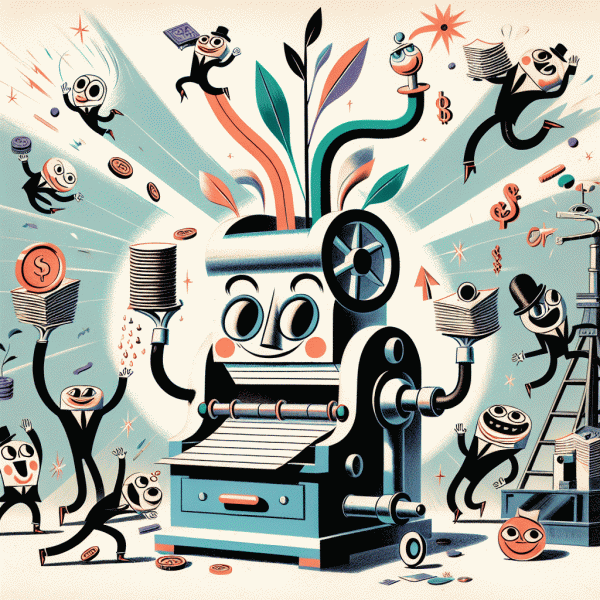
AI copilots have quietly graduated from flashy demos to everyday teammates that actually move numbers. Instead of promising miracles, they're being embedded into ad ops, content studios, and CRM flows to do the heavy lifting: synthesize signals, recommend high-propensity audiences, and spin up creative variants at scale. The practical result is less guesswork and more repeatable uplift—faster rounds of iteration, smarter budget allocation, and creatives that feel tailored rather than templated. If you want marketing that scales without feeling robotic, these copilots are the power tool that finally fits into your belt.
Where the value shows up is painfully simple: relevance. When a copilot combines first-party behavior with model-driven propensity scores, you move from broad buckets to real microsegments—people who are likely to buy, upgrade, or engage. That drives immediate improvements in CTR and conversion, while automated creative systems cut time-to-live for ad variants from weeks to hours. Early adopters often report meaningful drops in cost-per-lead and faster test cycles; think of it as turning a slow-motion A/B lab into a rapid-fire engine that surfaces what actually works, not what looks good on a whiteboard.
Getting hands-on doesn't require a PhD or a warehouse of data. Start by picking one high-impact use case—cart recovery emails, lookalike audiences for top-margin SKUs, or headline optimization for paid social. Hook the copilot up to the smallest complete dataset that informs that use case, run a 4–8 week pilot, and measure against a clear baseline. Define success metrics up front (incremental conversions, CPA change, creative velocity) and give the system permission to iterate within guardrails. Quick pilots that focus on one ROI lever tend to produce convincing proof points you can scale.
Human oversight is still the secret sauce. Use a human-in-the-loop for tone checks and brand consistency, and lock down creative templates so the copilot optimizes within brand-safe frames. Implement prompt/version control and log outputs so you can analyze why a particular variant won. Don't forget data hygiene: stale signals and noisy labels create brittle recommendations. Finally, bake privacy and explainability into your setup—ask your vendor how propensity is calculated and how it maps to your business KPIs before rolling the tool into revenue-critical flows.
For leaders who want a quick sell: propose a time-boxed pilot, estimate the expected lift conservatively, and promise to scale only after hitting measurable thresholds. The math is simple—shorter creative cycles and smarter targeting compound, and within a few quarters those efficiencies pay for the tooling and change management. If you're looking to print growth in 2026, these copilots aren't a shiny experiment anymore; they're the practical lever you can pull to make marketing faster, smarter, and measurably more profitable.
Zero-click content steals the spotlight — how to capture demand before the click
Think of zero-click content as the marketing equivalent of serving the espresso at the kitchen counter: people get what they need without sitting down to a full meal. Search engines, voice assistants, and feed cards now favor bite-sized answers and rich previews, so your job isn't always to win the click—it's to win the first impression. That means crafting copy and markup that delivers a fast, complete answer while keeping a subtle path to deeper engagement. Do that well and you're capturing demand before a user even decides to click, which is exactly what growth plays look like in 2026.
Start with the answer-first habit. Write a clear, 1–3 sentence lead that directly answers high-intent queries, then follow with a short, scannable expansion: lists, tables, or step-by-step HowTos. Add structured data (FAQ, HowTo, Product, LocalBusiness) and optimize your headings so the search engine can extract a single, useful snippet. Don't forget social preview meta (OpenGraph/Twitter) and image alt text—many zero-click experiences live in feeds and side panels where that preview determines whether the user even needs to tap. In short: make your content readable to humans and parsable to machines.
Measure the outcomes that matter. Traditional CTR is still useful, but pair it with impressions, rich result appearances, and "no-click" engagement signals from Search Console and GA4 (look at assisted conversions and on-site micro-conversions). Treat zero-click positions as lead generators: include micro-converters like click-to-call, booking schema, or newsletter signup markup so users can convert without a deep visit. Run rapid experiments—tweak the lead sentence, change the schema type, swap a list for a table—and compare which variation increases impressions in featured snippets and reduces time-to-conversion.
- 🆓 Snippet-first: Craft a concise lead that answers the query in 40–60 words so it's more likely to be pulled into a featured snippet or assistant reply.
- 🚀 Preview-perfect: Optimize OpenGraph/Twitter cards and hero images so your content looks irresistible in feeds and share previews, where many decisions happen before any click.
- 🤖 Feed-native: Use FAQ/HowTo schema and short, structured blocks so your copy can power knowledge panels, voice answers, and in-app answer cards without losing context.
Don't let zero-click feel like a threat—treat it as a new channel. Create a 30/60/90 day plan: audit top pages for snippet potential, implement schema on the highest-intent assets, and run microcopy A/B tests that swap the lead answer and preview text. Track impressions and assisted conversions, then iterate. The payoff: more visible real estate on the results page, earlier demand capture, and a faster path from curiosity to conversion—sometimes without a single click.
Community-led growth becomes your unfair advantage
Think of a community as a compound engine: the more you feed it relevance and trust, the more it prints momentum for acquisition, retention and product velocity. Community-led growth isn't a vague manifesto — it's a tactical advantage if you treat members like collaborators, not targets. Swap one-off launch parties and expensive ad blitzes for repeatable rituals: helpful onboarding rituals, celebration mechanics, and a public roadmap that invites members to co-design features. When people feel ownership, they don't just adopt your product, they evangelize it, troubleshoot it for new users, and defend it when competitors nibble at your edges.
Operationalize that advantage with metrics and structure. Track not only DAU/MAU but contribution rate (posts, replies, shareable content), referral velocity (how fast new signups come through members), and product adoption lift in cohorts exposed to community initiatives. Hire or promote a Community Lead who owns a north-star metric (eg. 30-day contribution rate), create feedback loops directly into product sprints, and budget for low-friction meetups that seed tighter bonds. Run small experiments monthly: a themed AMA, a creator grant, or a co-creation sprint. If an experiment increases referral velocity by 15–25% or raises retention of new users by 5–10 percentage points, you're on a clear path to organic scale.
Start with three high-impact plays and iterate fast — here's a tight checklist to use as your playbook:
- 👥 Advocates: Identify 1%–3% of users who've already praised you publicly; reward them with exclusive roles, early product access, and simple co-branding kits to make advocacy effortless.
- 🚀 Onboarding: Turn first-week activation into a social event: guided group onboarding, templated success paths, and a buddy system that turns early adopters into mentors.
- 💬 Signals: Instrument community interactions as product signals — feature requests, recurring bugs, and feature usage predictions — and feed that data into your roadmap prioritization.
Don't confuse a chat room with a strategy. Guard against over-incentivizing superficial activity (karma for the sake of karma) and under-investing in moderation, tooling and measurable outcomes. Scale community by codifying culture—playbooks, role definitions, escalation paths—and by automating the boring parts so humans can do the delightful ones: recognition, mentorship, and facilitation. Expect early ROI in reduced CAC, faster PMF, and a friendlier churn curve; many teams see measurable uplift within 3–6 months when community is embedded into the funnel and the roadmap. In short: build structures that let members co-create value, measure the right signals, and iterate like a product. That's how community becomes not just a channel, but your unfair advantage in 2026.
Search gets rewired by answer engines — optimize for intent, not just keywords
Search is no longer a keyword-only scavenger hunt; answer engines stitch together concise, sourced replies from across the web and hand them to users like a personal assistant. That rewiring means volume of long pages is less valuable than the clarity of each micro-answer you own. The play that prints growth in 2026 is not stuffing pages with keyword permutations but mapping every user intent your brand can satisfy, then delivering the exact answer that engines will lift and display. Think less about matching query text and more about matching user task: define the problem, give the one-line fix, and then expand with proof and pathways to conversion.
Here are three tactical microplays to adopt immediately:
- 🚀 Atoms: Break content into small, standalone answer blocks (one question, one crisp answer) so engines can harvest precise bites.
- 🤖 Snippets: Lead with a 30–60 word answer that reads like a human summary and formats well for featured snippets and voice responses.
- 💬 Signals: Add intent-focused schema, QAPage/FAQ markup, clear H2 question headers, and entity mentions so answer engines can verify and cite your content.
Operationalize this by running an intent audit: pull your top queries, tag them by intent type (informational, commercial, transactional, navigational, conversational), then create an answer template for each type. For informational intents, deliver a short canonical answer at the top, include a 3–5 step checklist, and cite sources or data points. For commercial intents, place a pricing snapshot or comparison table early so an engine can surface the buying signal. Measure the wins with metrics that matter to answer surfaces: answer impression share, clickthrough on answer-rich snippets, time-to-first-answer on page, and downstream conversion rate from those answer entries. Iterate fast: swap a paragraph for a one-line answer, test impact, repeat.
Start with a 90-day intent sprint: pick your highest-impression topics, atomize content, add schema, and run A/B tests against current long-form pages. Align product, content, and engineering teams around the simple KPI of "answer capture" rather than raw rankings. Do this, and you will stop chasing vanishing keyword volumes and start harvesting the growth answer engines are already willing to hand you.
RIP to spray-and-pray ads, vanity metrics, and bland CTAs
Goodbye to the spray and pray playbook. In 2026 the campaign that fires off a million impressions and hopes for miracles is officially on life support. Marketers are done chasing vanity metrics that look pretty on a dashboard but mean nothing to revenue: impressions, surface-level likes, and CEO-friendly screenshot moments will not buy retention or increase lifetime value. Bland CTAs that beg users to "learn more" instead of nudging them to act are the marketing equivalent of a lukewarm handshake. The new growth plays are built from intent, context, and measurable outcomes; the rest get relegated to the nostalgia shelf next to fossilized flash banners.
Replace hollow KPIs with micro conversions and value events that map to paydays. Personalization is not optional; it is the hygiene factor that separates expensive noise from high-performing relevance. Invest in dynamic creative that adjusts messaging to where people are in a journey, and measure the micro wins that stack into macro growth. Start with three small bets you can scale fast:
- 🚀 Personalize: Tailor headlines and offers to the user signal in real time so creative does not feel like a billboard to a person.
- 🤖 Automate: Use rules and lightweight ML to route budgets to audiences that show intent, not to safe audiences that only inflate CPMs.
- 💬 Convert: Replace generic CTAs with clear next steps tied to value, such as signing up for a short trial or booking a 10 minute walkthrough.
Actionable rollout matters more than another high level memo. Build simple experiments, measure the lift on activation and retention, then redirect spend from vanity engines into channels that prove causal impact. If you need short term capacity to test creative permutations or to stand up a rapid experiment, consider platforms where you can post tasks online and get one-off work done without bloated retainer commitments. Above all, ask two questions for every creative and metric: does this move someone closer to paying, and can I measure that move? Swap applause metrics for accountable metrics, and your pipeline will stop leaking.