From Curiosity to Conversion: How Those Clicks Turn Into Cash
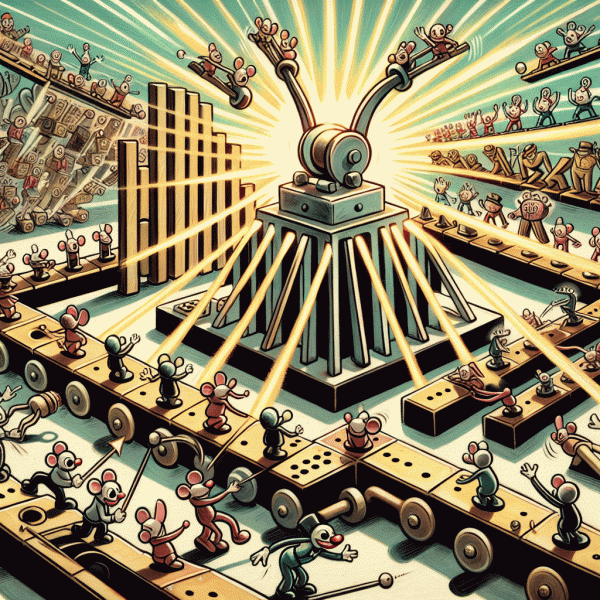
Think of each click as a tiny electric charge — curious, noisy, and hungry for a path to something meaningful. Those first micro-moments after someone taps your link are where curiosity either fizzles or funnels. You can't rely on luck; curiosity needs choreography. That means a promise clearly delivered within the first three seconds, a visual that answers the question behind the click, and a tone that feels like a friendly nudge rather than a pushy salesman. Nail those micro-moments and the ocean of anonymous clicks starts to look like a marching line of potential customers, ready to be guided toward a purchase. Treat signals like time on page and repeat visits as tiny sparks that reveal who's worth pursuing.
Start with a landing experience that respects attention. Fast load times, single-sentence value propositions, and one obvious click destination are table stakes. Use a strong hero image or short video that demonstrates use, and place social proof where it matters: concise testimonials, real numbers, or a small logo cluster that signals credibility without clogging the page. Make the call-to-action unmistakable with contrast and concise verbs — Try, Get, Join — and place it above the fold and again at the end. Optimize for mobile gestures, reduce form fields, and consider progressive disclosure so you only ask for what you need when you truly need it.
Data is your map for turning curiosity into currency. Track heatmaps, scroll depth, and click paths to find where attention evaporates, then test permutations with a single variable change. Segment visitors by source and behavior so you serve different hooks to cold traffic versus warm leads. Retargeting ads, triggered emails, and lookalike audiences are the muscle that pulls near-miss clicks back into the funnel. Don't forget referral and incentive mechanics — a tiny reward for sharing can multiply reach without blowing your budget. Automate follow-up sequences that feel personal: short, timely, and focused on the next logical step.
When it comes time to monetize, think beyond the one-and-done transaction. Offer tiered pricing, bundled upsells, trials, and no-hassle guarantees to lower perceived risk and raise average order value. Use honest scarcity and bonuses to increase urgency without panic, and make checkout a five-second experience with saved cards, autofill, and clear progress indicators. Consider low-cost entry points that lead to higher-ticket offers via onboarding and value delivery. Even modest improvements — higher AOV, a clearer CTA, a shorter form — compound across a thousand clicks into meaningful revenue, especially when you prioritize lifetime value over a single sale.
In short, transforming clicks into cash is deliberate, not mysterious. Design fast, test often, follow the data, and build multiple small pathways to cash rather than betting on a single giant leap. Treat every click like the start of a conversation: answer the question it implies, remove the friction, and give a gentle but clear direction to the next step. Run a seven-day sprint of tiny experiments, measure lift, iterate, and watch that chain reaction turn curious taps into predictable income. The secret is small, reproducible wins stacked together — that is how a thousand curious clicks become something you can count on.
The Drop-Off Drama: Where Your Audience Bails and How to Fix It
Clicks are cheap; attention is expensive. When 1,000 strangers arrive at your doorstep and half vanish before the offer appears, the drama is not random. It is a chain reaction where one small snag creates a domino line of exits. Start by tracing the path like a detective: entry source, first impression, primary action, and exit point. Each stage can either stoke curiosity or trigger a bailout. Treat the journey as a tiny theater where every second of stage time matters and every prop either intrigues or bores the audience.
Data will tell the story, but human instincts explain the motive. Heatmaps reveal where eyes wander, session replays show where confusion becomes frustration, and analytics give the timestamps for the escape. Layer those insights with quick qualitative checks: ask five fresh users to narrate what they think will happen next. If their guesses do not match the next step, you have cognitive friction. The faster you identify where mental models diverge from your design, the faster you can fix the script and keep the crowd glued to the performance.
Start repairs with three surgical fixes that return the most viewers to the plot:
- 🆓 Clarity: Replace jargon with a single sentence that answers what, why, and what happens next. If a visitor cannot explain the value in ten seconds, they will leave.
- 🚀 Speed: Cut load time by one second. Compress images, defer noncritical scripts, and offload heavy widgets. Faster pages translate directly to fewer collapses in the chain.
- 💬 Direction: Use one clear primary action and no more than two supporting cues. If the CTA is invisible or competing with ten others, the audience will freeze and then go.
Once the big leaks are patched, refine the little things that turn interest into intent. Improve microcopy so buttons explain outcome rather than action, for example Label as Start Free Trial becomes Get Instant Access. Add low friction verification options like social login and reduce form fields to essentials. Use progressive disclosure for complex offers so the first step feels tiny and commitment scales naturally. Layer social proof near the decision point to reassure without overloading. On mobile, increase tap targets and remove intrusive popups that eclipse the CTA. Pair changes with A B tests that measure not only clicks but the next meaningful event so you know if a win is a true conversion or just a vanity tap.
Finally, instrument a simple experiment loop: hypothesize one change, run it to statistical significance, and then bake the winner into the default experience. Repeat this cycle with weekly check ins and monthly roadmap updates. With a persistent detective mindset and targeted fixes, the drop off becomes less drama and more choreography, and that is how thousands of scattered clicks funnel into a single, delightful chain reaction.
Timing, Titles, and Thumbnails: What Moves the Needle Most
Think of your link as a baton in a relay: timing, title, and thumbnail are the hands that must pass it cleanly so the race does not stall. When all three are aligned, a single placement can trigger a rush of clicks that multiplies across social platforms, playlists, and recommendations. Start by treating each asset as an independent lever. Measure clickthrough rate, early retention, and downstream actions for every variant you publish. That data will tell you whether the baton was dropped early, fumbled midstream, or sprinted all the way to the finish line.
Timing is often underrated because it feels ephemeral, but a precise publish window can change a few dozen clicks into several hundred. Test three distinct windows over two weeks: a morning push for commuters, a midday burst for lunch-hour scrollers, and an evening release for leisure viewers. When you find a pattern, exploit momentum: re-share the best-performing link 30 to 90 minutes after the initial push with a fresh caption, and schedule follow ups at 24 and 72 hours to capture late bloomers. Also think about sequence: a teaser thumbnail followed by a fuller version in the second post can reengage curious viewers who skipped the first pass.
Titles do the heavy cognitive lifting. Your title needs to answer two simple questions in under a glance: what will I get, and why should I care right now. Use clear utility, concrete numbers, and a touch of emotion. Try three headline formulas on the same asset: a How-to, a Top-X list, and a Why-X explainer. Run A B tests and keep the winner, but record qualitative notes about comments and retention to see which promise matched delivery. Small edits matter: moving a number to the front, adding a parenthetical clarifier, or swapping a mild verb for a stronger one can lift CTR without changing content.
Thumbnails are the visual handshake that invites that first tap. Prioritize contrast, readable text at thumbnail size, and a focal point such as a face with expressive emotion or a bold object. Create two size-optimized crops: one for mobile feeds and one for desktop embeds. Maintain a consistent visual style so your audience learns to spot your content in a noisy feed, but iterate on color and composition to avoid visual fatigue. Finally, combine signals: when a high-performing title and thumbnail meet a well-timed push, amplify patiently and measure beyond clicks. Look at session length and conversion events to ensure the chain reaction is healthy and not just noisy traffic. Treat this process like a lab: hypothesize, run controlled tests, measure, and scale the combinations that actually move the needle.
Bots vs. Buyers: Filter the Noise and Find Real Fans
Clicks are cheap, attention isn't. Somewhere between vanity metrics and meaningful momentum lives the difference between a swarm of bots and a handful of true fans who will click, convert, and share. Start by shifting your question from "How many clicks did we get?" to "How many people took a meaningful next step?" That change in framing makes it obvious where to focus: engagement depth. Look for signals like repeat page visits, time spent interacting with your product demo, email opens that lead to a follow-up action, or social comments that go beyond an emoji. Those are the tremors a genuine chain reaction begins with. Don't be seduced by volume; be curious about behavior patterns.
Operationally, you can separate noise from nuance with a few tactical moves. First, baseline normal traffic so you can spot oddball spikes in seconds-long sessions, impossible time zones, or user agents that scream automation. Add JavaScript-based interaction checks and a simple honeypot field to catch unsophisticated bots. Filter analytics by engagement events (scroll depth, video watch %, form interactions) rather than raw pageviews; tools like GA4 and server logs give you the hooks to do that. Use IP and UA filters conservatively, but pair them with behavioral thresholds so you don't throw away curious early adopters. Finally, export suspicious cohorts and inspect replay or session traces before you write them off.
Once you have a cleaner pool, cultivate the people who behave like buyers. Design micro-conversions that are meaningful but low friction: a timed content unlock, a short survey that reveals intent, or a value-first email exchange. Track cohorts that complete these micro-conversions and measure their downstream actions: product trials, referrals, or UGC contributions. Turn those micro-conversions into a probationary fan club by delivering immediate, tailored value — a guide, a snippet of exclusive content, or a personalized onboarding nudge. Push retargeting dollars only at cohorts that pass the engagement threshold; that's how a single paid click transforms into a loop that fuels organic shares and higher lifetime value.
Finally, optimize the one link you funnel real people toward so it maximizes chain reaction potential. A/B test clear CTAs, social proof snippets, and a frictionless share mechanism that rewards authentic referrals (not fake signups). Build follow-up sequences that ask for a small, public act — a review, a comment, a tweet — right after a meaningful win. Monitor retention curves and LTV by cohort and tighten the feedback loop: if a channel produces lots of clicks but zero second actions, deprioritize it in favor of the lower-volume, high-quality drivers. In short, stop buying applause and start amplifying your choir: find the humans, give them a reason to act, and make every post-click step a mini-conversion that seeds the next click.
Your Next 1,000 Clicks: Quick Wins to Double the Impact
Think of the next 1,000 clicks as raw potential energy. They can fizzle out into a brief spike of vanity metrics, or they can trigger a tidy chain reaction that converts casual curiosity into repeat visits, shares, and revenue. The trick is to treat each click like a small investment with predictable returns: nudge the visitor twice—once to take a meaningful action, and once more to bring them back. That mindset turns "one-link" traffic into a multi-step funnel without needing a full redesign or a budget blowout.
Three surgical, low-friction moves often double the impact faster than a redesign. Try these quick wins this week and measure lift within days rather than months:
- 🚀 Headline: Fix the first 3 seconds by sharpening the value statement. Replace vague claims with one clear benefit and a tiny proof point.
- 💥 CTA: Reduce choice. Offer one primary action, styled in a high-contrast color, with microcopy that tells the user exactly what happens next.
- 👥 Proof: Add one social proof element near the fold — a short testimonial, a numeric metric, or a recognizable logo. Small credibility lifts cut hesitation.
Put those wins into action with three tactical experiments you can run in parallel. A headline swap A/B test on the landing page takes an hour to set up and usually yields fast signals; pair it with a button copy test that frames the same action in two different emotional tones (practical vs playful). Next, create a micro-landing experience for the link that strips navigation and focuses only on the single conversion you want. Finally, add a light retargeting pixel and cook up a 3-message sequence aimed at clickers who did not convert immediately. Each experiment should have a clear success metric and a minimum sample size to avoid chasing noise.
Turning clicks into longer-term value is about orchestration, not heroic effort. Capture emails with tiny incentives (a one-paragraph guide, a checklist, or a discount code), use in-page nudges like a sticky CTA or timed slide-in to recover wavering attention, and remove friction from the conversion path (pre-filled forms, single-click options, fewer fields). Then automate simple follow-ups: a welcome message that references the click, an educational touch that extends the initial promise, and a social-share prompt that makes it easy for visitors to amplify what they found. Those are the micro-operations that convert a solitary link into a repeatable growth lever.
Measure what matters: conversion lift, return visits within 7 days, and cost per retained user. Commit to a 48- to 72-hour sprint for each tweak, record results, and double down on the moves that produce consistent lift. Try the three quick wins in sequence or concurrently depending on traffic; either path will give you clearer insight into what turns 1,000 passive clicks into an active, engaged audience. Small experiments, big compounding effect — that is the chain reaction you want.